
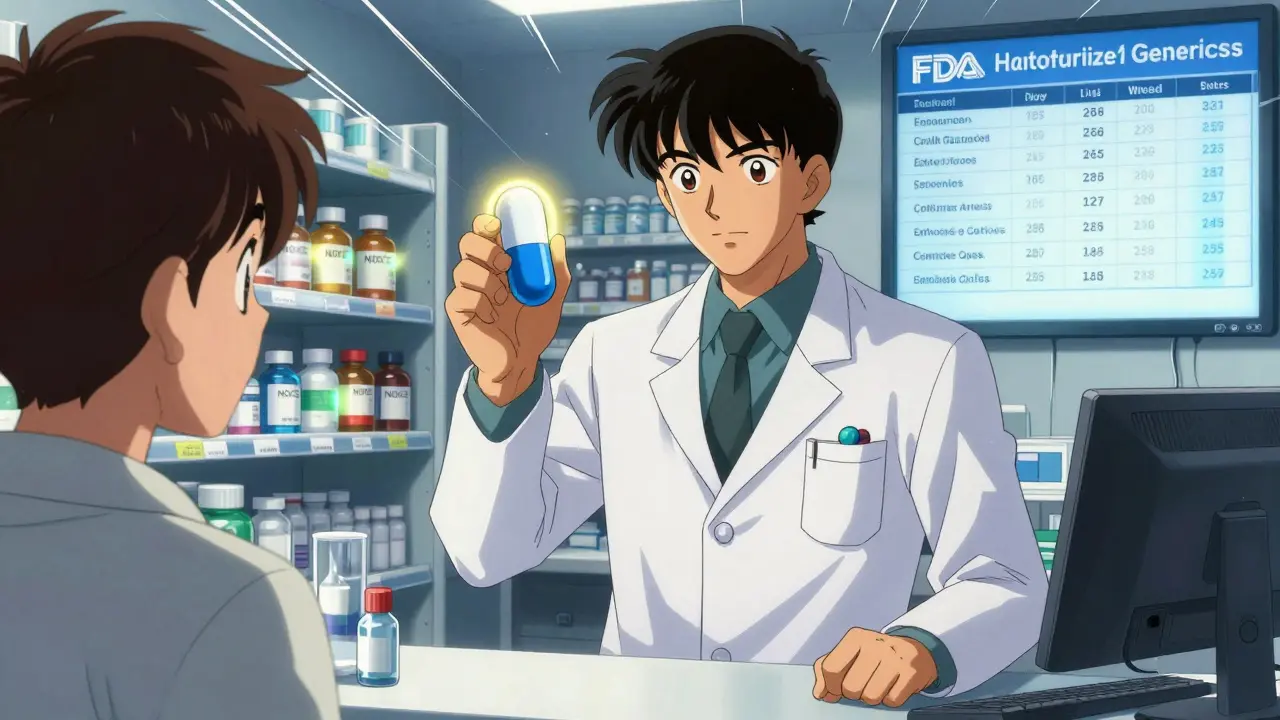
What exactly is an authorized generic?
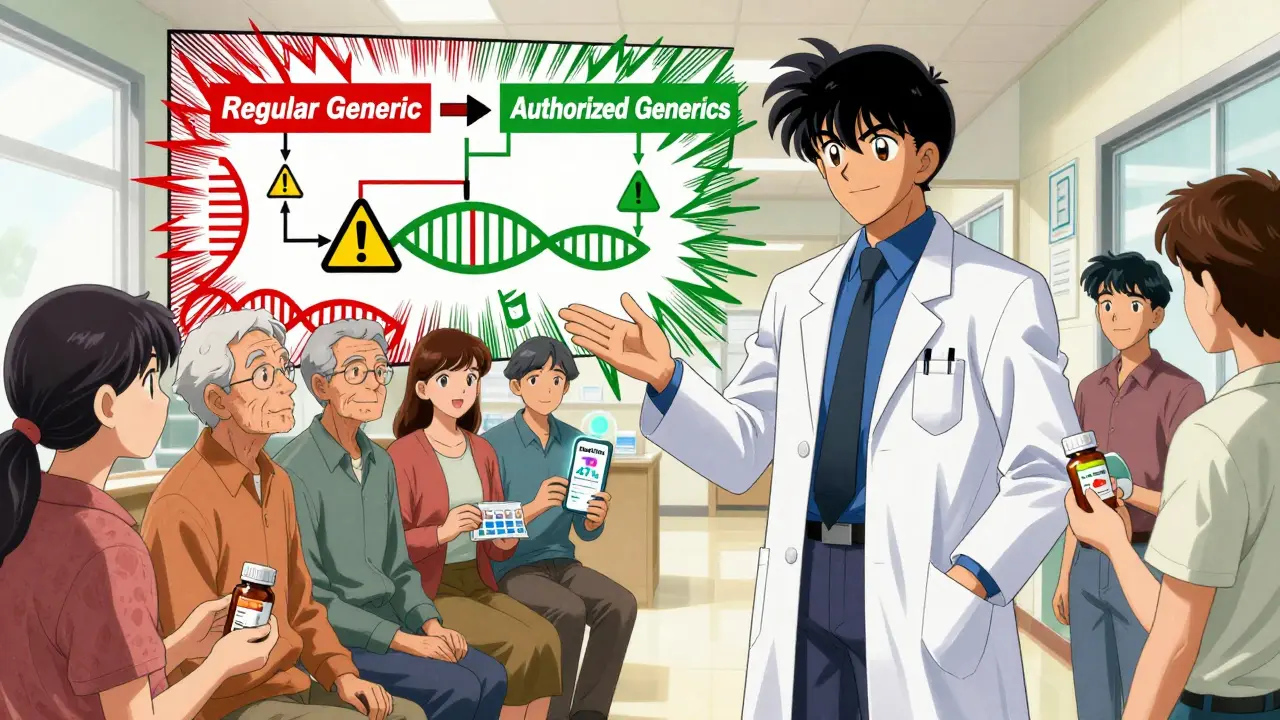
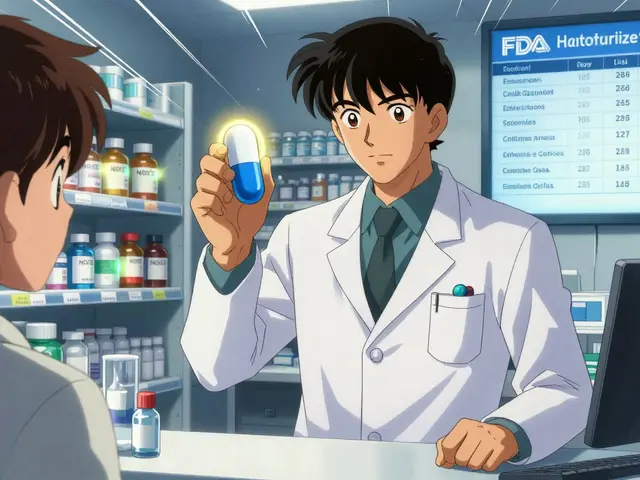
An authorized generic is the exact same medication as the brand-name drug-same active ingredients, same inactive ingredients, same manufacturing process. The only difference? It doesn’t carry the brand name on the label. It’s made by the original brand company (or under their direct permission) and sold under a different name or packaging. Think of it like a twin: same DNA, different shirt.
Unlike regular generics, which go through the Abbreviated New Drug Application (ANDA) process and can have different fillers or coatings, authorized generics are chemically and physically identical to the brand. That means if your patient has been taking a brand-name drug for years and suddenly reacts to a regular generic because of a gluten filler or lactose coating, the authorized generic might be the only safe switch.
When should pharmacists recommend authorized generics?
Not every generic substitution is created equal. Here are the three most important situations where an authorized generic isn’t just a good option-it’s the best one.
1. Patients with allergies or sensitivities to inactive ingredients
Regular generics often swap out fillers, dyes, or binders. One patient with celiac disease switched to a generic version of their thyroid medication and ended up with bloating and fatigue. Turns out, the generic used wheat starch. The brand and its authorized generic? Both used rice starch. No reaction. No problem.
Same goes for patients avoiding gelatin (due to religious or dietary reasons), lactose intolerant individuals, or those allergic to certain dyes like FD&C Red No. 40. Authorized generics preserve the original formulation. If the brand worked for them, the authorized generic will too.
2. Narrow therapeutic index (NTI) drugs
Drugs like warfarin, levothyroxine, phenytoin, and cyclosporine have razor-thin margins between effective and toxic doses. Even tiny differences in absorption can cause serious issues-think blood clots, seizures, or thyroid crashes.
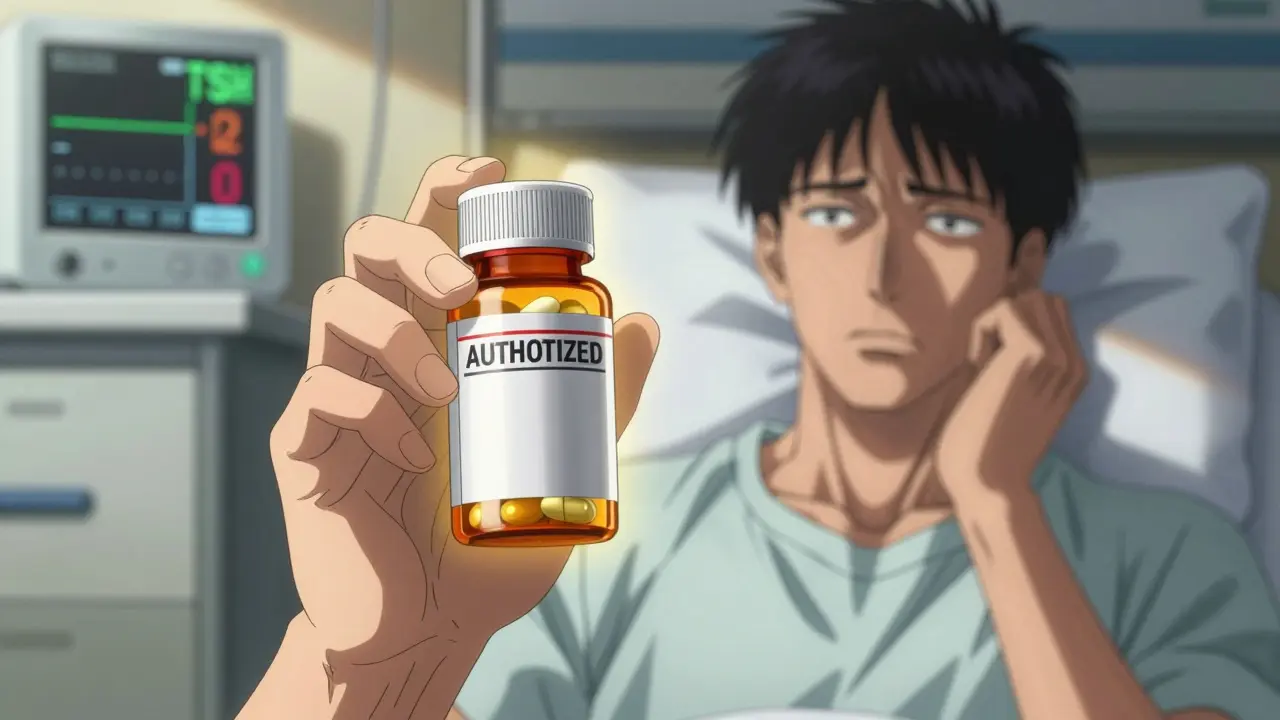
The FDA has documented cases where patients on brand-name levothyroxine had their TSH levels spike after switching to a regular generic. The authorized generic? No change. Because it’s the same pill, just without the brand logo.
For these drugs, the risk of switching to a regular generic isn’t theoretical-it’s clinical. Authorized generics remove that uncertainty.
3. Modified-release formulations
Extended-release pills, delayed-release capsules, and transdermal patches rely on complex delivery systems. Regular generics may meet bioequivalence standards on paper, but in real life, the drug can release too fast or too slow.
Take extended-release methylphenidate. Some generics release the full dose in the first few hours, leading to crashes by afternoon. The brand and its authorized generic? Consistent release, all day. Patients report better focus, fewer side effects, and less need for midday doses.
How to spot an authorized generic
You can’t tell by looking at the pill. A blue capsule today might be white tomorrow. But here’s how to find out if it’s an authorized generic:
- Check the FDA’s quarterly list of authorized generics. As of September 2023, there were 257 on the list-up from 185 in 2019.
- Look at the National Drug Code (NDC). If the labeler code matches the brand manufacturer (like Pfizer, Merck, or AbbVie) or a known authorized licensee (like Prasco or Greenstone), it’s likely an authorized generic.
- Don’t rely on the Orange Book. Authorized generics don’t appear there as separate entries. They’re treated as the brand itself.
Also, ask your wholesaler. Some, like AmerisourceBergen and Cardinal Health, carry more authorized generics than others. McKesson, for example, has fewer in stock.
Cost savings-real and misleading
Authorized generics usually cost 20% to 80% less than the brand. That’s huge. But here’s the catch: insurance plans don’t always treat them like generics.
According to a 2022 Health Affairs study, 63% of pharmacy benefit managers (PBMs) put authorized generics in the brand-name tier. That means your patient might pay $50 instead of $10-even though the pill is identical to the $10 generic.
Always check the formulary. Call the insurer. Ask: “Is this covered as a generic or a brand?” If it’s listed as a brand, the patient might be better off sticking with the brand and using a coupon-unless the brand is too expensive, and the authorized generic is the only affordable option with the right ingredients.
What about insurance and state laws?
Federal law lets pharmacists substitute authorized generics just like regular generics, unless the prescriber wrote “do not substitute.” But state rules vary.
Forty-two states allow substitution without prescriber approval. Eighteen states require notification to the prescriber. Massachusetts, for example, explicitly permits substitution as long as it’s not prohibited on the script.
Always document the substitution. Use the modifier code “DA” in your billing system. Keep a record showing the authorized generic matches the brand in active and inactive ingredients. You’re not just following the law-you’re protecting your patient.
How to talk to patients
Patient confusion is the biggest barrier. They see a different color, a different shape, a different label-and panic.
Don’t just hand them the bottle. Say this:
- “This is the same medication you’ve been taking. The inside is exactly the same.”
- “The only difference is the name on the bottle. It’s made by the same company.”
- “You’ll save money-sometimes half the price.”
- “If you notice any side effects, call us right away. But if you’ve had no issues with the brand, you shouldn’t have any now.”
That last point matters. A 2022 study found that 27% of patients stopped taking their meds after a pill changed appearance-unless the pharmacist explained why. With proper counseling, that number dropped to 8%.
Limitations and things to watch for
Authorized generics aren’t magic. They’re not available for every drug. Only about 5% of brand-name medications have them. And while they’re identical to the brand, rare cases exist where manufacturers tweak the formulation slightly when launching an authorized version-usually disclosed in FDA updates.
Also, packaging changes can hurt adherence. A 2021 study showed that 15% of patients missed doses because the bottle looked different or the instructions were unclear. Always check the labeling. Make sure the dosage instructions are clear. Offer a pill organizer if needed.
The future of authorized generics
They’re growing. From 2010 to 2019, the number of authorized generics increased by 18% each year. Consumer searches for them on GoodRx jumped 47% in just two years. More patients are asking about them.
Legislation like the Affordable Insulin Now Act of 2023 could expand access for high-cost drugs. Professional groups like the American Pharmacists Association are updating guidelines for 2024, with clearer rules on substitution.
As value-based care takes hold, pharmacists who know when to recommend authorized generics won’t just be saving money-they’ll be preventing hospitalizations, improving adherence, and building trust.


Nick Flake
February 3, 2026 at 05:08This is the kind of post that makes me proud to be a pharmacist. 🙌 Authorized generics are literally the same pill, just without the marketing budget. I had a patient on levothyroxine who kept having TSH spikes until we switched to the authorized version. Zero changes. Zero drama. Just peace of mind. 🤫💊
Brett MacDonald
February 4, 2026 at 15:46so like... its just the brand but cheaper? why dont they just call it the brand then lol
Sandeep Kumar
February 5, 2026 at 05:02America still wasting money on branded pills while India makes perfect generics for 10% cost. This authorized generic thing is just corporate PR. We don't need this overcomplication. Simple is better
Gary Mitts
February 5, 2026 at 08:00Same pill. Different label. Same price? Nope. That’s the joke.
clarissa sulio
February 6, 2026 at 20:43I can't believe how many patients panic when the pill looks different. I always hand them the bottle and say 'this is your medicine, just in pajamas.' It works every time. No more missed doses.
Vatsal Srivastava
February 7, 2026 at 11:40Authorized generics are a myth created by big pharma to keep control. Real generics are just as good. You're overthinking this
Brittany Marioni
February 7, 2026 at 21:29I just want to say-thank you-for writing this with such clarity and care. So many pharmacists are underappreciated, and this? This is exactly the kind of guidance that saves lives. Please keep sharing this. 🙏✨
Monica Slypig
February 9, 2026 at 14:42Why are we even talking about this? In America we pay more for medicine than any other country. And now you want us to believe some 'authorized' version is better? Please. The system is broken. And you're just polishing the coffin.
Becky M.
February 10, 2026 at 14:34i just wanted to add-i work in a rural clinic and we get a lot of elderly patients who are terrified of any change. i use the 'same pill, different shirt' line too. it helps. also, sometimes they just need to hold the bottle and see the same logo on the box from before. small things matter. thanks for the nudge to check ndc codes. i forgot to do that last week. oops.
Hannah Gliane
February 10, 2026 at 21:19Oh wow. So you're saying the only reason people react to generics is because they're too lazy to read the label? 🤦♀️ And now we're supposed to be excited that Big Pharma is letting us buy their own product for less? What a revolutionary idea. I'm sure the shareholders are thrilled you're helping them keep their margins while pretending to care about patients.
Murarikar Satishwar
February 11, 2026 at 13:17This is excellent. I've been advocating for authorized generics in my pharmacy in Delhi for years. Many patients come from the U.S. with prescriptions and are shocked we don't have access. But the principle is universal: safety over cost, consistency over convenience. If the brand works, why risk it? The science is clear. The system just needs to catch up. Thank you for this detailed breakdown.