
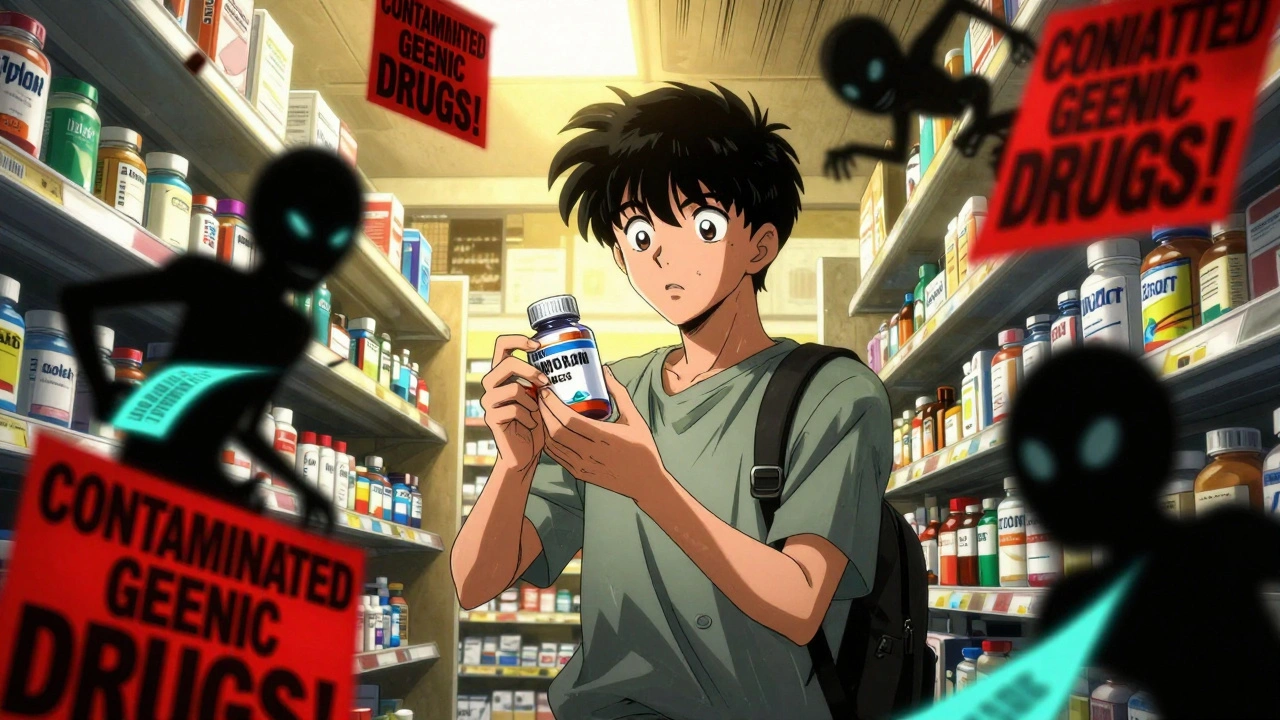
When you pick up a prescription, you probably don’t think twice about whether it’s a brand-name drug or a generic. But what if the news you read yesterday made you question whether that generic pill is really safe? That’s not paranoia-it’s the result of how media stories frame generic medications, often without context, data, or balance.
Generic drugs work the same. So why don’t we trust them?
Eighty-four percent of prescriptions filled in the U.S. are for generic drugs. That’s not a small fraction-it’s the norm. Yet, despite overwhelming scientific proof that generics contain the exact same active ingredients as their brand-name counterparts, nearly half of patients still can’t tell the difference between the two. A 2023 study found that 40% of people mistakenly believe generic drugs are less effective or even counterfeit. And it’s not because they’re uninformed-it’s because the media keeps feeding them fear.
Look at headlines like “Contaminated Generic Drugs Reveal an Urgent Public Health Crisis” or “How Some Generic Drugs Could Do More Harm Than Good.” These aren’t rare. They’re common. And they’re misleading. The FDA approves every generic drug before it hits the shelf. Every one. They must meet the same standards for purity, strength, and performance as the brand-name version. But when a news outlet reports on a single batch of pills recalled in India, it doesn’t mention that this affects less than 0.1% of all generics. It doesn’t say that the same company makes the brand-name version in the same factory. It just says “generic drugs are dangerous.” And that sticks.
Why the media keeps using brand names-and why it matters
Here’s a simple experiment: next time you read a health article, count how many times the drug is called by its brand name versus its generic name. You’ll likely find that the brand name is used almost every time-even when the story is about the generic version.
A 2014 study in JAMA Network found that only 2% of newspapers had written policies requiring reporters to use generic names. The rest? They defaulted to brand names like “Lipitor,” “Zoloft,” or “Prevacid.” Why? Because brand names are familiar. They’re catchy. They’re what people recognize. But this isn’t just a style choice-it’s a psychological trick. When you hear “Lipitor,” you think of a trusted pharmaceutical company with a big ad campaign. When you hear “atorvastatin,” you think… nothing. It sounds foreign. Unreliable. Even if it’s the same drug.
This naming bias doesn’t just confuse patients. It fuels the myth that generics are inferior. If you’re told your doctor prescribed “Lipitor,” and then you get a pill with a different color and a strange name on the bottle, your brain doesn’t register it as the same thing. It registers it as a downgrade. And that’s exactly what the media is unintentionally reinforcing.
Bad news hits harder-and it lasts longer
It’s not just what the media says. It’s when they say it.
A 2023 study from the University of Texas at Dallas found that after patients received bad health news-like a high cholesterol reading or a diabetes diagnosis-they were far more likely to refuse generics and demand brand-name drugs. And this shift didn’t happen months later. It happened within the first 90 days. That’s when fear is highest, when people are most vulnerable, and when they’re most likely to pay more for the illusion of safety.
Why? Because bad news triggers a psychological need for control. If you’ve just been told your life is at risk, you don’t want to gamble on a pill you don’t understand. You want the one you’ve seen on TV. You want the one your neighbor swears by. You want the brand. And the media doesn’t help. It amplifies the fear instead of calming it.
Even worse, the media rarely reports on the flip side: patients who take generics are more likely to stick with their treatment. A 2023 study in US Pharmacist showed that because generics are cheaper, patients skip fewer doses. They refill prescriptions more often. They’re more consistent. But you won’t hear that in a headline. “Cheaper Pills Keep Patients on Track” doesn’t get clicks. “Generic Drug Recall Sparks Panic” does.
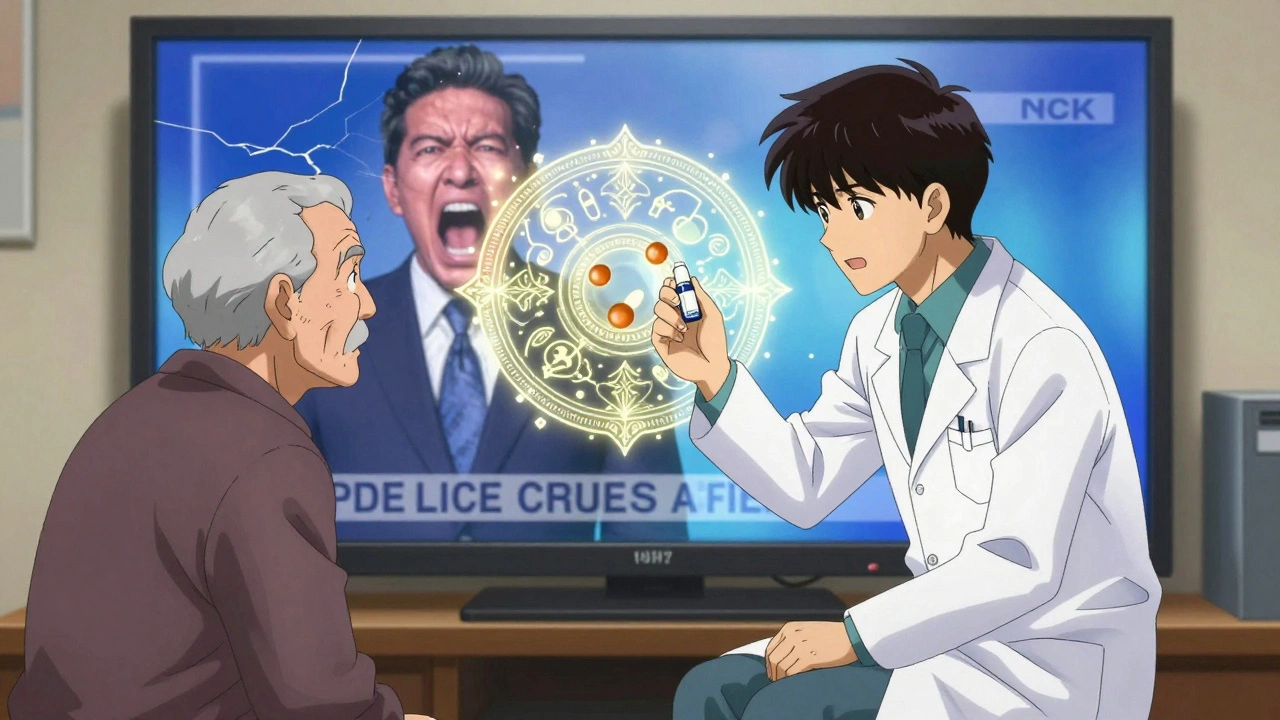
Doctors and pharmacists are the real bridge
Here’s the good news: when patients talk to their doctor or pharmacist about generics, their trust goes up. Fast.
Research shows that patient trust in their healthcare provider overrides their own doubts about generics. If your doctor says, “This generic is identical to the brand, and here’s why,” you’re far more likely to believe them than a news anchor who’s reading from a script written by a PR team.
Pharmacists, in particular, are in the perfect position to fix this. They’re the ones handing you the pill. They see the confusion on your face. They know what’s in the bottle. And studies confirm that when pharmacists take even two minutes to explain how generics work, patient confidence jumps. They answer questions like: “Why does it look different?” “Is it really the same?” “Can it cause side effects?”
But too often, pharmacists are rushed. Too often, they’re not trained to counter media myths. And too often, patients don’t even ask. They just assume the worst.
What’s really driving the price fears?
Another big reason people distrust generics? They think they’re expensive.
Media stories love to spotlight a single generic drug that suddenly jumped in price. “Generic EpiPen Now Costs $400!” they scream. But they rarely mention that this is an outlier. Or that when there are three or more generic competitors in the market, prices drop by an average of 20%. Or that the original brand-name EpiPen was priced at $600 before generics entered the market.
It’s a pattern: focus on the spike, ignore the trend. The public hears “generic drug prices are rising” and assumes the whole system is broken. But the real story is that competition drives prices down-and generics are the reason we pay less overall. The FDA’s own data shows that in markets with multiple generic makers, patients save billions every year. But you won’t see that in a 30-second news clip.
How to fight back: what you can do
It’s easy to feel powerless when the media shapes your beliefs. But you’re not helpless.
- Ask your pharmacist to explain the difference between your brand and generic. Don’t assume. Ask.
- Check the FDA’s website for approved generics. You don’t need to be a scientist-just search the drug name and see if it’s listed as “therapeutically equivalent.”
- Don’t trust headlines that say “generic drug danger” without mentioning the FDA, the study size, or the number of patients affected.
- Ask your doctor if they’d take the generic version themselves. Their answer will tell you more than any news story.
- Share accurate info. If a friend is scared of generics, show them the data. One conversation can undo years of media noise.
The truth? Generic drugs are not a compromise. They’re the standard. They’re the reason millions of people can afford their medication. They’re rigorously tested. They’re approved by the same agency that approves the brand names. And they’re just as safe.
The problem isn’t the pills. It’s the stories we’re told about them.
Why this matters beyond your prescription
This isn’t just about one pill. It’s about trust in medicine. If people stop believing in generics because of misleading headlines, they’ll pay more. They’ll skip doses. They’ll get sicker. And the system will get more expensive for everyone.
Healthcare costs are already too high. Generics save the U.S. healthcare system over $300 billion a year. That’s not a small number. That’s enough to cover insulin for every diabetic in the country. Or fund cancer screenings for millions. Or lower premiums for families.
But if we keep letting fear-driven media stories dictate our choices, we’re not just hurting ourselves-we’re hurting the system that’s supposed to protect us.


Levi Cooper
December 12, 2025 at 22:11Let’s be real-generic drugs are just big pharma’s way of screwing over the working class. They’re made in sketchy factories overseas, and the FDA? Ha! They’re in the pocket of the big guys. I’ve seen people get sick from generics-rashes, seizures, the whole deal. You think that’s coincidence? Nah. It’s systematic. They don’t care if you die as long as they get paid.
Reshma Sinha
December 14, 2025 at 05:20Interesting analysis, but I’d argue the root issue isn’t just media bias-it’s the structural asymmetry in pharmacovigilance systems. In India, where ~70% of global generics are manufactured, the regulatory infrastructure is still maturing, and while the FDA audits, the latency in adverse event reporting creates perceptual gaps. The media exploits this opacity-not because they’re malicious, but because narrative trumps nuance in attention economies.
Rob Purvis
December 15, 2025 at 20:30So many people don’t realize that the FDA’s ANDA process is actually more rigorous than the NDA for brand-name drugs in some ways-because generics have to prove bioequivalence across multiple populations, not just one clinical trial cohort. And yet, we still get headlines like 'Generic Drug Recall!' like it’s a scandal. It’s not. It’s a feature of the system working. Every batch is tracked. Every lot is tested. The system’s not broken-it’s just being weaponized by fear.
Also, the naming thing? Huge. I work in healthcare IT. We tried switching all internal documentation to generic names. Staff resisted like it was a religion. 'But Lipitor sounds like medicine!' they said. Like the brand name gives it magic powers.
Adam Everitt
December 16, 2025 at 23:29the media dont care about truth they care about clicks… and people… well… people like to feel scared. its easier than being informed. i mean… why read a 10 page study when you can just scroll past a headline that says 'generic drugs are killing people' and feel righteous about it? we’re all just reacting to dopamine triggers now. sad. but true.
wendy b
December 18, 2025 at 15:51While I appreciate the sentiment, the author’s argument lacks empirical grounding in behavioral economics. The phenomenon described is not merely a media artifact-it is a manifestation of the endowment effect and status quo bias, wherein individuals ascribe higher utility to familiar, branded entities regardless of objective equivalence. Furthermore, the implicit assumption that patients are passive recipients of media narratives ignores the role of cognitive dissonance in rejecting pharmacological alternatives.
Stacy Foster
December 19, 2025 at 15:46EVERY TIME I’ve taken a generic, I’ve felt weird. Like, physically off. I don’t care what the FDA says. I’ve had side effects the brand never caused. And don’t even get me started on the pills that look different every time-like they’re just repackaging expired junk. Someone’s lying. And it’s not me.
nikki yamashita
December 20, 2025 at 08:46YES. This is so true. I used to panic when I got a generic. Then my pharmacist sat me down for 2 minutes and showed me the FDA equivalence chart. I cried. I was so stupid. Now I save $80 a month. And I’m alive. 🙌
Laura Weemering
December 21, 2025 at 05:35It’s not just the media… it’s the entire capitalist machinery. The brand-name companies fund the studies that 'prove' generics are inferior. They buy ad time. They lobby. They pay doctors to push their products. And the FDA? They’re just the fig leaf. The system is designed to keep you dependent. You think you’re choosing health? You’re choosing profit. And the media? They’re just the bell-ringer.
I used to believe in science. Now I believe in survival.
Audrey Crothers
December 22, 2025 at 02:59My grandma took a generic blood pressure med for 12 years. Never had an issue. Her doctor said, 'It’s the same pill, just cheaper.' She said, 'Then why does it cost less?' He said, 'Because we don’t pay for fancy ads or purple pills.' She got it. Now she tells everyone. 💙
Lawrence Armstrong
December 23, 2025 at 11:23Just a heads up - if you’re worried about generics, check the National Drug Code (NDC) on the bottle. You can look it up on the FDA’s database. If it’s approved, it’s good. I do this for my dad’s meds. It takes 30 seconds. No fear needed. 🤓💊
Donna Anderson
December 23, 2025 at 11:41My pharmacist gave me a free sample of the generic version of my anxiety med and said, 'Try it for a week. If you feel different, come back.' I did. I didn’t feel a thing. Saved me $120. I’m not mad. I’m grateful. 😊