
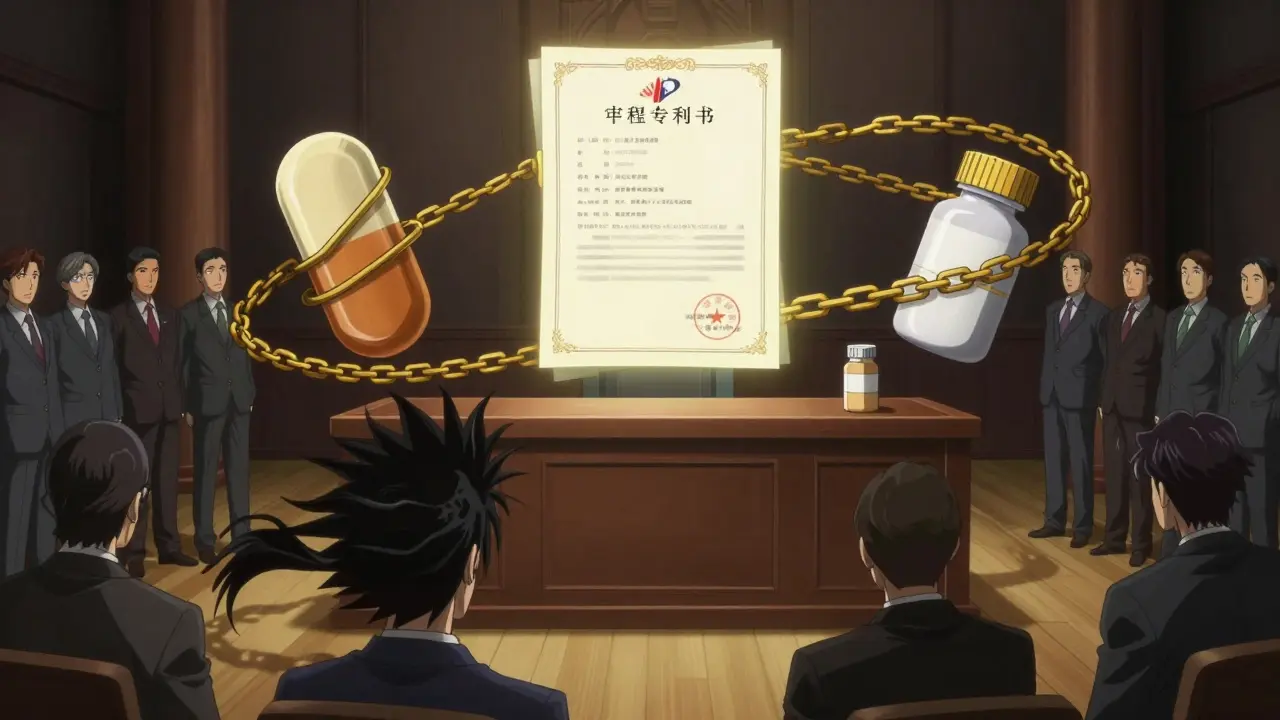
When a pharmaceutical company spends over $2.6 billion to bring a new drug to market, it doesn’t do so out of charity. It does it because the law says it can have a monopoly-no competition-for a set time. That’s the core of patent law in medicine. Patents don’t just protect ideas; they protect the financial risk behind life-saving treatments. But here’s the twist: the same system that rewards innovation also creates the path for cheap generics to enter the market and slash prices. It’s not a battle between good and bad. It’s a carefully balanced machine.
How Patents Work in Drug Development
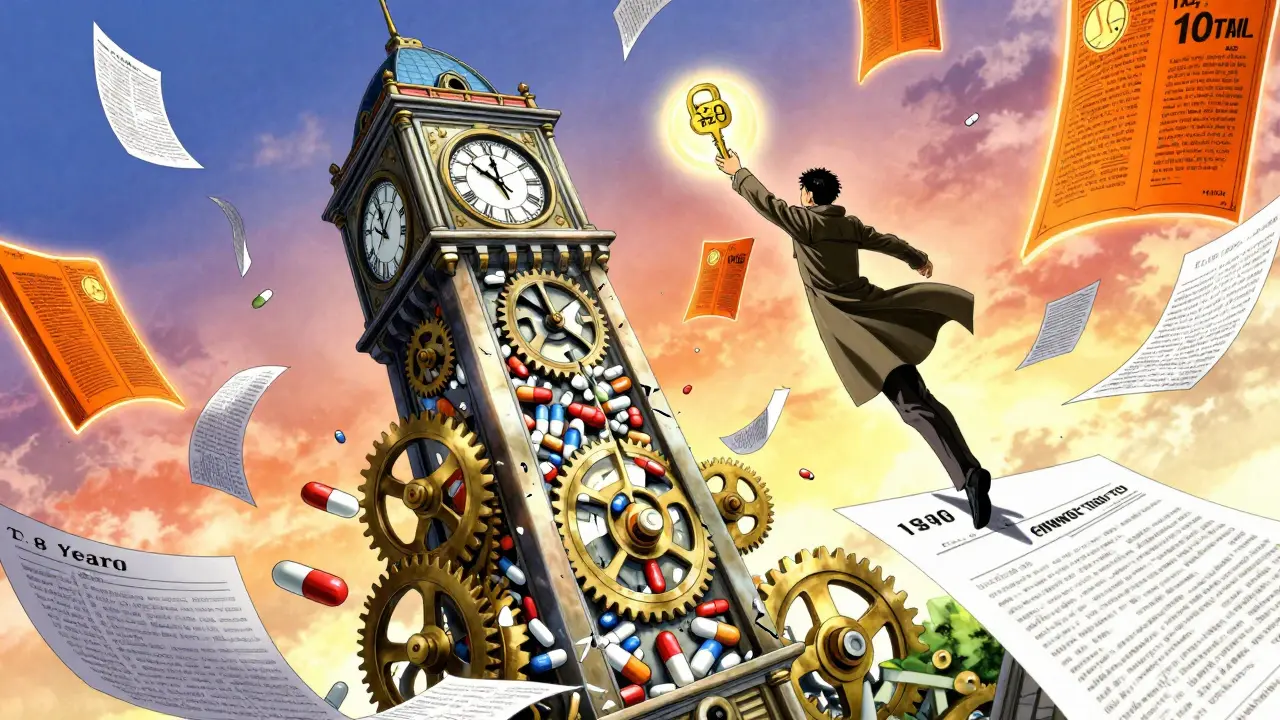
A pharmaceutical patent gives the inventor exclusive rights to make, sell, and distribute a drug for 20 years from the date it’s filed. Sounds simple, right? But here’s the catch: by the time a drug gets FDA approval, half of that 20-year clock has already run out. Clinical trials, safety tests, and regulatory reviews take 10 to 12 years on average. That leaves companies with only 8 to 10 years of actual market exclusivity to recoup their investment.
That’s why the law lets them get extra time. Under the Hatch-Waxman Act a 1984 U.S. law that created the modern framework for generic drug approval and patent term extension, innovators can apply for patent term restoration to make up for time lost during FDA review. This can add up to five years of extra protection. Without this, most drugs would never be profitable to develop.
Take Prozac, for example. When its patent expired in 2001, Eli Lilly lost 70% of its U.S. market share overnight. Annual sales dropped by $2.4 billion. That’s the price of innovation-once the patent runs out, generics flood in, and prices collapse.
The Generic Drug Engine: Hatch-Waxman in Action
The Hatch-Waxman Act a 1984 U.S. law that created the modern framework for generic drug approval and patent term extension didn’t just protect brand companies. It also created the legal pathway for generics to enter the market without reinventing the wheel.
Before Hatch-Waxman, generic makers had to run full clinical trials to prove their version of a drug worked. That cost millions and took years. The law changed that. Now, generics can file an Abbreviated New Drug Application (ANDA). They only need to prove their version is bioequivalent-same active ingredient, same dose, same effect. No need to repeat 10 years of trials.
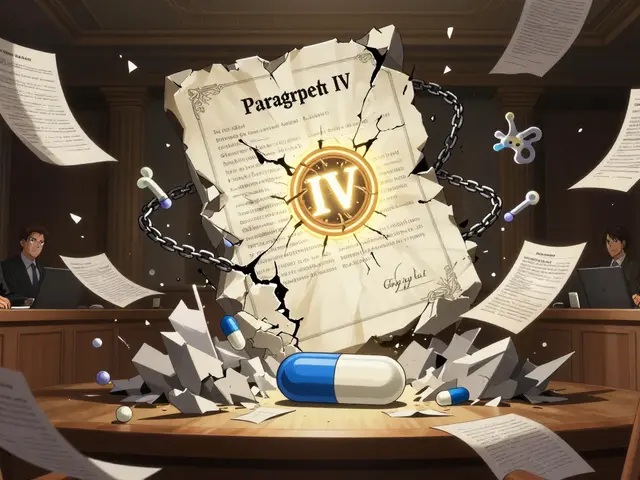
But there’s a catch. Generics can’t launch until all patents are expired-or challenged. That’s where the Paragraph IV certification a legal mechanism under Hatch-Waxman allowing generic manufacturers to challenge the validity of listed patents comes in. A generic company can say, “Your patent is invalid or we don’t infringe it.” That triggers a 45-day window for the brand company to sue. If they do, the FDA can’t approve the generic for 30 months. That’s a legal delay, even if the patent is weak.
Why would a generic risk a lawsuit? Because the first one to challenge successfully gets 180 days of exclusive market rights. No other generic can enter during that time. That’s worth hundreds of millions. State laws force pharmacists to substitute generics when possible, so that 180-day window is a goldmine.
The Orange Book and Patent Thickets
The Orange Book the FDA’s official list of approved drug products with patent and exclusivity information is the playbook for this whole system. Every brand drug listed here must include patents that cover the drug’s chemical compound, formulation, or method of use. Generics review this list before they even start developing their version.
But here’s where things get messy. Some companies file dozens of patents on the same drug-not because they’re new inventions, but to stretch out exclusivity. This is called patent thickets.
Take Humira, the arthritis drug. By 2023, its maker had filed 241 patents across 70 patent families. That delayed biosimilar competition in the U.S. until 2023-even though biosimilars were available in Europe since 2018. Each new patent added another layer of legal protection, making it harder and costlier for generics to enter.
The system was never meant to work this way. But the legal tools are there, and companies use them. The FTC has called this “evergreening”-a tactic to extend monopoly power beyond the original patent term. The European Commission has even labeled some of these practices as abuse of dominance under competition law.
When Generics Hit the Market: The Price Drop
Once a generic enters, prices don’t just dip-they plummet.
Generic drugs cost, on average, 80% to 85% less than their branded versions. A bottle of ibuprofen that once sold for $15 under the brand name Brufen dropped to under $2 after generics arrived. Today, 91% of all prescriptions in the U.S. are filled with generics. But they account for only 24% of total drug spending.
That’s a $373 billion annual savings for patients and insurers, according to 2022 FDA data. One generic entry can cut prices by 70% within six months. Add a second, and it drops another 20%. By the time five generics are on the shelf, the price is often down 90%.
And yet, the average time from patent expiration to generic entry has grown from 2.1 years in 2005 to 3.6 years in 2020. Why? Because litigation has gotten longer, more complex, and more strategic. Brand companies now treat patent challenges like a chess match-not a legal fight.
Pay-for-Delay and the Fight Against Stalling
There’s one dark corner of this system: pay-for-delay deals.
In these agreements, a brand company pays a generic manufacturer to delay launching its cheaper version. It’s not a patent settlement-it’s a bribe. The FTC estimates these deals cost consumers $3.5 billion a year.
They’re not illegal, but they’re controversial. Congress has tried to ban them with bills like the Preserve Access to Affordable Generics and Biosimilars Act. Courts have ruled against them in some cases, but they still happen. In 2023, over 10% of Paragraph IV cases involved settlements that included payment to delay entry.
The CREATES Act a 2022 law designed to prevent brand companies from blocking generic manufacturers from obtaining drug samples needed for testing, passed in 2022, tried to fix another tactic: refusing to sell samples to generics so they can’t test bioequivalence. Some brands held samples hostage to delay generic entry. The CREATES Act made that illegal.
Who Wins? Who Loses?
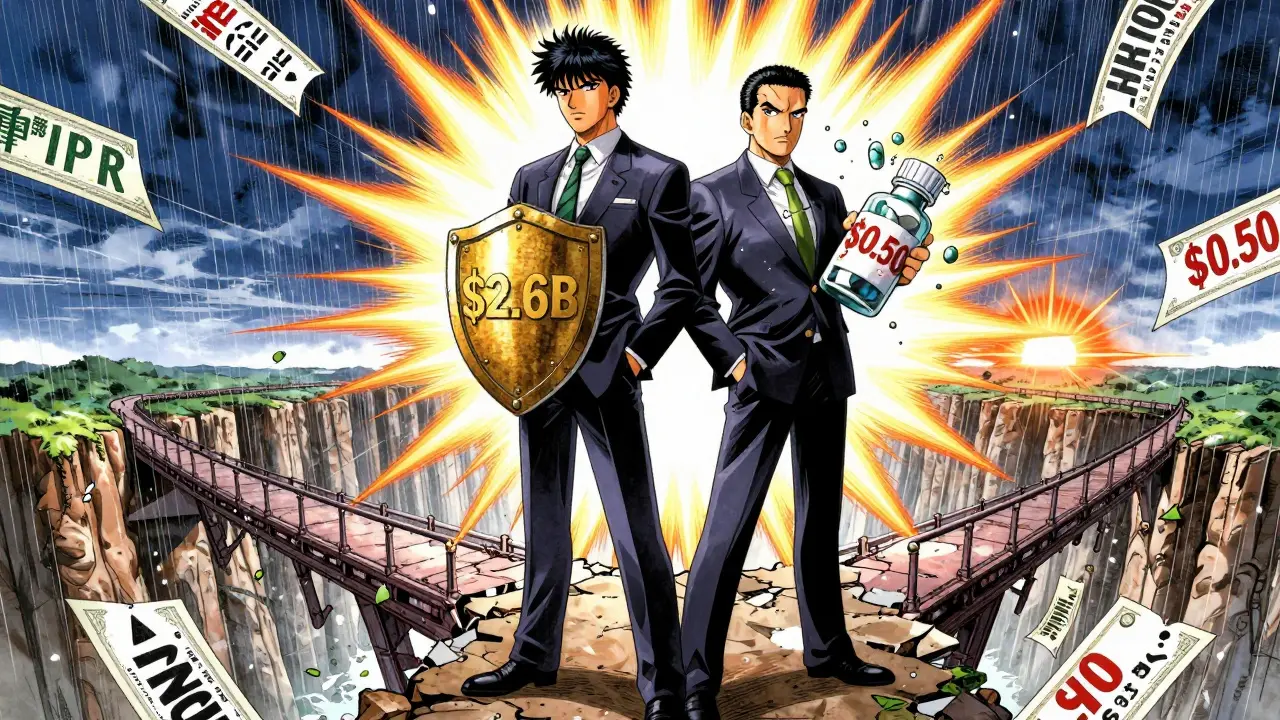
Patients win when generics are available. Insurers win. Taxpayers win. The system saves billions.
But if patents were weaker or shorter, would we have new drugs at all? The pharmaceutical industry spends $83 billion a year on research. That’s the cost of developing the next cancer treatment, the next Alzheimer’s drug, the next antibiotic. Without patent protection, that money wouldn’t come.
Generics companies argue they’re not the problem-they’re the solution. The Association for Accessible Medicines trade group representing generic drug manufacturers in the U.S. says generics prevented $2.2 trillion in healthcare costs between 2010 and 2020.
Brands argue they need strong patents to justify the risk. The PhRMA Pharmaceutical Research and Manufacturers of America, the main lobbying group for brand-name drug companies says without patents, innovation dies.
Both are right. The problem isn’t the system. It’s the abuse of it.
The Future: More Lawsuits, More Pressure
The Inter Partes Review (IPR) a process at the U.S. Patent Trial and Appeal Board that allows third parties to challenge the validity of issued patents has become a favorite tool for generics. It’s faster and cheaper than federal court. But now, brand companies are suing, claiming IPR is unconstitutional. The Supreme Court hasn’t ruled yet.
Biologics-the new wave of complex drugs made from living cells-are even trickier. The Biologics Price Competition and Innovation Act a 2010 law that created a pathway for biosimilar drugs, modeled after Hatch-Waxman for small-molecule generics was supposed to work like Hatch-Waxman. But a 2017 court decision threw a wrench in it. The “patent dance”-a structured exchange of patent information between brand and biosimilar makers-was ruled optional. Now, biosimilar litigation is messy, unpredictable, and slow.
Drug prices keep rising. In 2022, Americans spent $621 billion on prescriptions-22% of all healthcare spending. That’s unsustainable. The public is watching. Congress is listening. And the balance between innovation and access is under more pressure than ever.
But the core of Hatch-Waxman still stands. 97% of new generic applications still use the Paragraph IV process. The 30-month stay is still the norm. The Orange Book is still the map. The system works-but only if it’s not gamed.


Amanda Eichstaedt
January 12, 2026 at 08:13Patents aren’t just legal documents-they’re social contracts. We’re betting our health on a system that says: ‘You risk everything, you get to gouge us for a decade.’ But when that decade ends and the price drops 90%, suddenly everyone’s a genius for waiting. The real question isn’t whether patents work-it’s whether we’re okay with paying for innovation through suffering.
Abner San Diego
January 13, 2026 at 23:30These pharma bros think they’re heroes but they’re just rent-seekers with fancy labs. Pay-for-delay? That’s not capitalism, that’s organized crime with a white coat. And don’t get me started on Humira’s 241 patents-like they invented the color blue. America’s health care is a joke and this is why.
Eileen Reilly
January 15, 2026 at 15:27ok but like… the orange book?? why does it sound like a fruit catalog?? and why do i feel like i’m reading a spy novel when it’s just about pills?? also 30 month stay?? that’s longer than my last relationship 😅
Monica Puglia
January 16, 2026 at 18:50It’s heartbreaking to think someone might skip their insulin because they can’t afford the brand version. But then I remember-without patents, that insulin might never have existed. There’s no easy answer, only people caught in the middle. 🤍
steve ker
January 18, 2026 at 07:36patents are theft of the future by rich men in suits
George Bridges
January 20, 2026 at 00:43I’ve worked in rural clinics where patients choose between rent and meds. I see the math: generics save lives. But I’ve also seen families who lost someone because the next drug never got made. It’s not black and white. It’s just… heavy.
Rebekah Cobbson
January 21, 2026 at 19:33For everyone saying ‘just break the patents’-have you ever tried to develop a drug? It’s not like baking a cake. You’re talking about years of failed experiments, dead ends, and teams working 80-hour weeks. The system’s flawed, but the fear of no reward is why nothing gets made. Let’s fix the abuse, not the incentive.
TiM Vince
January 22, 2026 at 16:39The 180-day exclusivity for first filers is wild. It turns patent law into a high-stakes poker game where the winner gets to make millions while everyone else waits. I get why it exists-but it feels like the system rewards lawyers more than patients.
Jessica Bnouzalim
January 24, 2026 at 16:05Wait-so if a generic company challenges a patent and wins, they get 6 months of monopoly?? That’s insane!! Why not let everyone in at once?? It’s like saying ‘first person to break into the bank gets to keep all the money for half a year’-what kind of messed-up logic is this??
Bryan Wolfe
January 25, 2026 at 12:36Jessica, you nailed it. The 180-day window is a loophole dressed like a reward. It’s not fair to the public, and it’s not even fair to other generics. Imagine being the second company to develop the same drug-same science, same cost-but you get to wait another year because someone else got lucky with a lawsuit. That’s not competition. That’s a rigged race.
Sumit Sharma
January 27, 2026 at 01:10The structural inefficiencies in the Hatch-Waxman framework are exacerbated by regulatory capture. The Orange Book’s patent listing requirements are systematically exploited via evergreening strategies that circumvent antitrust thresholds under Section 1 of the Sherman Act. The IPR mechanism, while procedurally efficient, introduces uncertainty in patent validity determinations that disincentivizes capital allocation in early-stage R&D. Without structural reform, the system remains a zero-sum博弈 between innovation and access.
Jay Powers
January 28, 2026 at 09:21Maybe we need a new model. Like, what if the government paid companies a flat fee to develop a drug, then made it public domain? No patents. No generics. Just… medicine. People need it. We have the money. We just need the will.