

Knowing you’re allergic to a medication isn’t just a note in your file-it can change your entire treatment path. For many people, a childhood rash from amoxicillin leads to a lifelong label: "penicillin allergy." But here’s the thing: 90% of people who think they’re allergic to penicillin aren’t. That label might be costing you more than just time-it could be pushing you toward costlier, riskier drugs you don’t need.
What Really Counts as a Drug Allergy?
A true drug allergy means your immune system is reacting to a medication like it’s an invader. That’s different from side effects-nausea, dizziness, or a headache-those aren’t allergies. Allergies involve your body releasing histamine and other chemicals, which can cause hives, swelling, trouble breathing, or even anaphylaxis. The most common culprit? Penicillin. About 10% of people say they’re allergic to it. But when tested properly, only 1 in 10 actually have a real IgE-mediated allergy. Most reactions from decades ago were just rashes, not immune responses. And guess what? Many people outgrow these allergies over time.Why Mislabeling Matters
If your chart says "penicillin allergy," doctors often avoid it-even if you never had a serious reaction. That means they reach for alternatives like clindamycin, vancomycin, or fluoroquinolones. These drugs aren’t just more expensive. They’re broader-spectrum, which means they kill off good bacteria along with bad ones. That raises your risk of infections like Clostridium difficile, which causes severe diarrhea and can be life-threatening. Studies show patients with mislabeled penicillin allergies have 40% higher rates of C. diff and stay in the hospital 30% longer. In the U.S. alone, this adds up to $1.2 billion extra in healthcare costs every year.How to Know If You’re Really Allergic
The only way to be sure is testing. Skin testing is the gold standard. It involves a tiny prick with a solution of penicillin and its breakdown products. If your skin reacts-redness, swelling-you might have a true allergy. If not, you get a small oral dose under supervision. In a 2021 study of 1,000 people labeled as penicillin-allergic, 957 passed the test without a reaction. That’s 95.7%. Many of them had their allergy removed from their records. One Reddit user, u/PenicillinCurious, shared how after 20 years of avoiding penicillin, testing at age 35 let them finally take amoxicillin for strep throat-without getting sick.
What If You Really Are Allergic?
If testing confirms a true allergy, you need safe alternatives. But not all alternatives are equal. Here’s what works for common infections:- For bacterial infections (like strep throat): Macrolides like azithromycin or clarithromycin. They’re effective but cost about $25 for a 5-day course-six times more than penicillin.
- For urinary tract infections: Nitrofurantoin or fosfomycin. These avoid the broad-spectrum trap.
- For skin infections: Doxycycline (a tetracycline) is often a solid choice.
- For serious infections like syphilis: Penicillin is the only treatment that works. If you’re pregnant or have neurosyphilis, you don’t get to skip it. That’s where desensitization comes in.
Drug Desensitization: When You Need Penicillin But Can’t Tolerate It
Desensitization isn’t a cure. It’s a temporary workaround. Under strict medical supervision, you get tiny doses of penicillin every 15 to 30 minutes, slowly increasing until you reach a full therapeutic dose. It’s done in a hospital setting with IV fluids, epinephrine, and monitors ready. Success rates? Over 80%. It’s used for syphilis, endocarditis, or severe infections where no other drug works. The catch? You can’t stop and restart it. If you miss a dose or stop for more than 48 hours, you have to go through it all again.What About Other Antibiotics? Cross-Reactivity Myths
Older guidelines warned that if you’re allergic to penicillin, you can’t take cephalosporins like ceftriaxone. That’s outdated. Modern data from the CDC shows the cross-reactivity risk is under 1%. For most people, ceftriaxone is safe-even if you had a true penicillin reaction. The same goes for most other beta-lactams. The real concern is with carbapenems (like meropenem) and monobactams (like aztreonam), but even those are low-risk unless you’ve had a severe reaction. Don’t assume you’re allergic to an entire class. Test first.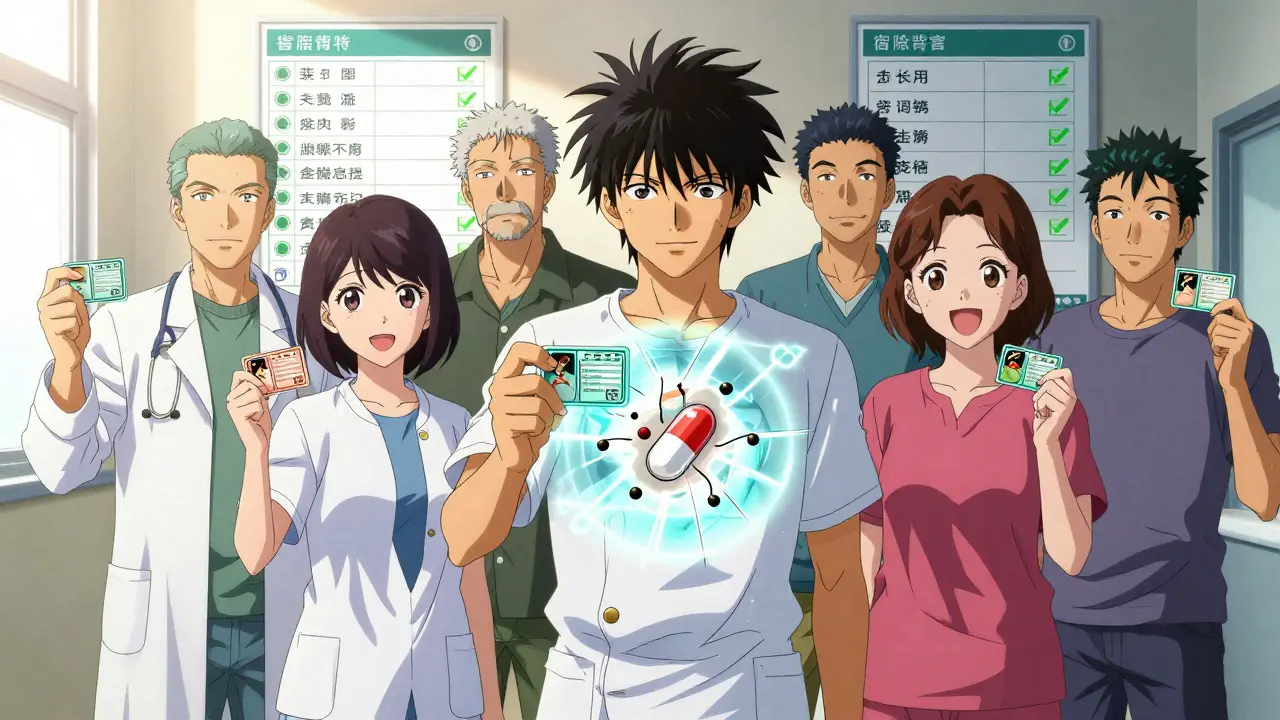
How to Protect Yourself
You can’t control every doctor’s chart. But you can control your own records. Here’s what to do:- Know your reaction: Was it a rash? Hives? Swelling? Trouble breathing? Write it down. A rash alone doesn’t mean allergy.
- Carry a wallet card: List the drug, the reaction, and the date. Include your allergist’s contact info if you’ve been tested.
- Ask for testing: If you were labeled allergic as a child, ask your doctor about skin testing. It’s quick, safe, and covered by most insurance.
- Update your records: If you’ve been cleared, ask your allergist to send a letter to your primary care provider and pharmacy. Follow up. Many systems still show old labels.
What’s Changing in 2026?
The push to fix this problem is gaining speed. The CDC’s 2022 guidelines now support skin testing even in outpatient clinics for low-risk patients. The "Choose Penicillin" campaign, launched in early 2023, is now active in over 50 hospitals across the U.S. and Australia. By 2027, half of all penicillin allergy evaluations are expected to happen in primary care offices-not just allergy clinics. Electronic health records are also being updated to require detailed allergy entries: drug name, reaction type, date, and whether it was confirmed. No more "penicillin allergy" with no details. That’s a big step.Final Thought: Don’t Let a Label Limit Your Care
If you’ve been told you’re allergic to a medication, don’t accept it as fate. Ask questions. Ask for testing. Ask for a second opinion. A simple skin test can open doors to safer, cheaper, more effective treatments. And if you’re the one prescribing or dispensing meds-check the allergy history. Don’t assume. Verify. Because sometimes, the safest drug is the one you’ve been told to avoid.Can I outgrow a penicillin allergy?
Yes, many people do. Studies show that about 80% of people who had a penicillin allergy as children lose their sensitivity after 10 years. Even if you had a reaction in your 20s, you might still be able to tolerate penicillin today. Skin testing or an oral challenge under medical supervision is the only way to know for sure.
Are all rashes from antibiotics allergic reactions?
No. Only about 10% of reported penicillin "allergies" are true IgE-mediated reactions. Many rashes are viral in origin-especially in kids with mononucleosis or other infections. A rash without swelling, breathing trouble, or hives is often just a side effect, not an allergy. Still, always report it to your doctor.
Is drug desensitization dangerous?
It’s safe when done correctly. Desensitization is performed in a hospital setting with emergency equipment and trained staff. The process takes several hours and involves gradually increasing doses. Severe reactions are rare-occurring in less than 5% of cases-and are managed immediately. It’s not for everyone, but for those who need penicillin and have no alternatives, it’s life-saving.
What if my pharmacy still lists my old allergy?
Pharmacies often pull allergy data from old electronic records. If you’ve been cleared by an allergist, get a letter or test report and give it to your pharmacy. Ask them to update your profile. Follow up in a week. If they refuse, speak to the pharmacist directly. You have the right to accurate medication records.
Can I take cephalosporins if I’m allergic to penicillin?
Yes, for most people. The risk of cross-reactivity between penicillin and third-generation cephalosporins like ceftriaxone is less than 1%. If you’ve never had a severe reaction (like anaphylaxis), you can likely take them safely. Still, your doctor should review your history and may start with a test dose if unsure.


Mike Dubes
March 2, 2026 at 05:16This is such an important topic. I had my penicillin label removed after testing at 28. Turns out, the rash I got at 7 was from a virus, not the antibiotic. Now I take amoxicillin like it's candy. Saved myself hundreds on prescriptions and avoided unnecessary side effects. Seriously, if you were labeled as a kid, get tested. It's not scary.
John Cyrus
March 2, 2026 at 13:27People dont understand how dangerous this is. You think its just a label but its a death sentence waiting to happen. Clindamycin wipes out your gut flora and leaves you wide open for C. diff. I saw a guy die from it last year. Doctors are lazy. They dont test. They just write it down and move on. This is systemic negligence.
John Smith
March 3, 2026 at 19:44The healthcare system is a circus and we're all clowns in the back row. Penicillin is the OG antibiotic and yet we're treating it like it's radioactive. We're throwing away the Swiss Army knife of medicine because someone got a rash during a cold. Meanwhile, people are getting pumped full of vancomycin like it's energy drink. Wake up. Test. Don't assume. And for god's sake stop letting pharmacies run the show.
Siri Elena
March 4, 2026 at 04:11How adorable that you think a skin prick test is enough. Have you considered that IgE tests are only one part of the immune puzzle? There are T-cell mediated reactions that don't show up on standard panels. You're just reinforcing a dangerous oversimplification. This isn't a BuzzFeed quiz.
Divya Mallick
March 5, 2026 at 12:35In India we don't have this luxury. We don't have allergists in every town. We don't have insurance to cover skin tests. We don't have time to wait for a referral. We just take what the pharmacist hands us. And yes, some of us get rashes. But we don't have the privilege of being 'correct' about our allergies. So don't lecture us about testing when we're trying to survive.
Pankaj Gupta
March 5, 2026 at 12:46The data is clear. Studies consistently show that over 90% of self-reported penicillin allergies are not true allergies. The CDC guidelines from 2022 explicitly recommend outpatient testing for low-risk patients. The cost savings and reduction in C. diff infections are statistically significant. This is not anecdotal. This is evidence-based medicine.
Alex Brad
March 7, 2026 at 02:49If you were told you're allergic as a kid, get tested. Period.
Stephen Vassilev
March 8, 2026 at 09:38I find it alarming that the article suggests skin testing is universally accessible and safe. What about the elderly? The immunocompromised? The rural populations without access to allergists? The article reads like a Silicon Valley tech bro's dream of healthcare optimization. Reality is messier. And more dangerous. We need structural reform, not individual fixes.
RacRac Rachel
March 8, 2026 at 22:00I got tested last year and it was LIFE CHANGING 😭 I had avoided penicillin since I was 5. Now I take amoxicillin for every cold. Saved $$$, no more weird side effects, and I feel like I finally have control over my body. 🙌 If you're reading this and you have a label from childhood-just do it. You won't regret it.
Renee Jackson
March 10, 2026 at 05:45Thank you for this comprehensive, evidence-based, and deeply compassionate overview. The clinical implications of mislabeled drug allergies are profound and underappreciated. I encourage all healthcare providers to integrate allergy re-evaluation into routine primary care visits. Your advocacy for accurate documentation and patient empowerment aligns with the highest standards of ethical medical practice. Please continue this vital work.