

When a generic drug hits the shelf, you might assume it’s just a cheaper copy of the brand-name version. But behind that simple label is a complex science ensuring it works the same way in your body. That’s where bioequivalence testing comes in. It’s not just about matching ingredients-it’s about proving the drug gets into your bloodstream at the same rate and amount as the original. And there are two main ways to prove it: in vivo and in vitro testing. Knowing when each is used helps explain why some generics are approved faster, cheaper, and with fewer people involved.
What In Vivo Bioequivalence Testing Actually Means
In vivo means "within the living." For bioequivalence, that means testing in real people. The gold standard is a crossover study with 24 healthy adults. Each person takes the generic drug in one period, then the brand-name version after a washout period-usually a week or more-so the first drug clears out. Blood samples are taken over 24 to 72 hours to measure how much of the drug shows up in plasma and how fast. The key numbers? The 90% confidence interval for the ratio of the generic to brand-name drug’s Cmax (peak concentration) and AUC (total exposure over time) must fall between 80% and 125%. For drugs with a narrow therapeutic index-like warfarin, levothyroxine, or cyclosporine-that range tightens to 90%-111.11%. If it doesn’t hit those numbers, the generic isn’t approved. These studies are expensive. A single in vivo bioequivalence trial can cost between $500,000 and $1 million. They take 3 to 6 months to complete, including screening, dosing, blood draws, and data analysis. They also require a certified clinical research unit, trained staff, and strict compliance with FDA’s 21 CFR Part 11 for electronic records. And yes, they involve human volunteers-ethical oversight is intense.What In Vitro Bioequivalence Testing Is and Why It Matters
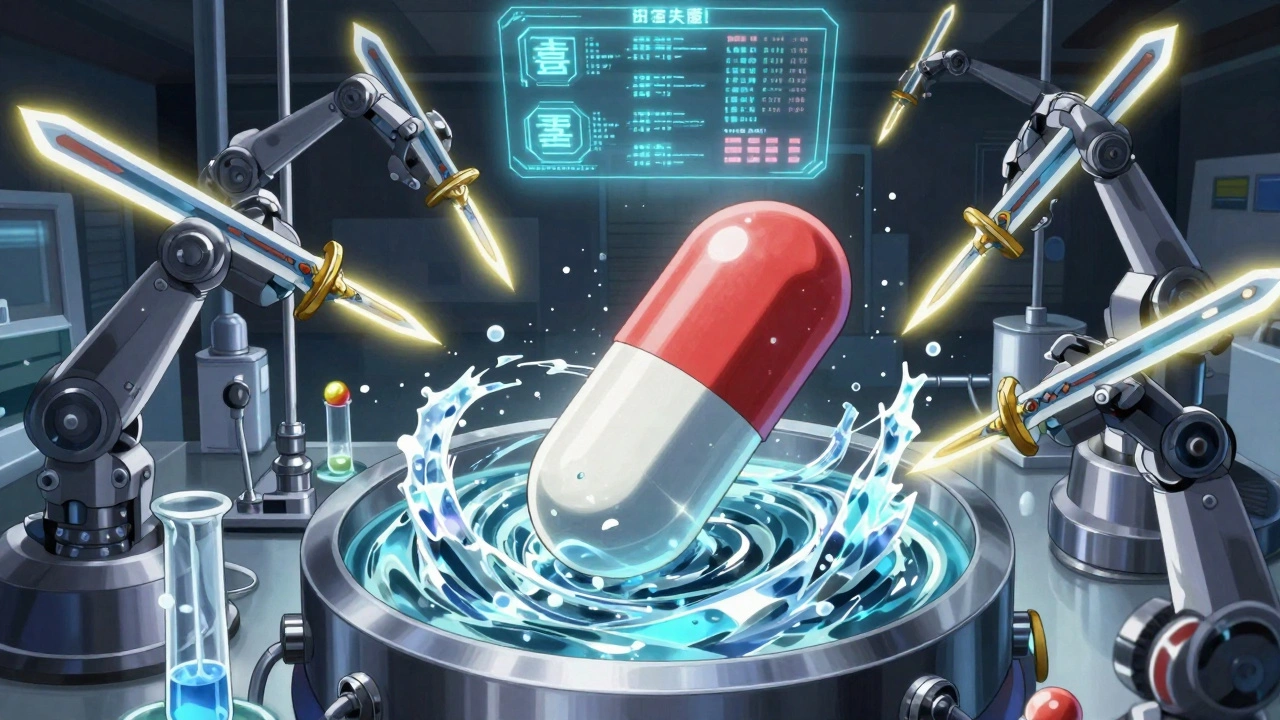
In vitro means "in glass." No humans involved. Just lab equipment, test tubes, and machines. The most common method is dissolution testing. You put the pill in a fluid that mimics stomach acid (pH 1.2), then intestinal fluid (pH 6.8), and measure how fast the drug dissolves. Other methods include particle size analysis, spray pattern tests for inhalers, and dose uniformity checks. These tests are precise. Dissolution results often have a coefficient of variation (CV) under 5%, compared to 10-20% in human studies. That’s because you control every variable: temperature, agitation, pH, media composition. No one’s stomach is the same, but a dissolution apparatus is. The FDA accepts in vitro testing alone for certain drugs. For example, if a drug is BCS Class I-highly soluble and highly permeable-it’s very likely to be absorbed the same way every time. In 2021, the FDA granted biowaivers (approval without human testing) for 78% of BCS Class I generic applications. That’s why you can buy generic ibuprofen or amoxicillin without ever needing a blood draw.When In Vitro Testing Is the Go-To Choice
In vitro testing isn’t just cheaper-it’s smarter for certain products. Here’s when regulators and manufacturers lean on it:- BCS Class I drugs: Soluble and absorbable. Dissolution predicts absorption. No need for blood tests.
- Inhalers and nasal sprays: Getting drug particles to the right spot in the lung or nose is hard to measure in blood. Instead, cascade impactors measure particle size and spray pattern. Teva’s generic budesonide nasal spray was approved in 2022 using only in vitro data.
- Topical creams and ointments: If the drug works locally on the skin, systemic absorption doesn’t matter. Dissolution and spreadability tests are enough.
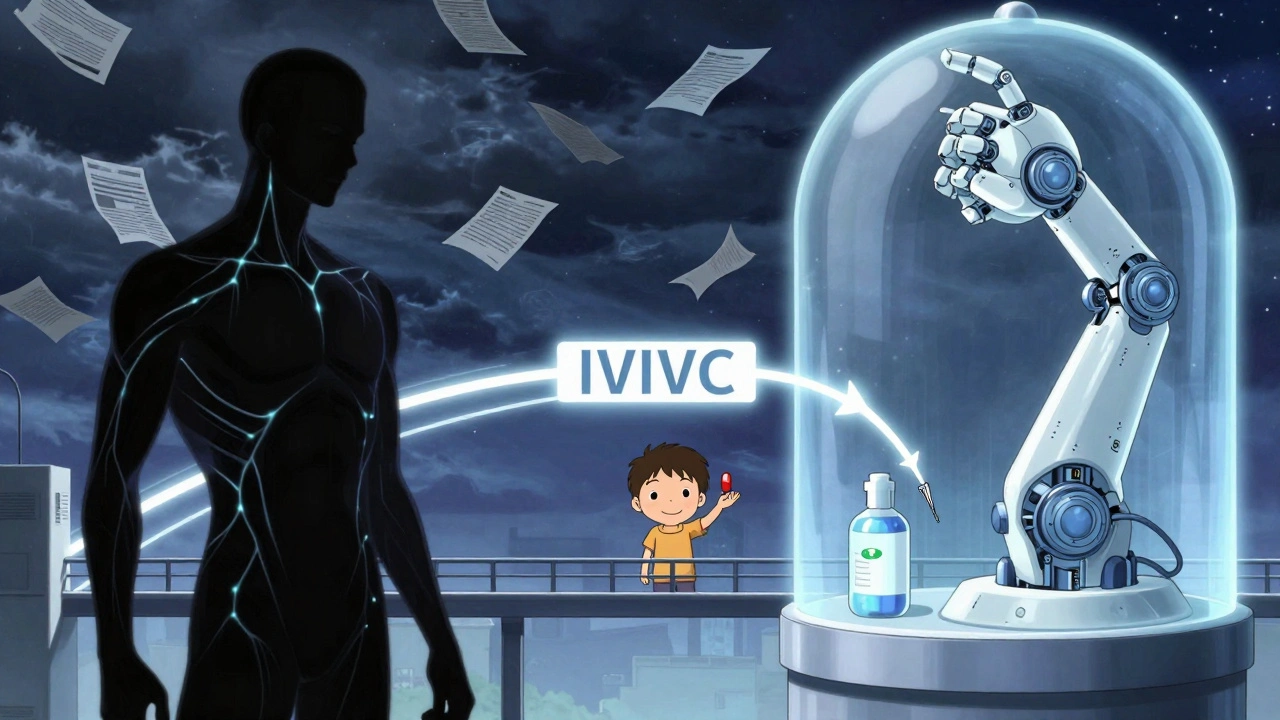
- When IVIVC is proven: If you’ve built a validated model that links dissolution rate to actual blood levels (called a Level A correlation, with r² > 0.95), you can skip human studies. This has been done successfully for modified-release theophylline and other complex formulations.
Why In Vivo Testing Still Can’t Be Replaced
Despite advances, in vivo testing remains essential in many cases:- Narrow therapeutic index drugs: Even tiny differences in absorption can cause toxicity or treatment failure. Blood levels are the only way to be sure.
- Drugs with food effects: Some drugs absorb better with food. You need fed and fasting studies to cover real-world use.
- Nonlinear pharmacokinetics: If doubling the dose doesn’t double the blood level, human data is required.
- Drugs absorbed in specific gut regions: If absorption only happens in the upper small intestine, and the drug’s release timing is off, dissolution tests alone can’t catch it.
- When in vitro data is inconsistent: A 2018 study found in vitro methods correctly predicted in vivo results for 92% of BCS Class I drugs-but only 65% of BCS Class III (low solubility, high permeability). That’s a big gap.
One real-world lesson: A topical antifungal cream was approved using in vitro data. But after market release, patients reported inconsistent results. A post-marketing in vivo study revealed a formulation difference that dissolution tests didn’t catch. The company had to spend $850,000 and delay expansion by 11 months.
The Cost and Time Difference Is Staggering
Let’s compare the numbers:| Factor | In Vivo Testing | In Vitro Testing |
|---|---|---|
| Typical Cost | $500,000-$1,000,000 | $50,000-$150,000 |
| Timeline | 3-6 months | 2-4 weeks (after method development) |
| Human Subjects | 18-24 volunteers | None |
| Regulatory Documentation | 300-500 pages | 50-100 pages |
| Equipment Cost | Minimal (clinical sites) | $85,000-$120,000 (USP Apparatus 4, cascade impactors) |
For a generic manufacturer, choosing in vitro can mean saving $1.2 million and 8 months-on the right product. But developing a validated dissolution method can take 3-6 months of its own. It’s not easy. It requires deep expertise in analytical chemistry, biopharmaceutics, and regulatory strategy.
Regulatory Trends: The Future Is In Vitro, But Not Yet
The FDA, EMA, and ICH are pushing hard to expand in vitro methods. In 2022, the EMA approved 214 biowaivers based on in vitro data-a 27% jump from 2020. The FDA’s 2023 draft guidance now allows in vitro testing alone for certain nasal sprays and inhalers. The goal? To make generic approvals faster, cheaper, and more ethical. But it’s not a full replacement. The FDA’s 2023 White Paper on Modernizing Bioequivalence says it clearly: "In vitro testing, supported by mechanistic modeling, will become the primary method for most generic drugs. In vivo studies will be reserved for high-risk cases." That means we’re moving toward a hybrid future. For simple, well-understood drugs, in vitro will dominate. For complex, high-risk, or poorly understood drugs, human testing stays.What This Means for You
If you’re a patient: You can trust that a generic approved via in vitro testing is just as safe and effective as the brand-when it’s the right kind of drug. The system is designed to catch differences before the drug reaches you. If you’re a pharmacist or prescriber: Understand that not all generics are tested the same way. A BCS Class I drug approved via dissolution testing is as reliable as one tested in humans. But for drugs like warfarin or levothyroxine, stick with the same brand unless you’re sure the generic was tested in vivo. If you’re in pharma: The pressure to reduce costs and speed up approvals is real. Investing in in vitro method development isn’t optional-it’s strategic. But don’t skip the in vivo step when the science says you need it. Cutting corners here risks patient safety and regulatory rejection.What’s Next for Bioequivalence Testing?
The next big shift is in silico-computer modeling. The FDA is now accepting physiologically based pharmacokinetic (PBPK) models to predict how a drug behaves in the body. Combine that with in vitro data, and you can simulate human absorption without ever touching a human subject. The Generic Drug User Fee Amendments (GDUFA) IV plan commits to issuing two new guidances on in vitro testing for complex products by December 2025. That’s not a distant promise-it’s a deadline. The future isn’t about choosing in vivo OR in vitro. It’s about using the right tool for the job. For most generics, in vitro is the smarter, faster, cheaper path. But when the stakes are high, nothing beats real human data.Is in vitro bioequivalence testing reliable?
Yes, for the right drugs. In vitro testing is highly reliable for BCS Class I drugs (high solubility, high permeability), inhalers, nasal sprays, and topical products where systemic absorption isn’t the goal. It’s also reliable when a validated in vitro-in vivo correlation (IVIVC) exists. But for drugs with narrow therapeutic indices, food effects, or nonlinear absorption, in vitro methods alone aren’t sufficient. The key is matching the method to the drug’s behavior.
Why do some generic drugs need human testing while others don’t?
It depends on how the drug behaves in the body. If it’s easily absorbed and doesn’t change based on food or stomach conditions (like ibuprofen), in vitro dissolution tests can predict how well it works. But if it’s absorbed only in certain parts of the gut, has a narrow safety window (like warfarin), or behaves unpredictably with food, human studies are needed to confirm it works the same in real people.
How long does in vitro bioequivalence testing take?
Once the dissolution or particle testing method is developed and validated, actual testing takes 2-4 weeks. But method development can take 3-12 months, depending on complexity. For simple oral tablets, it might be 3 months. For inhalers or complex formulations, it can take a year or more to satisfy regulatory requirements.
Can a drug be approved with only in vivo testing?
Yes, and it’s still the most common route. In 2020, about 95% of generic oral solid drug applications relied on in vivo testing. But for complex products like inhalers, topical creams, or nasal sprays, in vitro is often preferred-and sometimes required. The goal isn’t to eliminate human testing entirely, but to use it only when necessary.
What’s the biggest challenge with in vitro bioequivalence testing?
The biggest challenge is developing a method that truly reflects what happens in the human body. Dissolution in a beaker doesn’t capture stomach movement, enzyme activity, or gut pH changes. For drugs with absorption windows or food effects, in vitro methods can miss critical differences. That’s why regulators require strong validation, especially for drugs that aren’t BCS Class I.
Are in vitro methods cheaper than in vivo?
Absolutely. In vitro testing typically costs $50,000-$150,000, while in vivo studies run $500,000-$1 million. In vitro also takes weeks instead of months. But the upfront cost of developing a validated method can be high-$85,000-$120,000 for specialized equipment like USP Apparatus 4 or cascade impactors. Still, for the right product, the savings are massive.


Noah Raines
December 9, 2025 at 21:24Honestly, I didn't realize generics could be approved without human testing. 🤯 Guess that's why my ibuprofen costs $3 instead of $30. Science is wild.
Michael Robinson
December 11, 2025 at 09:21So it's not about the drug being the same... it's about how it moves through the body. That's actually kind of beautiful. We're not just copying pills. We're copying biology.
Andrea Petrov
December 12, 2025 at 23:44You know who benefits from this? Big Pharma. They push in vitro so they can approve generics faster... then raise prices on the brand version anyway. It's all a game. They don't care if you live or die as long as the profit margin stays high.
Suzanne Johnston
December 13, 2025 at 16:50I appreciate how this breaks down the nuance. It's not about choosing one method over the other-it's about matching the tool to the problem. Like using a scalpel instead of a sledgehammer. Smart regulation isn't about cutting corners. It's about cutting smart.
Steve Sullivan
December 15, 2025 at 05:00in vitro = cheaper, faster, less humans. in vivo = more accurate but $$$ and time. but here's the thing... if your drug is a bcs class i, why even bother with blood draws? it's like testing if water is wet. 🤷♂️
George Taylor
December 16, 2025 at 10:56I'm sorry, but... this is terrifying. You're telling me that a drug that's supposed to keep me alive-like warfarin-is approved based on... a beaker? A machine? What if the pH in my stomach is different? What if I ate a greasy burger? You're gambling with people's lives. And you call this science?
ian septian
December 16, 2025 at 22:38Stick to the science. Use in vitro when it works. Use in vivo when it doesn't. Simple.
Arun Kumar Raut
December 17, 2025 at 14:39In India, we see this every day. Many generics are cheap because they skip testing. But here, the system tries to balance cost and safety. That’s good. Not perfect, but better than nothing.
Carina M
December 17, 2025 at 21:54I must express my profound concern regarding the normalization of in vitro bioequivalence as a primary regulatory pathway. The human organism is not a beaker. To substitute physiological complexity with mechanistic proxies is not innovation-it is epistemological arrogance. We are trading the sanctity of clinical validation for corporate convenience.
Ajit Kumar Singh
December 18, 2025 at 09:20In US they talk about cost and time but in India we have companies who just copy and sell without even doing in vitro or in vivo and people still take it and survive so maybe the whole system is overengineered? Just saying
Lisa Whitesel
December 19, 2025 at 00:27The FDA's 2023 white paper says in vitro will be primary but in vivo for high risk. That's a lie. They approved 78% of BCS I drugs with no human data. But when a patient dies from a generic warfarin? That's on the patient. Not the regulator. Not the manufacturer. Just bad luck.