

Every year, millions of people take prescription drugs without issue. But for some, a medication can cause a serious or unexpected reaction - a rash, heart palpitations, liver damage, or worse. When that happens, reporting it to the FDA isn’t just a good idea - it’s a critical part of keeping drugs safe for everyone. The system that handles these reports is called MedWatch, and it’s the backbone of drug safety monitoring in the U.S. If you’ve ever wondered how to report a bad reaction to a medication, here’s exactly how to do it - whether you’re a patient, a caregiver, or a healthcare provider.
What Counts as an Adverse Event?
An adverse event is any negative or unexpected reaction that happens after taking a medication. It doesn’t have to be proven to be caused by the drug. Even if you’re not sure, it still counts. Examples include:- Severe allergic reactions like anaphylaxis
- Unexplained liver enzyme spikes
- Depression or suicidal thoughts after starting a new antidepressant
- Kidney failure linked to a painkiller
- Birth defects in babies whose mothers took medication during pregnancy
- A drug that simply doesn’t work when it’s supposed to
The FDA defines an adverse event broadly: if it’s unusual, unexpected, or harmful, and happened after taking the medicine, it belongs in the system. Even if you think it’s "probably not the drug," report it anyway. The more data, the better the chances of spotting a real pattern.
Who Can Report?
Anyone can report. You don’t need to be a doctor. You don’t need to be a pharmacist. You don’t even need to be the person who took the drug. If you’re a parent, spouse, or caregiver who saw a reaction, you can report it. Healthcare professionals - doctors, nurses, pharmacists - are encouraged to report, and in some cases, legally required to.Pharmaceutical companies are required by law to report serious and unexpected reactions within 15 days. But here’s the truth: most of the early warnings come from patients and providers on the front lines. The FDA’s FAERS database - which holds over 30 million reports - gets about 400,000 reports each year directly from consumers. That’s not a small number. That’s the voice of real people catching problems before they become epidemics.
How to Report as a Patient or Caregiver
Reporting as a consumer is simple - but doing it right matters. Here’s how:- Get the basics ready: Write down the name of the medication (brand and generic if you know it), dosage, how long you took it, and when you started noticing the problem.
- Describe the event clearly: What happened? When did it start? Did it get worse? Did it go away after stopping the drug? Include symptoms, how they affected daily life, and any hospital visits or tests done.
- Include medical details: Age, gender, and any other conditions you have. If you took other medications or supplements at the same time, list them.
- Use the MedWatch form: Go to www.fda.gov/medwatch and click "Report a Problem." Fill out Form 3500 online. You can save your progress and return later - the system keeps your draft for three days.
- Attach evidence: If you have a photo of the pill bottle, the prescription label, or even a lab result, upload it. Reports with photos are more likely to be reviewed thoroughly.
You don’t need to be a medical expert. But the more specific you are, the more useful your report becomes. For example, instead of writing "I felt weird," say: "Three days after starting metoprolol, I had chest tightness and dizziness when walking up stairs. My heart rate dropped to 48 BPM. I stopped the drug and symptoms cleared in 48 hours."
Reports like that are gold. They help FDA analysts spot trends. One report might not change anything. But 50 similar reports? That’s a signal.
How Healthcare Professionals Report
Doctors, nurses, and pharmacists have a slightly different path - but the goal is the same: provide clinical context.- Use the same MedWatch Form 3500, but add details from medical records: lab values, imaging results, ECG findings, and diagnostic codes.
- Include the timeline: When was the drug started? When did the event occur? When was it stopped? This helps determine if there’s a clear link.
- Mark whether the event was "serious" - meaning it led to hospitalization, disability, birth defect, or death.
- Don’t wait for a patient to ask. If you see a reaction that seems unusual, report it. Studies show that reports from providers are 73% more likely to contain enough detail to trigger a safety review.
Some drugs require mandatory reporting. For example, under the National Childhood Vaccine Injury Act, providers must report serious reactions to vaccines. For other medications, it’s voluntary - but strongly encouraged. The FDA doesn’t punish you for reporting too much. They punish you for not reporting enough.

What Happens After You Submit?
You won’t get a call right away. The FDA doesn’t have staff to respond to every report individually. But your report doesn’t disappear.Once submitted, it goes into the FAERS database - a massive, searchable system used by FDA scientists to find patterns. They use algorithms to compare how often a certain side effect shows up with a specific drug versus others. If a pattern emerges - say, 100 reports of a rare liver injury linked to a new diabetes drug - that’s a safety signal. That signal can lead to:
- Updated warning labels
- Black box warnings (the strongest type)
- Restrictions on who can take the drug
- Requirements for additional studies
- In rare cases, withdrawal from the market
For example, in 2018, reports of aortic aneurysms linked to fluoroquinolone antibiotics led to new black box warnings. That came from dozens - maybe hundreds - of individual reports that eventually added up.
Some people report and get a follow-up email asking for more info. That’s a good sign. It means your report was flagged as potentially important.
Common Problems and How to Avoid Them
Not all reports are created equal. Many get tossed because they’re too vague. Here’s what goes wrong - and how to fix it:- "I felt bad after taking the pill." → Too vague. Specify: "Headache, nausea, and blurred vision started 2 hours after taking the first dose of lisinopril."
- "The drug didn’t work." → Not enough. Was it supposed to lower blood pressure? Did it fail to reduce pain? Add context.
- Missing dates. → Always include: drug start date, event onset date, and end date.
- Forgetting other meds. → List everything: supplements, OTC drugs, even herbal teas. A reaction might be from a mix, not the main drug.
- Not uploading labels. → Photos of the bottle help confirm the exact product. Generic versions can have different inactive ingredients that cause reactions.
Also, don’t wait. The sooner you report, the better. The FDA’s average lag between report submission and signal detection is over 200 days. That’s why early reports matter.
Why Reporting Matters - Even If You Think It’s "Just One Case"
Most people think: "It’s just me. It probably won’t happen to anyone else." But here’s the reality: experts estimate that only 1% to 10% of adverse events are ever reported. That means for every one report you see in the system, there could be 10 to 99 that never made it in.That’s why your report counts. If you’re the 5th person to report a rare skin reaction to a new cholesterol drug, you might be the one who triggers a warning before hundreds more get hurt. The FDA doesn’t have a crystal ball. They rely on people like you to see what’s happening in the real world - outside of clinical trials.
And it works. In 2022, the FDA identified a link between a popular migraine drug and heart valve damage after just 18 reports. That led to a safety alert within weeks. That’s what happens when people speak up.
What’s New in 2026?
The FDA is upgrading its system. In 2023, they launched FAERS Public Dashboard 2.0 - a free tool anyone can use to search reports by drug, symptom, or date. You can see what others have reported. You can even spot trends yourself.By 2024, AI tools are being trained to scan thousands of reports automatically, looking for hidden patterns. And in 2025, the FDA plans to integrate data from electronic health records - meaning doctors’ notes might automatically feed into the system, reducing the burden on patients and providers.
But until then, the system still runs on human reports. You’re still the eyes and ears of drug safety.
What If You’re Outside the U.S.?
If you’re in Canada, Australia, or Europe and had a reaction to a U.S.-approved drug, you can still report to the FDA. Just make sure the report is in English. The FDA accepts international reports - and they’re just as valuable. In fact, global data helps them spot issues that might be missed in one country.Many countries have their own reporting systems (like Health Canada’s MedEffect or Australia’s TGA). Report there too. The more places you report, the better the chances of action.
Final Thoughts
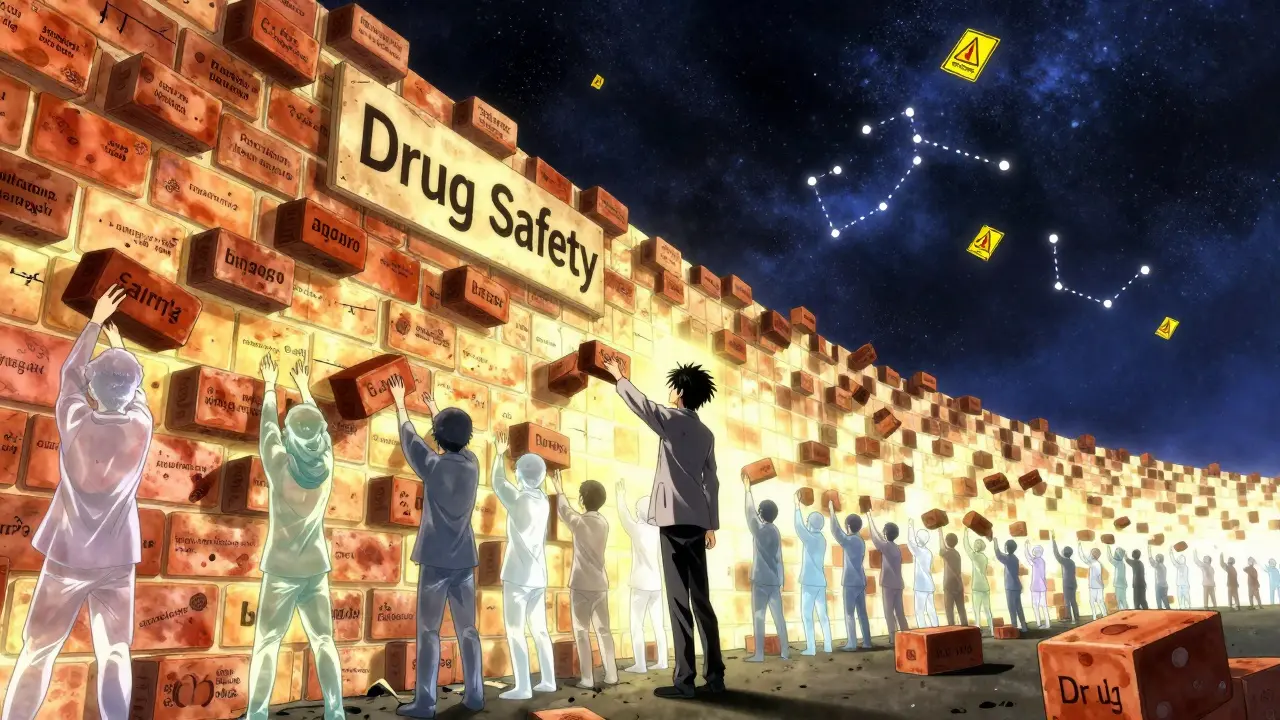
Reporting an adverse event isn’t complicated. It doesn’t require medical training. It doesn’t require a lawyer. It just requires you to care enough to speak up.Think of it this way: every report you submit is a brick in the wall that protects the next person. Maybe it’s your neighbor. Your child. Your parent. Someone you’ll never meet.
So next time you or someone you know has a bad reaction to a medication - don’t just shrug it off. Don’t assume it’s "normal." Don’t wait for someone else to report it.
Go to www.fda.gov/medwatch. Fill out the form. Click submit.
Your report matters.



Pat Dean
January 18, 2026 at 18:42This whole system is a joke. The FDA doesn't care about your 'report' - they're busy taking bribes from Big Pharma. I reported my daughter's seizure after her ADHD med, and got a generic auto-reply that said 'Thanks for your feedback.' Like I'm writing a Yelp review. Wake up, people. This isn't safety - it's PR theater.
Jay Clarke
January 19, 2026 at 23:41Look, I get it - you want to feel like a hero for clicking a button. But let’s be real: 99% of these reports are from people who don’t even know what ‘hepatotoxicity’ means. I’m a pharmacist. I’ve seen the data. Most of what gets flagged is noise. The FDA’s AI filters out 87% of it before a human even glances. So yeah, report if it makes you feel better. But don’t pretend you’re saving lives.
Selina Warren
January 21, 2026 at 15:07STOP WAITING FOR SOMEONE ELSE TO DO IT. Your silence is complicity. That pill you think is ‘fine’? It might be killing someone’s kid right now. I reported my husband’s heart arrhythmia after his new blood pressure med - and guess what? Three weeks later, the FDA issued a warning. It wasn’t luck. It was US. You. Me. The people who refuse to look away. If you’re reading this and you’ve ever had a weird reaction - GO REPORT IT. NOW. Not tomorrow. Not ‘when you have time.’ NOW. The system only works if we make it work.
Robert Davis
January 22, 2026 at 02:28Interesting. I read the MedWatch form. It’s 17 pages long if you print it. And the online version auto-saves every 12 seconds - which means if you close the tab by accident, you lose everything. Also, the dropdown for ‘age’ doesn’t go above 99. I’m 102. I had to type it in. And the system flagged my report as ‘incomplete’ because I didn’t upload a photo of the pill bottle. I don’t keep pill bottles. I throw them out. So now my report’s in limbo. Thanks, FDA.
Eric Gebeke
January 22, 2026 at 22:41You people are so naive. You think reporting helps? The FDA doesn’t act on patient reports - they act on lawsuits. I worked at a drug company for 12 years. We got 200 reports of liver damage from Drug X. We buried them. We didn’t report them to the FDA until the first class-action lawsuit landed. Then - boom - we ‘voluntarily’ submitted them. Your report? It’s a footnote. Until someone sues.
Ryan Otto
January 23, 2026 at 08:12Let us not overlook the geopolitical implications. The FDA’s FAERS database is a tool of American hegemony. By accepting international reports, they extract pharmacovigilance data from sovereign nations while offering no reciprocal transparency. Canada’s MedEffect is far more rigorous. Meanwhile, the U.S. system remains opaque, underfunded, and politically compromised. Your ‘bricks in the wall’ are made of sand. This is not safety - it’s surveillance capitalism dressed in public health rhetoric.
rachel bellet
January 24, 2026 at 12:39Per the FDA’s 2023 Safety Reporting Metrics, 68% of consumer-submitted reports lack sufficient clinical detail to be actionable. The absence of ICD-10 codes, temporal alignment of drug administration with symptom onset, and concomitant medication exposure renders over two-thirds of these submissions statistically irrelevant. Furthermore, the current FAERS architecture lacks signal-to-noise ratio optimization, resulting in a high false-positive rate for rare adverse events. Until standardized structured reporting protocols are implemented - via EHR integration or mandatory structured data fields - consumer reporting remains a symbolic gesture with minimal clinical utility.
Joni O
January 25, 2026 at 05:39i just wanted to say… thank you. i reported my mom’s rash after her new chemo med last year. i was scared i’d mess it up. i didn’t know what to write. but i did it. and a few months later, the dr called to say they’d seen 3 other reports like hers - and they changed the warning label. i didn’t think it mattered… but it did. so if you’re hesitating? just type it out. even if it’s messy. even if you’re not sure. you’re not alone. we’ve got this.
Andrew Short
January 26, 2026 at 08:36Of course you should report. But let’s be honest - most people who report are the same ones who believe in 5G mind control and that vaccines cause autism. The FDA doesn’t need more noise. They need better data. And guess what? They’re not getting it from people who write ‘I felt weird.’ They’re getting it from labs, hospitals, and real clinicians. Stop pretending your anecdote is science.
christian Espinola
January 27, 2026 at 03:28Just report it. Seriously. Five minutes. Do it.