
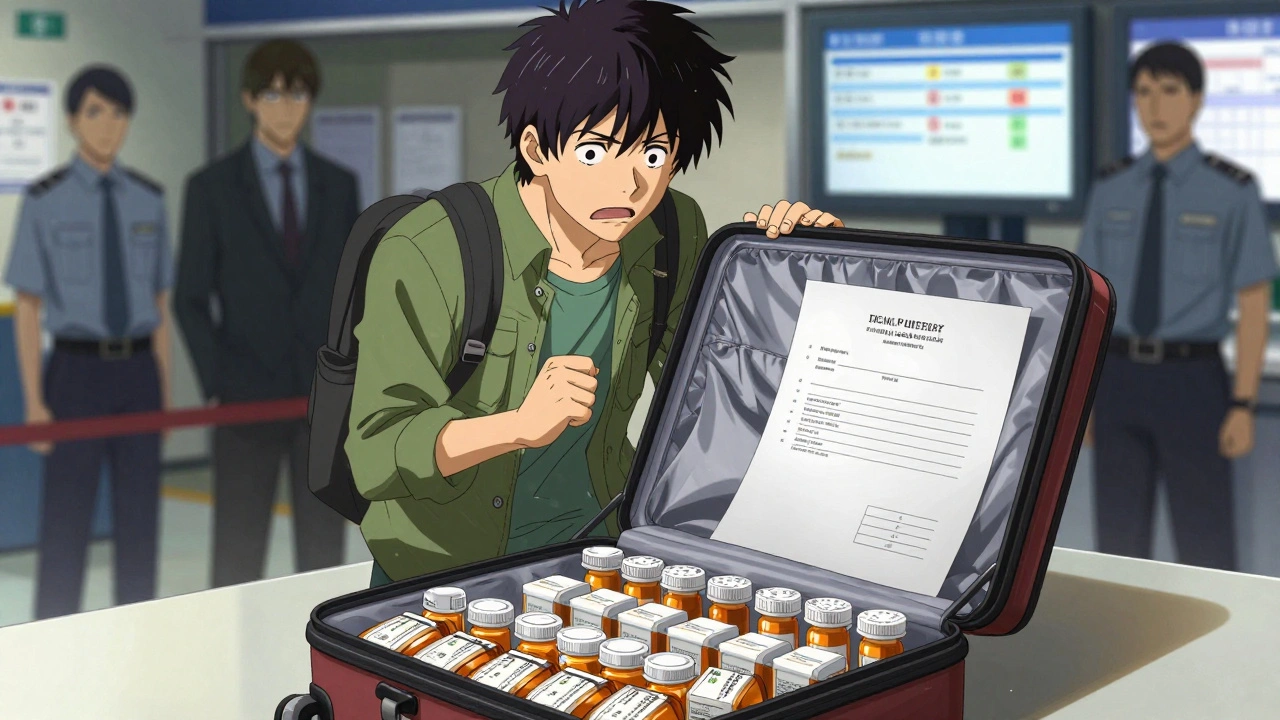
Learn the 2025 rules for bringing prescription drugs across international borders - including what’s banned, what paperwork you need, and how to avoid getting stopped at customs.
Bringing Meds Abroad: What You Need to Know Before You Travel
When you're bringing meds abroad, the act of carrying prescription or over-the-counter drugs across international borders. Also known as traveling with prescription drugs, it’s not just about packing your pills—it’s about understanding laws that vary wildly from country to country. You might think if it’s legal at home, it’s fine everywhere. That’s a dangerous assumption. In some places, common painkillers like tramadol or even ADHD meds like Adderall are classified as controlled substances. Get caught with them without the right paperwork, and you could face fines, detention, or worse.
One of the biggest mistakes travelers make is assuming a doctor’s note is enough. It’s not. Many countries require a medication customs rules, official documentation issued by the destination country’s health authority or embassy before you even land. Others demand prescriptions in English with the generic drug name clearly listed. And don’t forget about quantity limits. Carrying a 90-day supply might be fine in Canada, but in Japan, you’re legally allowed only a 30-day supply for personal use. If you’re taking insulin, thyroid meds, or mental health drugs, you need to plan ahead—some countries require pre-approval, and others ban entire classes of drugs outright.
It’s not just about legal risks. You also need to think about practical stuff: Will your meds survive the heat in Dubai? Should you pack them in checked luggage or carry-on? (Answer: always carry-on.) Are you carrying them in original bottles with your name on them? If not, you’re asking for trouble. Even if you’re just visiting for a week, you need to treat your meds like a passport. Keep copies of prescriptions, get a letter from your doctor explaining why you need them, and check the official government travel site for your destination—not a blog or forum. Some countries even require you to declare meds on arrival forms. Skip that step, and you could be flagged.
The good news? Most people who plan ahead have zero issues. But the ones who don’t? They end up stuck in foreign jails or forced to buy expensive, unregulated replacements. This collection of articles covers everything from how to handle controlled substances overseas to what to do if your meds get confiscated. You’ll find real advice on navigating customs, dealing with language barriers, and understanding how different countries classify the same drug. Whether you’re traveling for work, family, or a vacation, knowing these rules isn’t optional—it’s your safety net.