
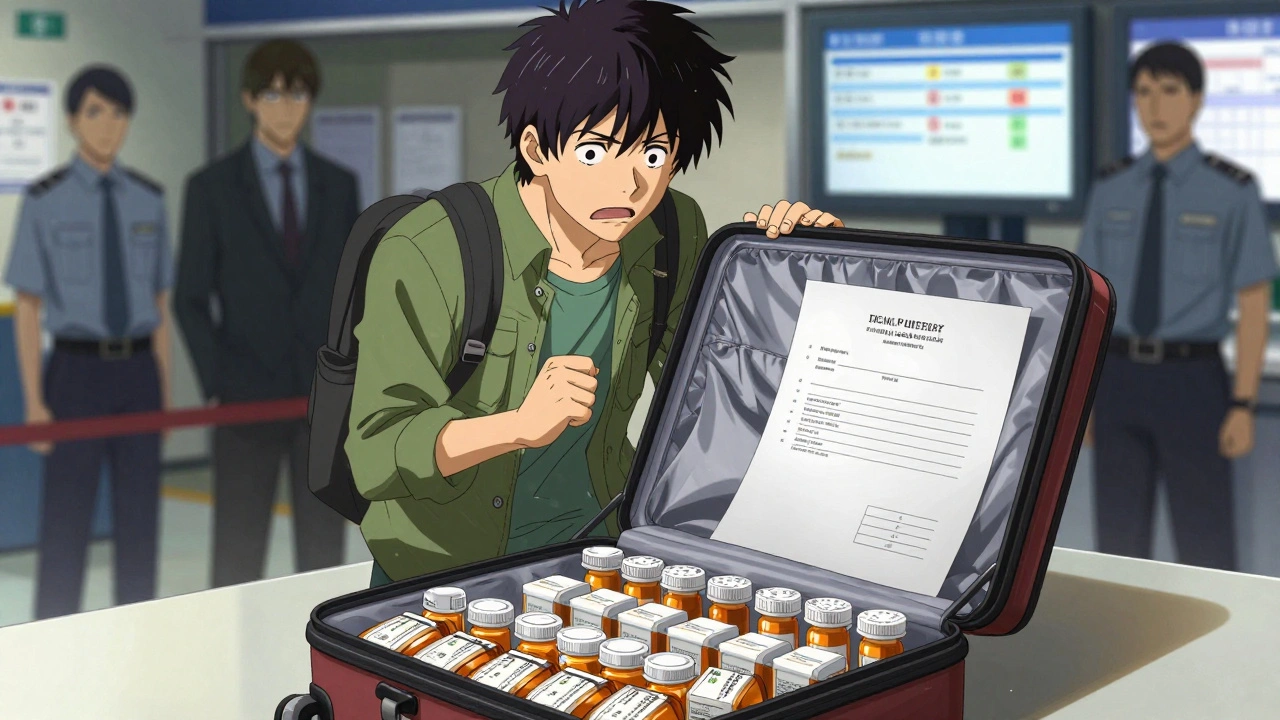
What You Can and Can’t Bring Across Borders with Your Medications
If you’ve ever had your pills taken at customs, you know how stressful it is. You didn’t mean to break any rules - you just needed your medication to get through the trip. But in 2025, the rules around bringing medicine across borders have gotten tighter, faster, and more confusing. What was once a simple matter of packing your prescription bottle is now a minefield of paperwork, language requirements, and sudden policy shifts. The good news? If you know what to do, you can avoid the hassle. The bad news? Ignorance won’t protect you anymore.
The U.S. Food and Drug Administration (FDA) still allows you to bring in up to a 90-day supply of prescription medication for personal use. But that’s just the start. If your medicine is a controlled substance - like oxycodone, Adderall, Xanax, or even some sleep aids - you’re in a whole different zone. The Drug Enforcement Administration (DEA) now requires prior approval for these. In 2024, they approved 78.3% of the 12,457 requests they received. That sounds high, but it means nearly one in five people were turned away. And that’s before you even land in your destination country.
Why Your Prescription Isn’t Enough Anymore
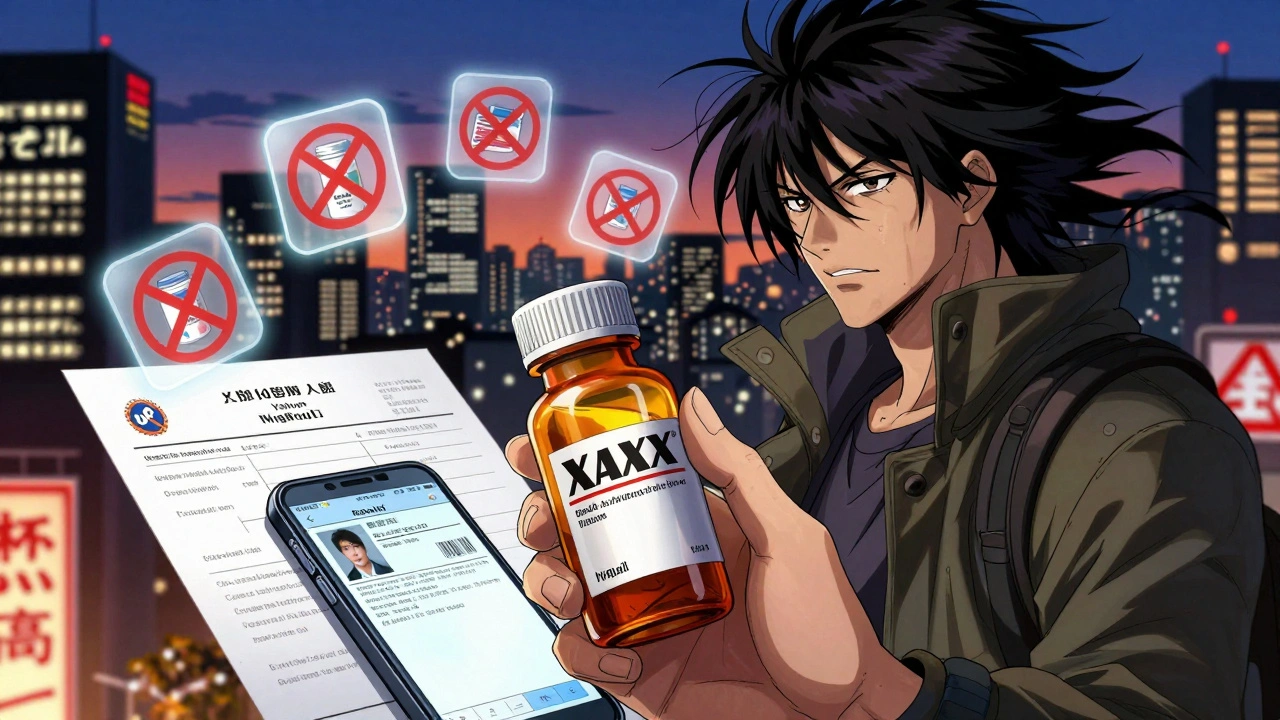
A prescription bottle with your name on it used to be all you needed. Not anymore. Many countries don’t recognize U.S. prescriptions, even if they’re in English. Some require translations. Others demand a letter from your doctor on official letterhead explaining why you need the medication. And some - especially in Asia and the Middle East - ban certain drugs entirely, even if they’re legal at home.
For example, benzodiazepines like diazepam (Valium) and alprazolam (Xanax) are restricted in 87% of countries, according to the International Narcotics Control Board (INCB). In Japan, even a small bottle of Adderall can get you arrested. In Thailand, travelers have reported having their Xanax confiscated despite having a valid U.S. prescription. The same thing happens in Singapore, Malaysia, and the UAE. These countries treat stimulants and sedatives like illegal drugs, no matter the medical reason.
The solution? Don’t rely on your pharmacy label alone. Carry a doctor’s letter that includes:
- Your full name and date of birth
- The generic name of each medication (not just the brand)
- The dosage and frequency
- The medical condition being treated
- Your doctor’s name, license number, and contact info
- The letterhead and signature
Many travelers skip this step - and regret it. A 2025 survey by PlanetDrugsDirect found that 63% of people who had delays or seizures at customs didn’t have a doctor’s letter. Those who did? Their issues dropped by 62%.
Original Bottles Are Non-Negotiable
Never transfer pills into a pill organizer unless you’re carrying the original bottle too. Customs officers in Australia, Canada, the UK, and the U.S. routinely check for proper labeling. If your pills are in a Ziploc bag with no label, they’ll assume they’re illegal. Even if you have a prescription, the lack of original packaging raises red flags.
The Transportation Security Administration (TSA) allows all FDA-approved medications - pills, liquids, creams - in any quantity on U.S. flights. But liquids over 3.4 ounces (100ml) will go through extra screening. That’s fine. What’s not fine? Trying to sneak through with unlabeled pills. Always keep your meds in their original containers with the pharmacy label intact. If you must repack for convenience, bring the original bottle along with you.
Pro tip: Take a photo of your prescription label and save it on your phone. If the bottle gets damaged or lost, you can show the photo to customs. It’s not official, but it helps.
The $800 Rule Is Gone - And It’s Making Things Worse
Before August 29, 2025, you could ship your meds home from abroad without paying duties if the value was under $800. That rule is gone. Now, every single package of medication entering the U.S. - no matter how small - is subject to customs review, taxes, and possible delays.
That change, part of Executive Order 14177, was meant to stop fake drugs from slipping in. But it’s hurting real patients. PlanetDrugsDirect analyzed 8,452 shipments between July and September 2025 and found average processing times jumped from 2.1 days to 5.7 days. Some took over two weeks. And you’re now paying an average of $28.75 extra per shipment in fees.
If you’re traveling and need to refill a prescription overseas, don’t assume you can just mail it home. Check with your insurance first. Some U.S. insurers now cover international refills if you’re traveling long-term. Others don’t. Either way, plan ahead.
Country-Specific Rules You Can’t Ignore
There’s no global standard. Every country has its own list of banned or restricted drugs. The INCB maintains a public database of 147 commonly restricted medications - and it’s updated monthly. Here are a few critical examples:
- Japan: All stimulants (Adderall, Ritalin), benzodiazepines (Xanax, Valium), and codeine require prior approval from the Japanese Ministry of Health. Apply at least 30 days before arrival.
- United Arab Emirates: Even over-the-counter cough syrups with codeine or dextromethorphan are illegal. Many travelers get arrested for bringing NyQuil.
- Australia: You must declare all medications on arrival. Controlled substances require a permit from the Therapeutic Goods Administration (TGA).
- Thailand: Possession of any benzodiazepine without a Thai prescription is a criminal offense. You can be jailed.
- Canada: More lenient than the U.S. - you can bring up to 180 days’ supply. But you still need the original label and a doctor’s note if it’s controlled.
For countries where English isn’t spoken, get your doctor’s letter translated. Many embassies offer free or low-cost translation services. Don’t rely on Google Translate - customs officers won’t accept it.
Medical Devices and Insulin? Here’s What to Do
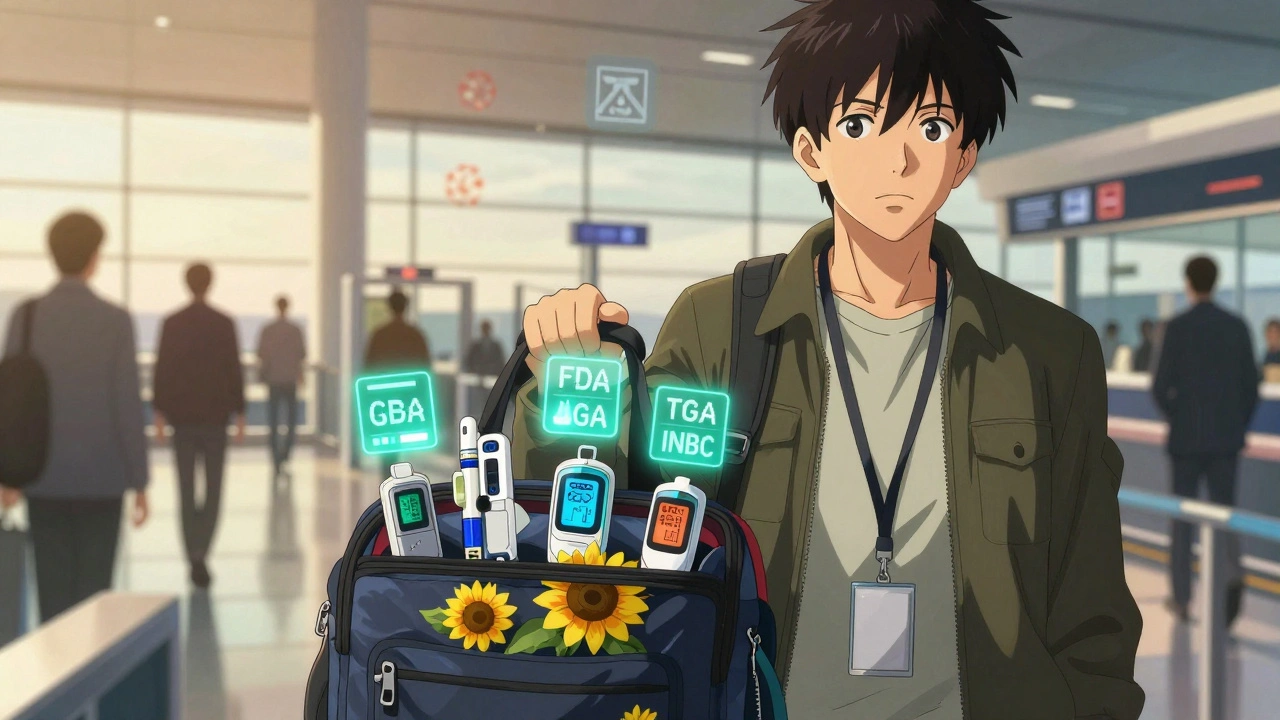
If you use an insulin pump, continuous glucose monitor (CGM), or other medical device, you’re not alone. The CDC logged over 1,800 cases in 2024 involving insulin and diabetes meds. TSA requires you to notify them 72 hours before your flight if you’re traveling with medical devices. Call the TSA Cares helpline at 1-855-787-2227. They’ll assign you a specialist to help you through security.
Wear a sunflower lanyard - now available at 148 U.S. airports. It signals to security you have a medical condition and need assistance. You don’t have to say a word. Just hold it up. Many travelers with diabetes, epilepsy, or chronic pain use it to avoid lengthy searches.
Never check your insulin or devices in your luggage. Always carry them with you. Temperature changes in cargo holds can ruin insulin. And if your bag gets lost, you’re stranded.
What Happens If You Get Caught?
Most of the time, if you’re traveling with medication for personal use and you have documentation, you’ll get a warning. But not always.
At major airports like Bangkok, Dubai, or Singapore, customs officers have the right to detain you for possession of unauthorized drugs - even if it’s a single pill. In some countries, this means jail time. In others, you’ll be fined, deported, or banned from re-entry.
There’s no guarantee you’ll be treated fairly. One Reddit user shared how they were detained in Thailand for three hours with their Xanax, even though they had a doctor’s letter and the original bottle. The officer said, “We don’t care what your doctor says.” That’s not rare.
Best practice? If you’re unsure, leave it behind. Ask your doctor if there’s an alternative medication that’s legal in your destination. Many clinics abroad can prescribe equivalents if you arrive with a letter.
How to Prepare: A 6-Week Checklist
Start planning early. Waiting until the day before your trip is asking for trouble. Here’s your 6-week checklist:
- Week 6: Check the INCB’s country-specific medication rules for every destination on your trip. Use their Table 2.6.1 - it’s free and updated monthly.
- Week 5: Contact your doctor. Ask for a letter on letterhead with all the details listed above.
- Week 4: If your destination requires translation, get your letter translated by a certified service or your embassy. Save a digital copy.
- Week 3: Call the embassy or consulate of each country you’re visiting. Ask: “What are the rules for bringing [medication name] into your country?” Get their official response in writing.
- Week 2: Pack your meds in original bottles. Keep them in your carry-on. Bring extra copies of your prescription and doctor’s letter.
- Week 1: If you’re flying out of the U.S., call TSA Cares. If you’re carrying devices, request assistance. Print your confirmation email.
What’s Changing in 2026 - And Why It Matters
The FDA’s Drug Supply Chain Security Act (DSCSA) rolls out fully on January 1, 2026. That means every prescription drug imported into the U.S. - even from pharmacies abroad - must have a digital tracking code. This is meant to block fake drugs. But it also means pharmacies overseas will need to upgrade their systems. If you’re buying meds abroad, make sure they’re from a licensed pharmacy with a verified website (look for VIPPS or similar seals).
Meanwhile, the European Union is planning to cap personal medication imports at 60 days starting in mid-2026. That’s stricter than the U.S. But they’ll also standardize the paperwork. If you’re traveling across multiple EU countries, that might make things easier - eventually.
The biggest threat? Mental health medications. In 2024, 47% of all medication-related traveler issues involved antidepressants, anti-anxiety drugs, or stimulants. Countries are cracking down hard. If you’re on SSRIs, SNRIs, or ADHD meds, assume you’ll need extra documentation - and plan accordingly.
Final Advice: When in Doubt, Leave It Out
You can get most medications abroad - if you plan ahead. Pharmacies in Europe, Japan, and Australia often carry U.S.-brand drugs under different names. Bring your doctor’s letter, and they’ll help you find a match. Some travel clinics even offer pre-trip medication consultations.
Don’t risk your safety or freedom for a few extra pills. The world is watching. The rules are clearer than ever. And if you do your homework, you’ll never have to explain why you had Xanax in your bag again.

Rashmin Patel
December 2, 2025 at 21:14I’ve been traveling with my SSRIs for years, and this post? Lifesaver. 🙌 Last year in Singapore, they confiscated my Lexapro because the bottle didn’t have a Thai label. I cried in the airport. Now I carry a doctor’s letter in English AND translated, plus a screenshot of the INCB’s page for Singapore. I also keep a printed copy of my pharmacy’s website showing the drug’s generic name. It’s extra work, but so is getting detained. Pro tip: Always carry twice the dose you think you’ll need. Things get lost. People get delayed. Don’t be the person begging for pills at 3 a.m. in Bangkok.
sagar bhute
December 4, 2025 at 13:59This is why America thinks it owns the world. Your prescription doesn’t mean jack in other countries. You think your Xanax is sacred? It’s a controlled substance everywhere outside the US. Stop acting like you’re entitled to bring your mental crutch into every country. If you can’t handle not having your drugs, maybe you shouldn’t travel.
Cindy Lopez
December 5, 2025 at 11:35Minor grammatical note: ‘You didn’t mean to break any rules - you just needed your medication to get through the trip.’ Should be ‘You didn’t mean to break any rules; you just needed…’ - a semicolon, not a dash. Also, ‘FDA allows you to bring in up to a 90-day supply’ - ‘a’ is redundant. But otherwise, this is one of the most thorough, accurate pieces on this topic I’ve seen. Thank you.
shalini vaishnav
December 5, 2025 at 20:30Let me be clear: India doesn’t need your American prescriptions. We have our own systems, our own laws, and our own dignity. You think you’re entitled to bring Adderall into Mumbai because you’re ‘sick’? In India, we treat mental health with yoga, Ayurveda, and discipline - not chemical crutches. If your body can’t handle a flight without Xanax, maybe you’re not fit to travel. Stop importing your Western pharmaceutical dependency into sovereign nations. Your doctor’s letter? It’s just a piece of paper. Our laws are not negotiable.
vinoth kumar
December 7, 2025 at 01:51Just got back from Bali - brought my ADHD meds and had zero issues. Had the doctor’s letter, original bottles, and a printed copy of the INCB page for Indonesia. Also, I emailed the Indonesian embassy 3 weeks out and got a reply within 48 hours. They said: ‘As long as it’s for personal use and you have documentation, you’re fine.’ I didn’t even get questioned at customs. My advice? Don’t panic. Do the prep. Most countries just want to make sure you’re not trafficking. Be transparent, be organized, and you’ll be golden.
bobby chandra
December 8, 2025 at 15:58Y’all are overcomplicating this. It’s not rocket science. If your meds are controlled, you’re not some innocent tourist - you’re carrying a Class II substance. Treat it like you’re smuggling a gun. Don’t wing it. Don’t hope. Don’t rely on ‘it’s just a few pills.’ You’re not in Kansas anymore. Get the letter. Get the translations. Get the embassy confirmation. Print it. Laminate it. Tape it to your forehead if you have to. This isn’t about freedom - it’s about survival. And if you’re too lazy to do the work? Stay home. Your anxiety isn’t more important than a country’s sovereignty.
Archie singh
December 9, 2025 at 02:40The $800 rule was a loophole for drug smugglers. They're not stopping fake meds - they're stopping Americans who think they can order pills from Mexico like Amazon Prime. I've seen people ship 500 pills of generic Adderall from India. That's not personal use. That's a black market. The system's broken. But your solution? More paperwork. More bureaucracy. More waiting. Meanwhile, real patients suffer. This isn't security. It's punishment.
Gene Linetsky
December 9, 2025 at 15:20Let me tell you what they’re not telling you. The FDA and DEA aren’t tightening rules because of fake drugs. They’re doing it because Big Pharma wants to control the global supply chain. The ‘$800 rule’ was killed so you’d have to buy from US pharmacies at $1000 a bottle instead of $20 from Canada. The ‘doctor’s letter’ requirement? It’s a trap. Most doctors won’t write it. And if they do, they’ll charge $200. This is all a profit scheme. The ‘INCB database’? It’s a smokescreen. You think they care about your anxiety? They care about your wallet. And your insulin pump? They’re tracking it. You think that lanyard is for help? It’s for surveillance.
Kidar Saleh
December 11, 2025 at 04:56As someone who’s lived in 12 countries, I’ve had meds confiscated in Dubai, questioned in Tokyo, and cleared with a smile in Lisbon. The key? Respect. Don’t treat customs like an enemy. Be polite. Be prepared. Show them the letter. Smile. Say, ‘I understand your rules - here’s what I have.’ In Japan, I handed them a handwritten note in Japanese (courtesy of my language student niece) and they gave me a tea and a nod. It’s not about bureaucracy - it’s about human connection. Your medication isn’t a weapon. It’s your lifeline. Treat the system like a partner, not a prison guard.
Chloe Madison
December 12, 2025 at 05:48This is exactly the kind of resource every traveler with chronic illness needs - and it’s beautifully structured. I’m a type 1 diabetic who travels monthly, and I’ve followed every step on this checklist for years. I’ve had TSA agents cry when they saw my sunflower lanyard and my insulin pump. I’ve had customs officers in Germany thank me for having my documentation in order. This isn’t about fear. It’s about dignity. You deserve to be safe. You deserve to be heard. And you deserve to have your medicine. Thank you for writing this. Please share it with every clinic, every support group, every airline.
Vincent Soldja
December 12, 2025 at 15:53The 90-day limit is outdated. Many chronic conditions require more. Why not 180? Why not 365? Arbitrary caps serve no medical purpose. The system is illogical.
Rashi Taliyan
December 13, 2025 at 15:22I just got back from Vietnam. I brought my antidepressants in the original bottle with my name on it, plus the doctor’s letter. I didn’t say a word at customs. The officer looked at it, nodded, and waved me through. I didn’t even have to translate it. I think if you’re calm, respectful, and prepared, most officers just want to do their job - not ruin your life. Don’t panic. Don’t overthink. Just be ready.
Kara Bysterbusch
December 14, 2025 at 14:06One thing this article doesn’t mention: the emotional toll. I’ve had panic attacks before flights because I was terrified my meds would be taken. I’ve cried in hotel rooms because I ran out and couldn’t refill. I’ve Googled ‘can I buy Zoloft in Thailand’ at 2 a.m. This isn’t just logistics - it’s trauma. We’re not just carrying pills. We’re carrying our mental stability. And when a country treats that like contraband? It feels like they’re saying we’re not worthy of care. This post is vital. But we also need global mental health advocacy - not just travel tips.
James Kerr
December 16, 2025 at 00:47Just brought my insulin to Mexico City last month. Original bottles, doctor’s note, photo of prescription on phone. No issues. They didn’t even ask. Just smiled and said, 'Buen viaje.' Sometimes the system works if you’re cool about it. Don’t stress. You got this. 🤝
Ignacio Pacheco
December 17, 2025 at 13:25So let me get this straight - if I bring my ADHD meds to Japan, I need a 30-day lead time, a letter, a translation, and I still might get arrested? But if I bring a suitcase full of counterfeit Rolex watches? That’s just ‘tourist shopping.’ Huh. Makes sense.