
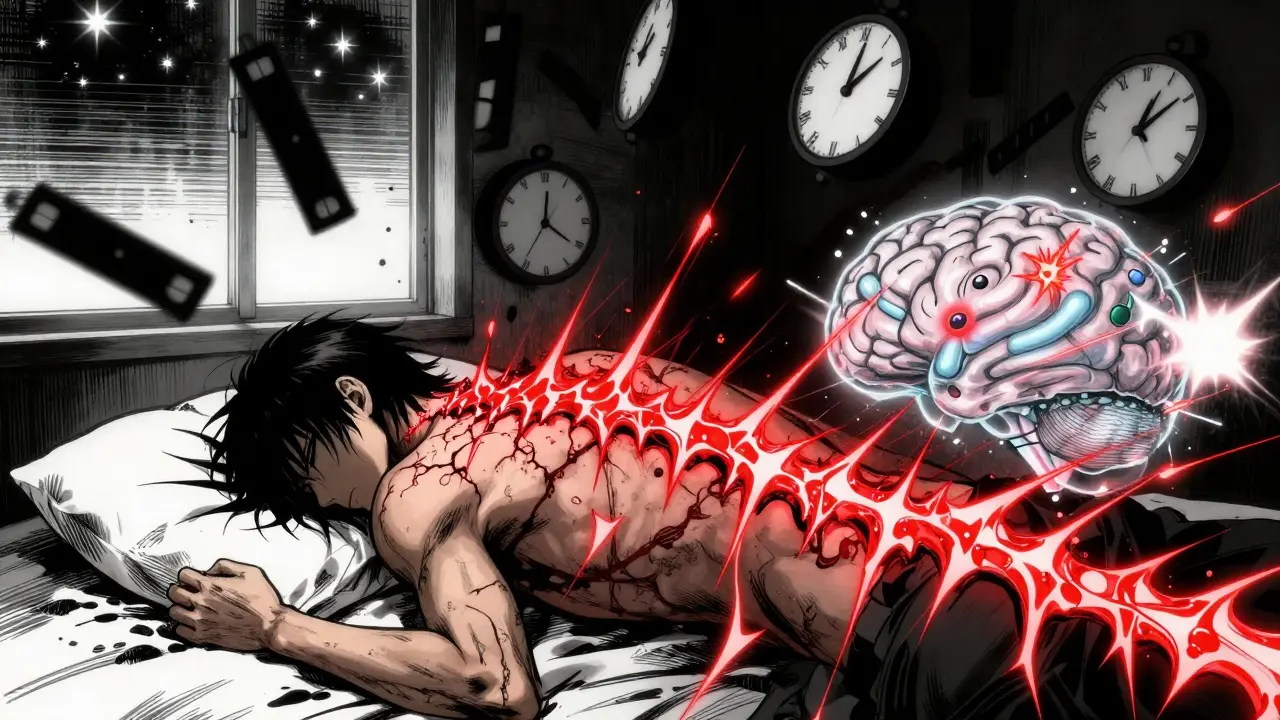
Imagine this: you lie in bed, back aching, muscles tight, mind racing. You count sheep. You turn over. You try deep breathing. But sleep doesn’t come. By 3 a.m., the pain feels worse-not just from the injury or condition, but because you’re exhausted. The next day, you’re more sensitive to every movement, every touch. You feel like your body is on fire. And when night comes again, the same cycle starts over. This isn’t just bad luck. It’s a well-documented loop: pain disrupts sleep, and poor sleep makes pain worse. And breaking it isn’t about taking more pills-it’s about changing how your body and brain interact.
The Cycle No One Talks About
For years, doctors treated chronic pain and insomnia as separate problems. If you had arthritis and couldn’t sleep, they’d give you painkillers and maybe a sleeping pill. But that rarely worked long-term. The real issue? They were treating symptoms, not the connection. Research now shows this isn’t a coincidence-it’s a biological loop. When you don’t sleep enough, your brain’s natural painkillers slow down. Endogenous opioids, your body’s own morphine-like chemicals, drop by 30-40%. At the same time, inflammation spikes. Pro-inflammatory cytokines like IL-6 rise by 25-35%. Your nervous system gets hypersensitive. What used to feel like a 4 out of 10 pain now hits an 8. And when pain keeps you awake, your sleep quality plummets. Studies show chronic pain patients lose 45-60 minutes of sleep every night, wake up 62 minutes total per night (compared to 35 in healthy people), and take 25-30 minutes longer just to fall asleep. The numbers are stark: 50-80% of people with chronic pain also have clinical insomnia. That’s more than 1.5 billion people worldwide. And here’s the kicker-people with poor sleep but no current pain are 56% more likely to develop chronic pain within five years. Sleep isn’t just a victim of pain. It’s a trigger.What’s Happening in Your Brain
It’s not just “being tired.” There’s a real, measurable shift in brain function. A 2023 study from Massachusetts General Hospital and Harvard Medical School used brain imaging to show how sleep loss hijacks your pain control system. Think of it like a thermostat that’s gone haywire. Normally, your brain regulates pain signals-turning them down when needed. But after even one night of bad sleep, that thermostat gets stuck on high. Pain signals flood through unchecked. Dopamine, the brain chemical tied to motivation and reward, also drops by 20-30% after sleep deprivation. That’s why people with chronic pain and insomnia often feel hopeless, unmotivated, and emotionally drained. It’s not “just depression.” It’s neurochemistry. And then there are the kappa opioid receptors-tiny switches in your brain that, when targeted, can improve sleep quality by 40-60% in animal models. Researchers at the University of Arizona are now testing drugs that tweak these receptors in humans. Early results show pain scores dropping by 25-30% and sleep quality improving significantly. But you don’t need a new drug to start breaking the cycle. The most effective tool already exists-and it doesn’t come in a pill bottle.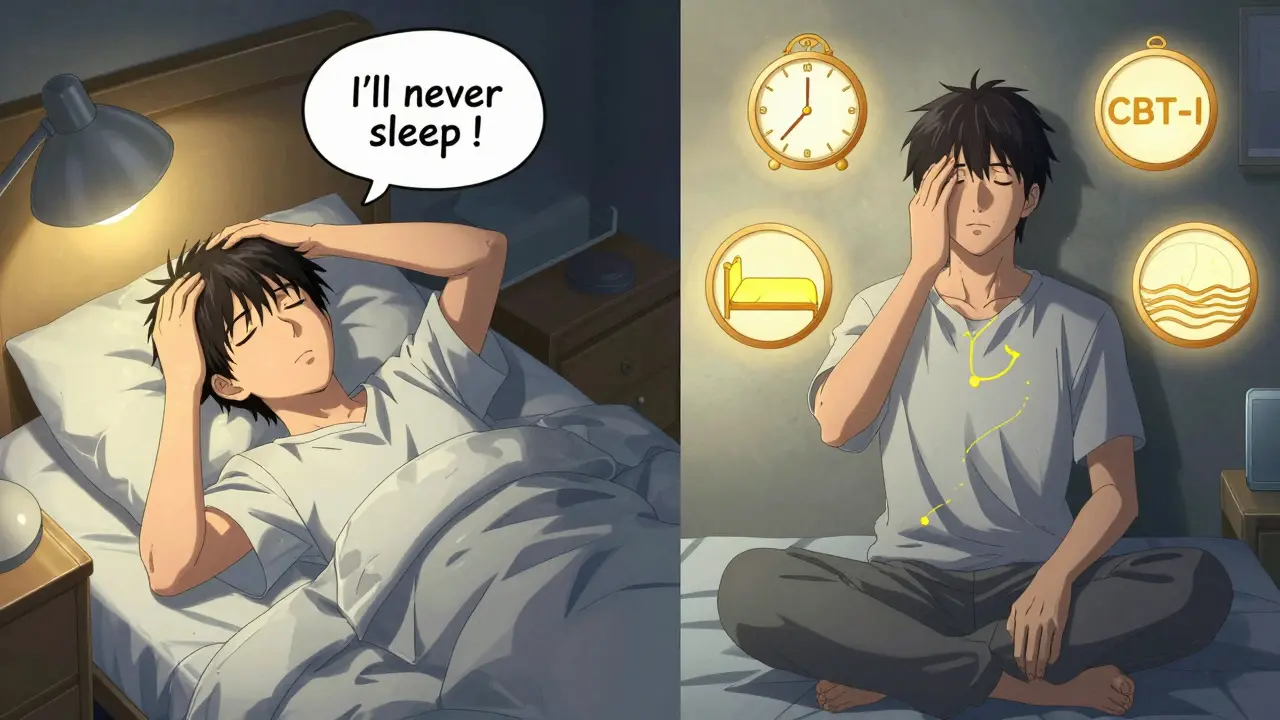
Cognitive Behavioral Therapy for Insomnia (CBT-I) Works
If you’ve tried melatonin, valerian root, or over-the-counter sleep aids, you’re not alone. A 2023 Arthritis Foundation survey found 72% of chronic pain patients tried OTC sleep aids. But only 35% got lasting relief. And 42% said next-day grogginess made their pain worse. Enter CBT-I. It’s not hypnosis or meditation. It’s a structured, evidence-based program that rewires how you think about sleep. And it works-even with chronic pain. Multiple studies show CBT-I reduces insomnia symptoms in 65-75% of chronic pain patients. More importantly, it cuts pain intensity by 30-40% after just 8-10 weekly sessions. That’s not a side effect. That’s the goal. One patient, Sarah M., shared on Reddit: “After four nights of bad sleep from back pain, my fibromyalgia flared from a 4/10 to an 8/10. It took two weeks to recover-even after I slept better.” She didn’t change her meds. She changed her sleep habits. CBT-I includes:- Stimulus control: Only use your bed for sleep and sex. No scrolling, no watching TV in bed.
- Sleep restriction: Limit time in bed to match actual sleep time. This builds sleep pressure and resets your rhythm.
- Cognitive restructuring: Challenge thoughts like “I’ll never sleep again” or “If I don’t sleep, my pain will explode.”
- Relaxation training: Techniques tailored to reduce muscle tension and nervous system arousal.
Why Most Clinics Fail
You’d think hospitals and pain clinics would be on top of this. But most aren’t. In 2018, only 35% of pain clinics screened for insomnia. By 2023, that jumped to 92%. Progress? Yes. But implementation? Still patchy. The biggest problem? Fragmented care. Pain specialists focus on pain. Sleep specialists focus on sleep. No one connects the dots. Patients get stuck bouncing between doctors. One prescribes gabapentin. Another recommends melatonin. No one asks: “How many hours did you actually sleep last week?” Trustpilot reviews of pain clinics show a clear pattern. Patients who got integrated care-where sleep and pain were treated together-gave 4.7/5 satisfaction ratings. Those who only got pain treatment? 3.2/5. The complaints? “They never asked about my sleep.” “I was told to sleep better, but no one helped me.” The fix? Ask your doctor for a sleep assessment. Use the Insomnia Severity Index (ISI). A score above 15 means you have clinical insomnia. Keep a sleep diary for two weeks: track when you get in bed, when you fall asleep, how many times you wake up, and how rested you feel. Bring it to your next appointment. It’s the first step toward real change.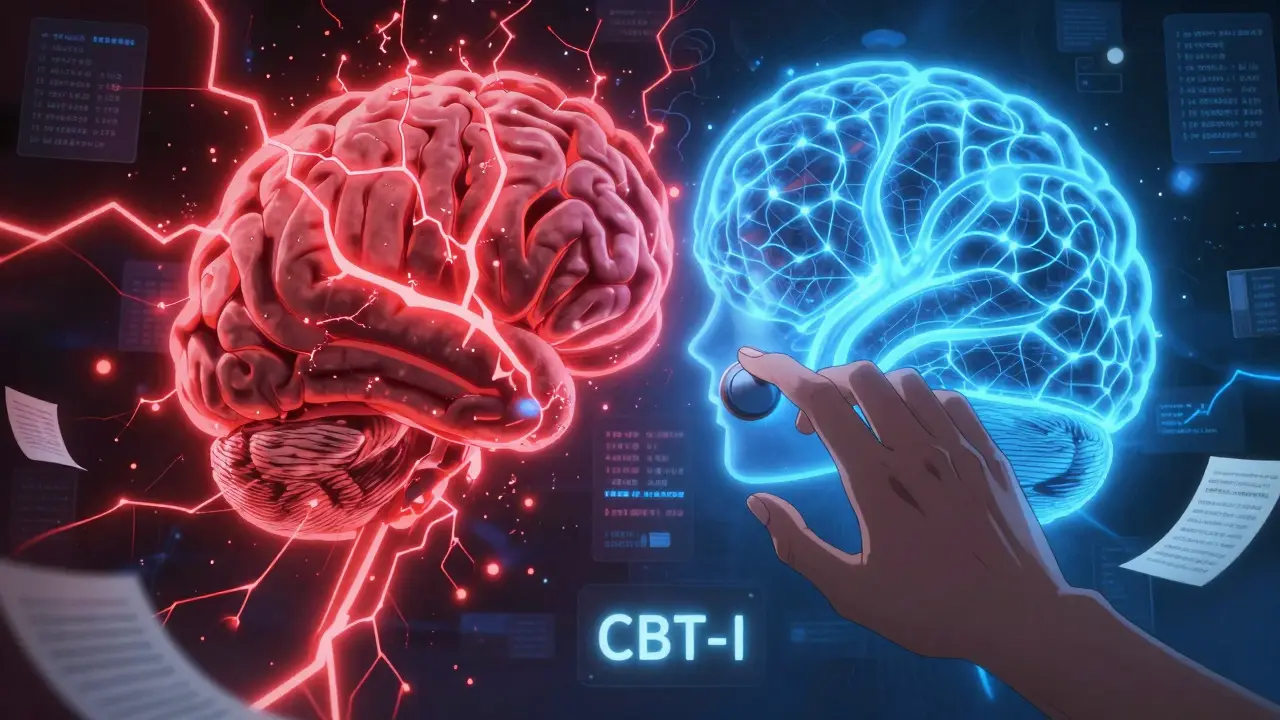
What You Can Do Today
You don’t need to wait for a specialist. Start here:- Get out of bed if you’re not sleeping. If you’ve been lying there for 20 minutes, get up. Go to another room. Read under dim light. Don’t check your phone. Come back only when sleepy.
- Keep a consistent wake time. Even on weekends. Your body thrives on rhythm. A 1-hour shift in wake time can throw off your entire sleep cycle.
- Move during the day. Gentle movement-walking, stretching, tai chi-improves sleep quality and reduces pain sensitivity. Aim for 30 minutes, most days.
- Limit caffeine after noon. Even decaf can trigger sensitivity in chronic pain patients. Cut it out completely for a week and notice the difference.
- Try a digital CBT-I program. Apps like Sleepio have 60-65% success rates in chronic pain patients. It’s not perfect, but it’s a start.
The Future Is Integrated
The science is clear. The market is growing-projected to hit $5.7 billion by 2028. Researchers are now testing gene-based treatments that predict who will respond best to sleep-pain therapy. A team at MGH identified 12 gene variants linked to both pain sensitivity and sleep regulation, with 68% accuracy in predicting treatment outcomes. But you don’t need to wait for gene therapy. You need to stop treating pain and sleep as separate problems. They’re two sides of the same coin. Fix one, and the other improves. Fix neither, and both spiral. If you’re living with chronic pain and poor sleep, you’re not broken. Your body is stuck in a loop. And loops can be broken. Not with magic pills. Not with luck. But with consistent, smart, science-backed habits. Start small. Track your sleep. Talk to your doctor. Ask for CBT-I. You’ve already done the hardest part-you recognized the problem. Now, it’s time to change it.Can painkillers help me sleep better?
Not reliably-and often they make it worse. Many pain medications, especially opioids and NSAIDs, disrupt sleep architecture. Opioids reduce deep sleep and REM sleep, which are critical for pain recovery. NSAIDs can interfere with melatonin production. Over-the-counter sleep aids like diphenhydramine cause next-day grogginess, which increases pain sensitivity. Medications may offer short-term relief, but they don’t break the cycle. They just mask symptoms.
Is insomnia the same as trouble sleeping?
No. Trouble sleeping happens to everyone now and then. Insomnia is a clinical disorder defined by three things: difficulty falling or staying asleep, happening at least three nights a week for three months or more, and causing daytime problems like fatigue, mood changes, or worsened pain. If you’ve had sleep issues for over three months and it’s affecting your pain levels, you likely have insomnia disorder-not just occasional poor sleep.
Does CBT-I work for severe chronic pain like fibromyalgia or neuropathy?
Yes. In fact, CBT-I is especially effective for these conditions. Fibromyalgia and neuropathic pain patients often have heightened nervous system sensitivity, which CBT-I directly addresses. Studies show CBT-I improves sleep efficiency by 12-15% and reduces pain intensity by 30-40% in fibromyalgia patients. The key is working with a therapist who understands chronic pain-someone who won’t dismiss your pain as “all in your head” but will help you build sleep habits that reduce your body’s overall stress response.
Can I do CBT-I on my own?
You can start, but full success usually requires guidance. Digital platforms like Sleepio or CBT-i Coach offer structured programs that work for many. But chronic pain adds complexity-physical discomfort, anxiety about pain, fear of movement. A trained therapist can adjust techniques for your body’s limits, help you pace activities, and prevent setbacks. If you’re serious about breaking the cycle, combine self-guided tools with at least 2-3 sessions with a professional.
How long until I see results from CBT-I?
Most people notice better sleep within 2-3 weeks. Pain reduction usually follows 4-6 weeks in. It’s not instant. CBT-I rewires habits, not just symptoms. Stick with it. Even if your pain doesn’t drop right away, better sleep means your brain regains control over pain signals. Many patients report feeling more in control, less anxious, and more able to manage daily tasks-even before the pain fully lessens.
Are there any supplements that help with both pain and sleep?
Magnesium and vitamin D show modest benefits in some studies, but they’re not magic. Magnesium may help with muscle relaxation and slightly improve sleep quality, especially if you’re deficient. Vitamin D deficiency is linked to higher pain sensitivity and poor sleep, so correcting low levels helps. But supplements alone won’t break the cycle. They’re support tools, not solutions. The real work is behavioral: sleep hygiene, CBT-I, movement, and stress reduction.

Sandy Wells
March 22, 2026 at 06:46So let me get this straight-you’re telling me the solution to chronic pain and insomnia is to stop using my bed for scrolling and watching Netflix? Wow. Groundbreaking. I’ve been sleeping on the couch for years because my back screams if I lie down. Guess I should’ve just turned off my phone. Duh.
Also, CBT-I? Sounds like a fancy acronym for ‘try harder.’ I’ve tried harder. It didn’t work. And no, I’m not gonna start a sleep diary. I’m tired, not a lab rat.
Bryan Woody
March 23, 2026 at 08:54Oh sweet mercy you people are still out here treating sleep like it’s a Netflix queue you can binge later. Pain doesn’t care if you had a rough day. Your nervous system isn’t a thermostat you can reset with a pep talk. CBT-I works? Sure. If you’re a well-rested, financially stable, trauma-free human with a yoga mat and a $200 weighted blanket. But for the rest of us? The ones who work two jobs, have kids screaming at 3 a.m., and whose back pain flares when we sneeze? You’re asking us to ‘get out of bed’ like we’re not already exhausted from existing.
Meanwhile, the real solution is a system that doesn’t force people to choose between rent and a sleep specialist. But hey, at least we’ve got apps now. Progress.
Also, I’ve tried all five steps. None worked. The only thing that helped? A damn morphine patch. But sure, let’s keep pretending willpower is medicine.
Desiree LaPointe
March 23, 2026 at 22:47Oh, so now we’re romanticizing cognitive behavioral therapy like it’s some mystical elixir brewed in a Harvard basement? CBT-I. How quaint. As if the real issue isn’t that our healthcare system is a dumpster fire and we’re expected to fix our neurochemistry with sticky notes and sleep hygiene checklists.
Let’s not forget: 72% of chronic pain patients tried OTC sleep aids. And 42% said it made their pain worse. So we’re supposed to believe that a 10-week program built on ‘only use your bed for sex and sleep’ is going to outperform a $12 melatonin gummy? Please. This reads like a corporate wellness brochure written by someone who’s never felt a nerve firing like a live wire under their skin.
And don’t get me started on the ‘move more’ advice. Try walking when your joints feel like ground glass. I’d love to hear your thoughts on tai chi while your fibromyalgia is screaming.
Jackie Tucker
March 25, 2026 at 15:40It’s fascinating how we’ve turned something as primal as sleep into a productivity hack. Like if you just stop thinking about pain, your brain will magically reboot. But no, the real issue is capitalism. The system that makes you work 60-hour weeks, then tells you to ‘practice mindfulness’ when your body’s falling apart. CBT-I? Sure, if you have the time, the money, the emotional bandwidth, and a therapist who doesn’t charge $250/hour.
Meanwhile, the real science? The opioid receptors, the cytokines, the dopamine crash-all of it is being ignored because Big Pharma doesn’t profit from sleep hygiene. They profit from pills. And now we’re supposed to be grateful for a 30% pain reduction from a program that doesn’t even exist in 90% of rural clinics?
It’s not that I don’t believe in CBT-I. It’s that I believe in a world where people don’t have to fight for basic neurochemical balance just to survive.
shannon kozee
March 26, 2026 at 20:29Just wanted to say the sleep diary tip is gold. Did it for two weeks. Turned out I was in bed 8 hours but sleeping 4.5. That shift alone made my pain feel more manageable. No magic, just data.
Paul Cuccurullo
March 28, 2026 at 01:18There’s something deeply human about this cycle-pain keeping you awake, exhaustion making the pain worse, and then the guilt that you’re not ‘trying hard enough’ to fix it. I’ve been there. For years. I thought I was broken. Turns out, I was just stuck in a biological loop no one taught me how to escape.
CBT-I didn’t erase my pain. But it gave me back my nights. And that? That’s everything. You’re not alone. And you don’t have to suffer in silence. Reach out. Ask for help. Your body deserves more than a pill and a prayer.
Timothy Olcott
March 28, 2026 at 20:30OMG YES THIS IS SO TRUE 😭 I was using gabapentin and melatonin and still waking up 12x a night. Then I tried the 20-min rule and got outta bed. I read a book under a red lamp. I didn’t touch my phone. I fell asleep in 15 mins. I cried. It worked. 🥹❤️
matthew runcie
March 30, 2026 at 07:26Been doing CBT-I for six months. Pain didn’t vanish. But I sleep like a rock now. And when I sleep, the pain doesn’t own me. Small wins add up. Keep going.
Nicole James
March 31, 2026 at 15:05Of course they’re pushing CBT-I. It’s cheaper than real treatment. Who benefits? The hospitals. The pharmaceutical companies. The tech startups selling $30/month apps. The real solution? Government-funded pain clinics with integrated sleep specialists. Not ‘try this app’ nonsense. This is all distraction. They don’t want you cured. They want you compliant. And addicted. To sleep logs. To apps. To hope. But not to healing.
Nishan Basnet
April 2, 2026 at 11:34As someone from a country where healthcare isn’t a luxury, I’ve seen people with chronic pain rely on nothing but movement, warmth, and community. No apps. No therapists. Just neighbors helping each other stretch, sit quietly, and breathe together. Sometimes the most powerful medicine isn’t in a study-it’s in a hand on your shoulder when you can’t sleep.
CBT-I helps, yes. But don’t forget the human stuff. It’s not outdated. It’s essential.
Allison Priole
April 3, 2026 at 05:51I started with Sleepio and honestly? It felt like a chore at first. But after a few weeks, I noticed I wasn’t dreading bedtime anymore. I didn’t panic when I couldn’t sleep. I just… let it happen. And weirdly? My pain didn’t spike as hard. It’s not a cure, but it’s like someone turned down the volume on my body. Still have bad nights. But now I know they’re just nights. Not disasters. I’m so glad I stuck with it.
Casey Tenney
April 4, 2026 at 14:53You’re not broken. You’re just not trying hard enough. Stop making excuses. Get out of bed. Move. Stop the caffeine. Sleep is a habit. Fix it.
Thomas Jensen
April 6, 2026 at 04:37Did you know the government is using sleep data to track chronic pain patients? It’s all connected to your insurance claims. They’re building profiles. They know when you sleep. When you wake. When you’re in pain. And they’re using it to deny care. CBT-I? It’s not therapy. It’s surveillance. They want you to ‘self-manage’ so they don’t have to pay for real treatment. Wake up. This isn’t science. It’s control.
Shaun Wakashige
April 7, 2026 at 11:23Yeah I tried CBT-I. It was fine. But I still can't sleep. Guess I'm just weak.
Solomon Kindie
April 8, 2026 at 21:12So the article says pain and sleep are a loop. But what if the real loop is doctors telling you to fix yourself while ignoring systemic neglect? You’re not broken. The system is. They don’t care about your cytokines. They care about your deductible. CBT-I works? Sure. For people with time, money, and privilege. For the rest? We’re just noise in the algorithm.