
Every year, millions of doses of medication go to waste because they expire unnoticed. In hospitals, nursing homes, and even home medicine cabinets, outdated pills and liquids sit quietly - sometimes for months - until someone picks them up by accident. The risk isn’t just wasted money. It’s safety. Expired medications can lose potency, break down into harmful compounds, or fail to work when needed most. The good news? You don’t have to rely on handwritten labels or memory anymore. Technology now makes tracking expiration dates simple, accurate, and automatic.
Why Tracking Expiration Dates Matters
| Risk | Consequence | Common Setting |
|---|---|---|
| Reduced effectiveness | Antibiotics don’t kill infections; insulin doesn’t lower blood sugar | Hospitals, home care |
| Chemical breakdown | Old tetracycline can damage kidneys; degraded nitroglycerin fails during heart attacks | Emergency kits, pharmacies |
| Regulatory violations | Fines from FDA or DEA for expired controlled substances | Hospitals, EMS, clinics |
| Waste and cost | Hospitals throw out $100K+ in expired drugs yearly | Large facilities |
It’s not just about avoiding mistakes - it’s about building a culture of safety. In 2023, the American Hospital Association found that hospitals using automated tracking systems reduced expired medication waste by 15-20%. That’s not just a number. It’s less risk for patients, less stress for staff, and real savings.
How RFID Systems Work for Medication Tracking
RFID - Radio Frequency Identification - is the most powerful tool in modern medication tracking. Instead of scanning one barcode at a time, RFID tags on medication bottles or blister packs let you scan an entire tray, drawer, or cart in seconds. A single scan reads every item’s expiration date, lot number, and location. No typing. No guessing.
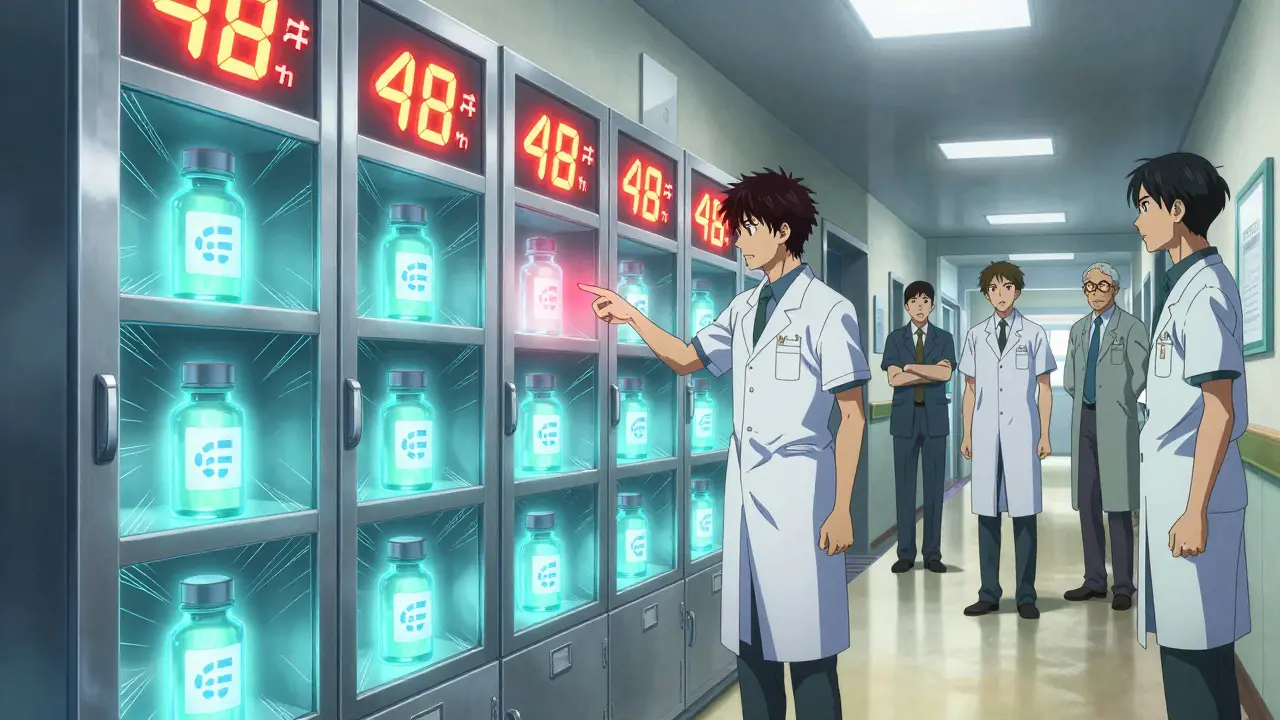
KitCheck is the leading system in this space, used in over 900 hospitals across the U.S. Each medication is pre-tagged with a tiny UHF RFID chip. When you place a crash cart or IV bag into a smart cabinet, the system instantly logs what’s inside and flags anything expiring in the next 48 hours. At Texas Children’s Hospital, pharmacists used to spend hours manually checking 784 high-value drugs costing over $100 each. Now, they do it in minutes - with 100% accuracy.
Unlike barcodes, RFID doesn’t need line-of-sight. You don’t have to pull each bottle out. You don’t have to squint at tiny print. The system just knows. And it alerts you before the expiration date hits - not after.
eMAR Systems: For Long-Term Care and Home Use
If you’re managing medications in a nursing home, assisted living facility, or for someone with chronic conditions at home, eMAR (Electronic Medication Administration Record) is your best bet. These aren’t just inventory tools - they’re care coordination platforms.
eVero’s eMAR system, for example, links directly with pharmacy orders. When a new prescription arrives, it’s automatically added to the patient’s digital profile. Nurses log each dose given using biometric login - no paper charts. The system flags expired meds before they’re even picked up. It also generates audit trails for regulators like the DEA and CMS.
Since 2020, adoption has surged in Intellectual and Developmental Disabilities (IDD) agencies. Staff used to rely on color-coded stickers and weekly checks. Now, they get real-time alerts on tablets. One agency in Ohio cut medication errors by 67% in six months after switching.
Automated Dispensing Cabinets (ADCs) - The Smart Pharmacy Shelf
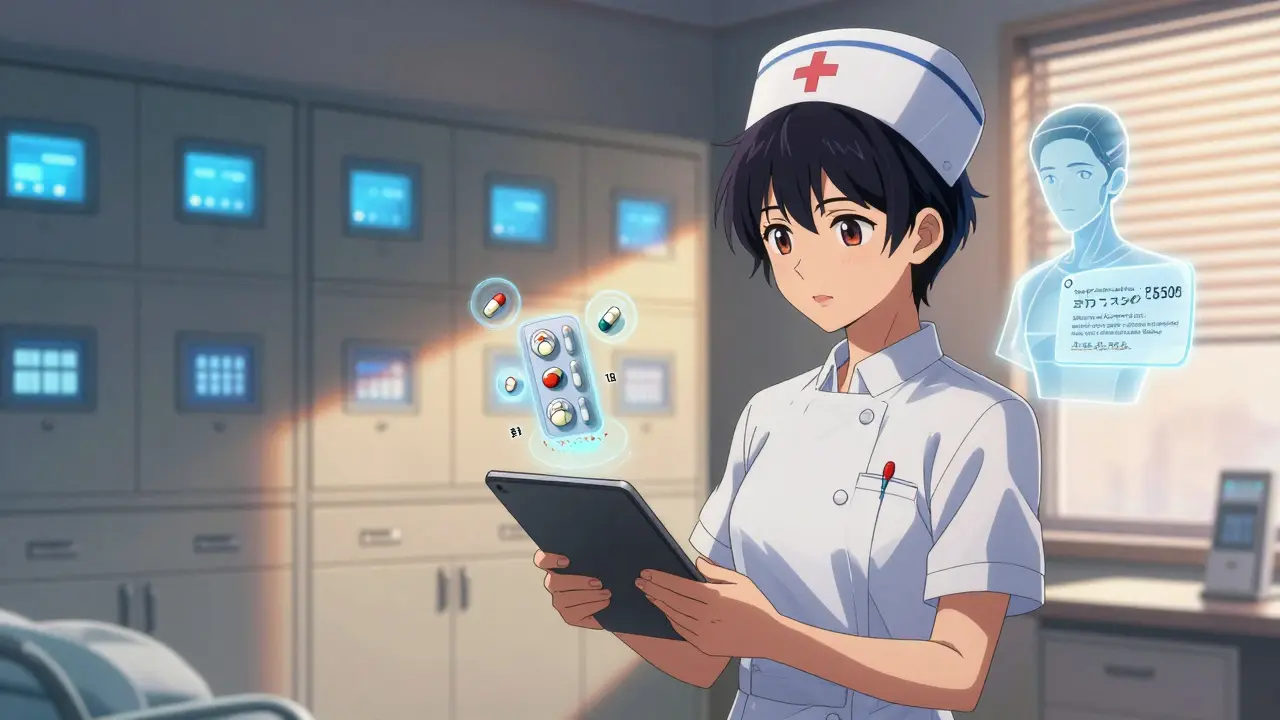
Think of an ADC as a high-tech vending machine for meds. Used in hospitals and closed-door pharmacies, these cabinets lock away controlled substances, antibiotics, and critical drugs. Each drawer opens only when authorized. And every time a drug is taken, the system records:
- Who took it
- When
- Which batch
- Expiration date
TouchPoint Medical’s ADCs automatically update inventory levels and send low-stock alerts. If a drug is nearing expiration, the system blocks access until it’s replaced. That means no one can accidentally grab an outdated vial - even under pressure.
These systems are especially vital in operating rooms and emergency departments. A surgeon doesn’t have time to check labels. But the cabinet does - and it won’t let them proceed if something’s expired.
Mobile Solutions for EMS and Home Use
Not every setting needs a full hospital system. Emergency medical services (EMS), paramedics, and even families managing chronic illness need something portable and simple.
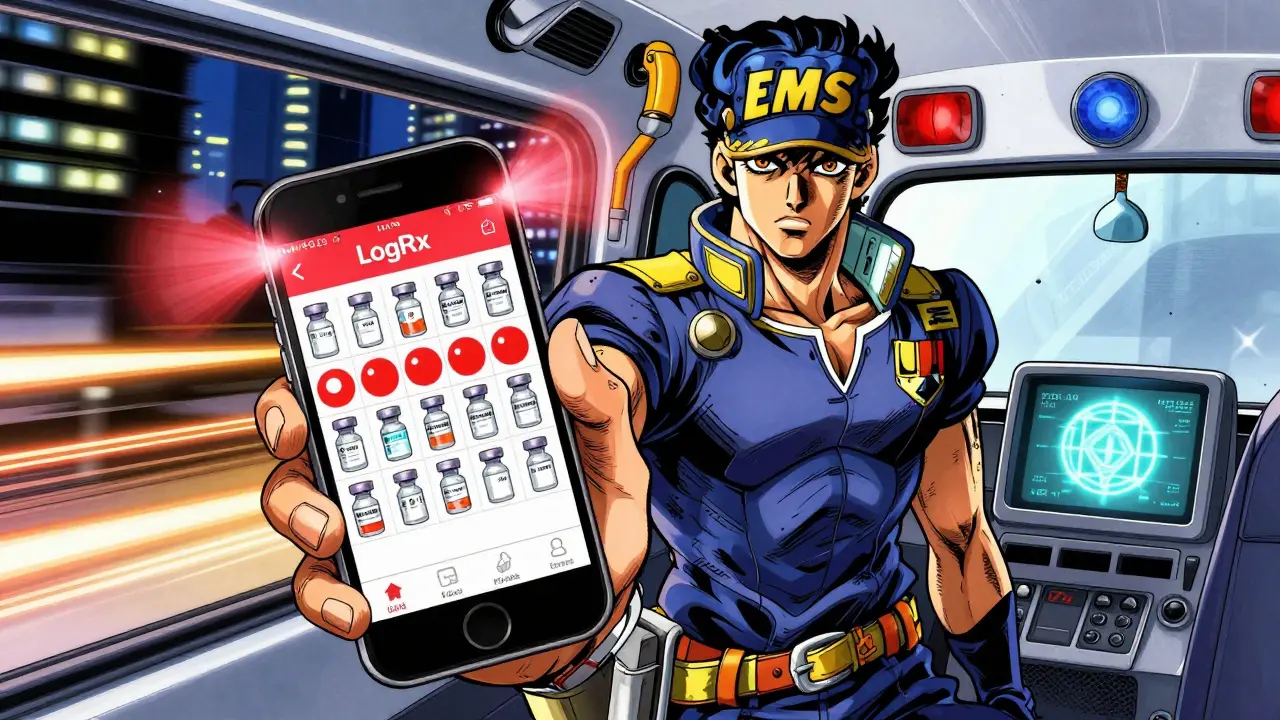
LogRx is built for this. It runs on any iPhone or Android device - no extra hardware needed. EMS teams in Portland and the UK use it to track narcotics, epinephrine, and other time-sensitive drugs. The app shows expiration dates in red, sends push alerts, and logs compliance with DEA rules. One team reported cutting administrative time by 70% and never missing a recall.
For home use, apps like Medisafe or MyTherapy let you scan pill bottles and set custom reminders. They won’t replace hospital-grade systems, but for someone taking five daily meds, they’re life-changing.
What You Need to Get Started
Choosing the right tech depends on your setting:
- Hospitals or large clinics: RFID systems like KitCheck or Intelliguard. Budget: $50,000-$200,000 depending on size.
- Nursing homes or IDD agencies: eMAR platforms like eVero. Budget: $10,000-$40,000/year.
- EMS or mobile teams: LogRx or similar mobile apps. Budget: under $5,000.
- Home users: Medisafe, MyTherapy, or even Google Calendar with barcode scanning.
Implementation takes time. Plan for:
- Assessment (2-4 weeks): What meds need tracking? What’s your current process?
- Installation (1-3 weeks): Hardware setup, software configuration.
- Training (2-6 weeks): Staff learn the new workflow. Resistance is normal - plan for it.
- Testing (2-4 weeks): Run mock scans, test alerts, fix glitches.
Most facilities report full adoption within 3-6 months. The key? Don’t rush. Train early. Celebrate small wins.
Common Pitfalls and How to Avoid Them
Technology helps - but only if used right.
- Bad integration: If your new system doesn’t talk to your existing EHR or pharmacy software, you’ll have double work. Demand API compatibility upfront.
- Skipping tagging: RFID only works if every item has a tag. Some hospitals skip pre-tagging to save time - and end up with 30% tracking errors. Don’t cut corners.
- Ignoring staff feedback: Nurses and pharmacists know the workflow best. Involve them from Day 1. If they hate the interface, they’ll find ways around it.
- Forgetting maintenance: RFID readers need cleaning. Batteries die. Software updates happen. Set reminders.
One Midwest hospital failed their first RFID rollout because they used old scanners that couldn’t read new tags. They spent $80,000 and had to start over. Learn from them.
The Future Is Already Here
By 2027, Gartner predicts 45% of U.S. hospitals will use RFID for medication tracking - up from just 25% today. That’s not hype. It’s necessity.
New developments are coming fast:
- AI predictions: Intelliguard Health is testing AI that forecasts which meds are most likely to expire - and auto-orders replacements before they run out.
- Blockchain: Some manufacturers are starting to tag drugs at the factory with tamper-proof digital records, so you know exactly where your meds came from.
- Home-to-hospital sync: UF Health Shands now tracks medications patients take home - and alerts the hospital if they’re not taken as prescribed or if they expire.
The goal isn’t just to avoid expired drugs. It’s to make medication safety invisible - so you never have to think about it.
What You Can Do Today
You don’t need a hospital budget to start.
- At home: Scan your medicine cabinet. Use your phone to take photos of expiration dates. Put them in a folder labeled "Meds - Expire 2026". Set phone alerts for anything expiring in the next 60 days.
- In a small clinic: Try a free app like Medisafe. It’s not RFID, but it’s better than sticky notes.
- In a pharmacy: Ask your vendor if they offer automated expiration alerts. Most modern pharmacy systems do.
Technology doesn’t replace good judgment - it amplifies it. The right tool turns a risky, manual chore into a silent, reliable safety net.

Dan Mack
January 15, 2026 at 13:10They're putting chips in your pills now. Next thing you know, the government will know when you take your blood pressure med and flag you as 'non-compliant'. This isn't safety-it's surveillance with a side of corporate greed.
Gloria Montero Puertas
January 16, 2026 at 16:40I'm genuinely astonished that anyone would consider manual tracking acceptable in the 21st century. The sheer negligence implied by relying on handwritten labels-oh, the horror!-is tantamount to medical malpractice. RFID? Of course. But why stop there? Why not integrate with blockchain-based biometric verification? The infrastructure is there. The will? Apparently, not.
Sohan Jindal
January 16, 2026 at 22:09This is how they control us. RFID tags in medicine? Next they'll put them in your water. They want to know when you take your pills so they can decide if you're worth saving. This ain't progress. This is the deep state using healthcare to track citizens.
Frank Geurts
January 16, 2026 at 23:24The integration of technological innovation into pharmaceutical logistics represents a paradigmatic shift in patient safety protocols. One must acknowledge the profound ethical imperative to mitigate waste and prevent adverse outcomes through systematic, data-driven intervention. The scalability of such systems, particularly in resource-constrained environments, warrants immediate and sustained investment.
Arjun Seth
January 17, 2026 at 18:25In my country, we still use paper logs because we trust people, not machines. You think a chip will stop someone from giving expired medicine to a child? No. Only care will do that. Technology is just a tool. It doesn't replace the heart.
Mike Berrange
January 18, 2026 at 22:49You mention KitCheck and eVero like they're miracles. But have you accounted for the cost of training? The downtime during implementation? The staff turnover when they quit because the interface is unintuitive? This article reads like a vendor brochure, not a real-world assessment.
Amy Vickberg
January 20, 2026 at 18:55I love that we're finally moving away from sticky notes and handwritten dates. My grandma used to forget when her meds expired and I used to panic every time she took something old. This tech isn't perfect but it's a huge step forward. Let's not throw it out because it's not flawless.
Nishant Garg
January 22, 2026 at 15:19I remember in Delhi, we used to have a system where the pharmacist would write the expiry date on the bottle with a red marker-so you couldn't miss it. Now, I use MyTherapy on my phone. It's not RFID, but it reminds me when my insulin is about to go bad. Technology doesn't have to be fancy to save lives. Sometimes, it just has to be there.
Amy Ehinger
January 23, 2026 at 14:19I tried Medisafe last year after my mom had a bad reaction to an old pill. It was so simple-just scan the barcode, set the reminder. Now I do it for my whole family. I don't care if it's not hospital-grade. It's better than nothing. And honestly? I sleep better at night knowing I didn't miss a date. I wish more people knew this stuff exists. It's not magic, but it's magic enough.
RUTH DE OLIVEIRA ALVES
January 23, 2026 at 21:17The implementation of automated medication tracking systems constitutes a significant advancement in pharmacovigilance and operational efficiency. However, it is imperative that such systems be deployed with rigorous adherence to HIPAA compliance, interoperability standards, and user-centered design principles. The ethical dimension of patient autonomy must remain central to technological integration.
Crystel Ann
January 25, 2026 at 14:55I just scanned my medicine cabinet with MyTherapy. Found three expired pills I didn't even know I had. One was for a migraine I had three years ago. I felt so dumb. But also kind of relieved. This stuff is stupid simple. Why didn't I do this sooner?