
| Feature | United States | European Union (Avg) |
|---|---|---|
| Generic Volume | ~90% of prescriptions | ~41% of prescriptions |
| Generic Pricing | Generally Lower | Generally Higher |
| Brand Pricing | Significantly Higher | Regulated/Lower |
| Price Setting | Market-driven / PBM Negotiated | Government / Reference Pricing |
The Secret to Cheap US Generics
Why are generics so cheap in the States? It mostly comes down to sheer volume and brutal competition. In the US, about 90% of all prescriptions filled are for unbranded generics. When that many people are using the same types of drugs, it creates a massive, hungry market that attracts every manufacturer possible. In Europe, the generic market is much smaller, with only about 41% of prescription volume going to unbranded generics. Because there is less demand and more regulatory hurdles for new players to enter the market, there is less pressure on companies to slash prices. In the US, if one company sells a generic for $10, another will try to sell it for $8 to grab the market share. This "race to the bottom" is great for the consumer's wallet, but it can be risky. We've seen cases where prices drop so low that they fall below the cost of making the drug, leading manufacturers to quit the market and causing sudden shortages.The Role of the Middlemen: PBMs
You can't talk about US drug prices without mentioning Pharmacy Benefit Managers. PBMs are third-party administrators that manage prescription drug programs for insurers and employers. These entities act as the primary negotiators between the drug makers and the pharmacies. PBMs use their massive buying power to demand deep discounts. For brand-name drugs, they might negotiate rebates that average 35-40% off the list price. For generics, they push for the lowest possible cost to keep their clients' spending down. The catch is that these rebates are often hidden from the person actually standing at the pharmacy counter. This fragmented system is far more chaotic than the European model, but for generics, that chaos drives prices down through aggressive volume purchasing.
How Europe Keeps Brand Names Cheap
If the US is the king of cheap generics, Europe is the king of affordable brand-name drugs. How? They don't let the "market" decide the price. Instead, they use a method called External Reference Pricing. Basically, a government agency looks at what France, Germany, or Spain are paying for a new drug and says, "We won't pay a penny more than the average of those countries." In the UK, the National Institute for Health and Care Excellence (NICE) takes it a step further. They evaluate whether a drug actually provides enough clinical value to justify its cost before they agree to reimburse it. This centralized power means European governments can force pharmaceutical companies to lower their prices. This is why a patented drug that costs $4,000 in a US hospital might only cost $1,000 in Europe. The government simply refuses to pay more.Who Pays for the Innovation?
This leads to a controversial point: the "free rider" problem. Developing a new drug is incredibly expensive and risky. Because US prices for new, patented medicines are so high, the US market essentially subsidizes global research and development (R&D). Industry experts, including those from the IQVIA Institute, note that the high revenues from the US market fund a huge chunk of the world's medical breakthroughs. When European countries negotiate prices down to the bone, they are benefiting from innovation that was largely paid for by American patients and insurers. In short, the US pays a "premium" for new drugs so that the rest of the world can eventually get them cheaper once the patents expire and generics hit the market.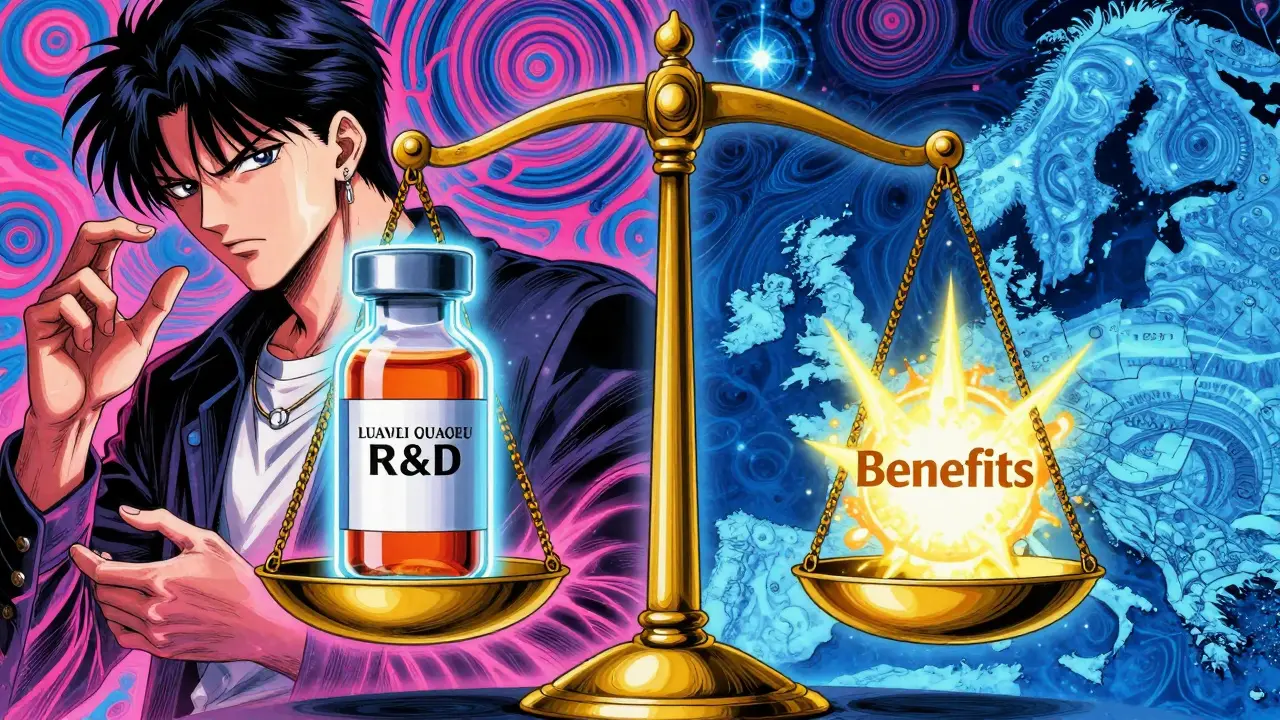
The Shifting Landscape: The Inflation Reduction Act
Things are starting to change. For the first time, the US government is trying to act more like the Europeans. The Inflation Reduction Act has introduced Medicare drug price negotiations. Instead of just accepting the price a company sets, Medicare is now negotiating prices for certain high-cost drugs. For example, for a drug like Jardiance, the US price was nearly 4 times higher than the average in other OECD countries. The goal of these new laws is to narrow that gap. If the US successfully lowers its brand-name prices, we might see a ripple effect where pharmaceutical companies raise prices in Europe to make up for the lost revenue.Practical Tips for Navigating Your Pharmacy Bill
Whether you're in the US or Europe, the way you handle your prescriptions can save you a lot of money. Here are a few rules of thumb:- Ask for the Generic: In the US, 49 states allow automatic generic substitution, but it never hurts to ask your pharmacist if a cheaper unbranded version exists.
- Check Your Formulary: If you have insurance, check which "tier" your drug falls under. Generics are almost always Tier 1 (lowest cost).
- Compare Net vs. List Price: Don't be fooled by the "sticker price" of a drug. In the US, the actual price paid (the net price) is often much lower due to PBM rebates.
- Look for Coupons: In the US, third-party discount cards can sometimes bring a generic price down even further than your insurance copay.
Why are generics cheaper in the US than in Europe?
The US has a much higher volume of generic prescriptions (about 90% of all fills) and a more aggressive competitive market. This high demand attracts more manufacturers, who compete by lowering prices. In contrast, Europe has lower generic usage and more regulatory barriers, which keeps prices higher.
Do European countries really pay less for all drugs?
Not for everything. While European countries pay significantly less for brand-name, patented drugs due to government price negotiations, they often pay more for basic generic medications than US consumers do.
What is a PBM and how do they affect prices?
Pharmacy Benefit Managers (PBMs) are middlemen who negotiate prices between drug manufacturers and pharmacies. They use the massive size of their member pools to force manufacturers to give rebates, which helps drive down the cost of generics but keeps brand-name pricing complex.
What happens if generic prices get too low?
When prices drop below the cost of production, some manufacturers simply stop making the drug. This can lead to drug shortages, where a previously cheap drug suddenly becomes unavailable or expensive because only one company is left producing it.
Will the Inflation Reduction Act make drugs cheaper?
Yes, specifically for brand-name drugs used by Medicare. By allowing the government to negotiate prices directly, the US is moving toward a model more similar to Europe's, which is expected to reduce the cost of some of the most expensive medications by 2027.



Christopher Cooper
April 5, 2026 at 17:05It is genuinely fascinating to see how these two systems operate on completely opposing logic. One side leverages sheer market volume to drive down the price of existing drugs, while the other uses centralized government authority to keep new innovations affordable. It really highlights how there is no single "perfect" way to handle healthcare, as both models have significant strengths and glaring weaknesses. I wonder if a hybrid approach could eventually emerge that provides the best of both worlds.
Daniel Trezub
April 7, 2026 at 14:17Actually, the whole "race to the bottom" thing is just a fancy way of saying the US market is unstable. It's not that it's "efficient" because of volume, it's that the regulatory environment is basically the Wild West compared to the EU. Sure, a pill might be four bucks, but if the manufacturer vanishes because they can't make a profit, you're left with nothing. Not exactly a win for the patient in the long run, but hey, cheap is cheap, right?
Ethan Davis
April 9, 2026 at 14:03PBMs are just a front for Big Pharma to keep the prices confusing and the money flowing into the pockets of middlemen. You think it's about "negotiation" but it's really about controlling the flow of information so you don't realize how much they're actually overcharging for the brand names. Everything is rigged to make sure the corporate suits get paid while we fight over four-dollar generics. Wake up.
Timothy Burroughs
April 11, 2026 at 11:24imagine thinking europe is doing something right here lol. they just leach off american innovation for decades and then pretend they are more humane because they cap prices
we take the hits so the rest of the world can survive. its literally the price of being the global leader in medicine. stop acting like the eu model is any better when they just ride our coattails
Stephen Luce
April 13, 2026 at 04:52I can totally relate to that frustration of seeing such a gap in pricing. It's honestly heartbreaking when you see someone struggling to afford a life-saving brand-name drug in the States while knowing it's a fraction of the cost elsewhere.
Vivek Hattangadi
April 13, 2026 at 13:49This is such a helpful breakdown of a complex topic! It's great to see the logic behind the pricing differences explained so clearly. I think focusing on the common ground and finding ways to implement the best parts of both systems would be a fantastic path forward for everyone. Let's keep the conversation going and look for solutions that help patients globally!
Rupert McKelvie
April 13, 2026 at 23:32The transition toward Medicare negotiations sounds like a positive step for accessibility in the US.
Michael Flückiger
April 15, 2026 at 05:21Finally!!! Some real change is coming with the Inflation Reduction Act!!! It is about time the government stopped playing around and started fighting for the people!!! We cannot let these companies just set any price they want!!! Absolutely fantastic news for seniors!!!
Jamar Taylor
April 17, 2026 at 02:58Keep pushing for those generics everyone! It is the best way to take control of your own healthcare costs right now. Just a little bit of advocacy at the pharmacy counter can save you hundreds of dollars a year. You've got this!
dwight koyner
April 17, 2026 at 03:10From a clinical and administrative perspective, it is important to note that the "net price" mentioned is often a result of complex contractual agreements between PBMs and manufacturers. These agreements often involve tiered rebates that do not always translate to lower out-of-pocket costs for the patient depending on their specific insurance plan. It is highly recommended that patients request a detailed breakdown of their pharmacy benefits to understand the actual cost-sharing structure. Furthermore, the risk of drug shortages due to unsustainable generic pricing is a legitimate concern that requires strategic stockpiling or diversified sourcing. In many cases, the shift toward the European model of reference pricing may lead to a decrease in the speed of new drug launches in the US market, as companies prioritize markets with higher returns. This trade-off between affordability and immediate access to cutting-edge therapy is the central tension of global health economics. Understanding the distinction between the list price and the actual acquisition cost is crucial for any patient attempting to optimize their medication spend. The role of the FDA in approving multiple generic equivalents is what truly fuels the competitive pricing we see in the US. Without that regulatory pathway, the market-driven approach would fail. Patients should also be aware that some "generics" are actually biosimilars, which follow a different pricing and approval trajectory. The complexity of the PBM model often masks the true cost of the drug, making it difficult for consumers to compare prices across different pharmacies. Ultimately, the sustainability of the US model depends on maintaining a balance where generics remain cheap without driving manufacturers out of business entirely. This delicate equilibrium is what makes the US generic market so unique yet volatile. I strongly suggest using reputable discount tools to verify the current market rate before paying a high copay.