

If you’ve had a cough that won’t quit-lasting more than eight weeks-you’re not alone. About 1 in 10 adults deal with this frustrating problem. And chances are, it’s not an infection, not allergies alone, and definitely not something you just need to “cough it out.” The real culprits are often three quiet, overlooked conditions: GERD, asthma, and upper airway cough syndrome (UACS), the modern term for what used to be called postnasal drip.
Why Your Cough Won’t Go Away
Most people assume a long-lasting cough means they’re still sick with a cold or bronchitis. But if it’s been over two months, something else is going on. The American College of Chest Physicians says that 80 to 95% of chronic cough cases in non-smokers not taking ACE inhibitors (a type of blood pressure drug) come down to just three causes. That’s the good news. The bad news? Many doctors skip the right steps and jump to antibiotics or inhalers without knowing why. The key is a smart, step-by-step approach. You don’t need CT scans or endless tests right away. You need a focused workup that rules out the obvious first-and treats based on what’s most likely.Step One: Rule Out the Red Flags
Before you even think about GERD or asthma, you need to make sure nothing serious is going on. If you’re coughing up blood, losing weight without trying, running a fever, or have swelling in your legs, you need urgent evaluation. These aren’t signs of a simple cough. They could point to lung cancer, tuberculosis, or heart failure. Also, check your meds. ACE inhibitors-drugs like lisinopril or enalapril-cause cough in 5 to 35% of people who take them. It can start within days or months. If you’re on one and have a chronic cough, talk to your doctor about switching. Often, the cough disappears within a week or two after stopping it.Step Two: The Basic Tests Everyone Needs
You don’t need a fancy lab to start. Two simple tests can rule out half the possibilities:- Chest X-ray: This catches big problems like pneumonia, tumors, or bronchiectasis. If it’s normal, you can mostly rule out those causes. A 2011 study found that a normal X-ray makes serious lung disease very unlikely.
- Spirometry: This breathing test measures how much air you can blow out and how fast. It checks for asthma or COPD. If your lungs are blocked or restricted, this test will show it. Even if you feel fine, asthma can show up only as a cough.
Step Three: The Big Three-Diagnosing Each One
Here’s where most people get lost. Doctors often treat all three at once. But that doesn’t work. Each one needs its own test-and its own treatment plan.1. Upper Airway Cough Syndrome (UACS) - The Silent Trigger
UACS used to be called “postnasal drip.” But that’s misleading. It’s not just mucus dripping down your throat. It’s irritation of the cough reflex in your upper airway-often from allergies, colds, or sinus inflammation. How to test for it: Try a 2- to 3-week course of a first-generation antihistamine (like diphenhydramine or chlorpheniramine) plus a decongestant (like pseudoephedrine). Don’t use newer antihistamines like loratadine-they don’t work as well for this. What to expect: If UACS is the cause, you’ll see improvement in 1 to 2 weeks. Up to 90% of people respond if it’s truly UACS. If there’s no change after three weeks, it’s probably not this. Pro tip: Many people don’t realize they have nasal congestion. Try using a saline spray and checking for post-nasal drip with a mirror. If you’re constantly clearing your throat or feel a tickle in the back of your throat, UACS is likely.2. Asthma - The Cough-Only Version
Most people think asthma means wheezing and shortness of breath. But in 24 to 29% of chronic cough cases, cough is the only symptom. This is called cough-variant asthma. How to test for it: If your spirometry is normal, the next step is a methacholine challenge test. This involves inhaling a mild irritant to see if your airways overreact. A positive test means your airways are hypersensitive-a hallmark of asthma. What to expect: If asthma is the cause, you’ll respond well to an inhaled corticosteroid (like fluticasone) or a combination inhaler (like Advair). Improvement usually happens in 2 to 4 weeks. If you’re coughing at night or after exercise, that’s a strong clue. Important note: A negative methacholine test doesn’t completely rule out asthma-but it makes it very unlikely. A positive test confirms it.3. GERD - The Cough Without Heartburn
This is the trickiest one. Many people assume GERD means burning chest pain. But in up to 70% of GERD-related coughs, there’s no heartburn at all. This is called “silent reflux.” Acid is still reaching your throat and larynx, triggering your cough reflex. How to test for it: The traditional approach is a 4- to 8-week trial of high-dose proton pump inhibitors (PPIs)-like omeprazole 40 mg twice daily. But here’s the catch: only 50 to 75% of people respond. And up to 40% of people who take PPIs for a cough get better even if they don’t have GERD (that’s the placebo effect). What to expect: If GERD is the cause, you’ll see improvement after 4 to 8 weeks. If you don’t, it’s probably not GERD. Don’t keep taking PPIs longer without a diagnosis-it’s not harmless. Long-term use can affect bone density and gut bacteria. Newer approach: The American College of Gastroenterology now advises against starting PPIs without evidence of reflux. Instead, they recommend the Hull Airway Reflux Questionnaire (HARQ). If your score is above 13, there’s an 80% chance you have laryngopharyngeal reflux. This is a simple 10-question survey you can take online.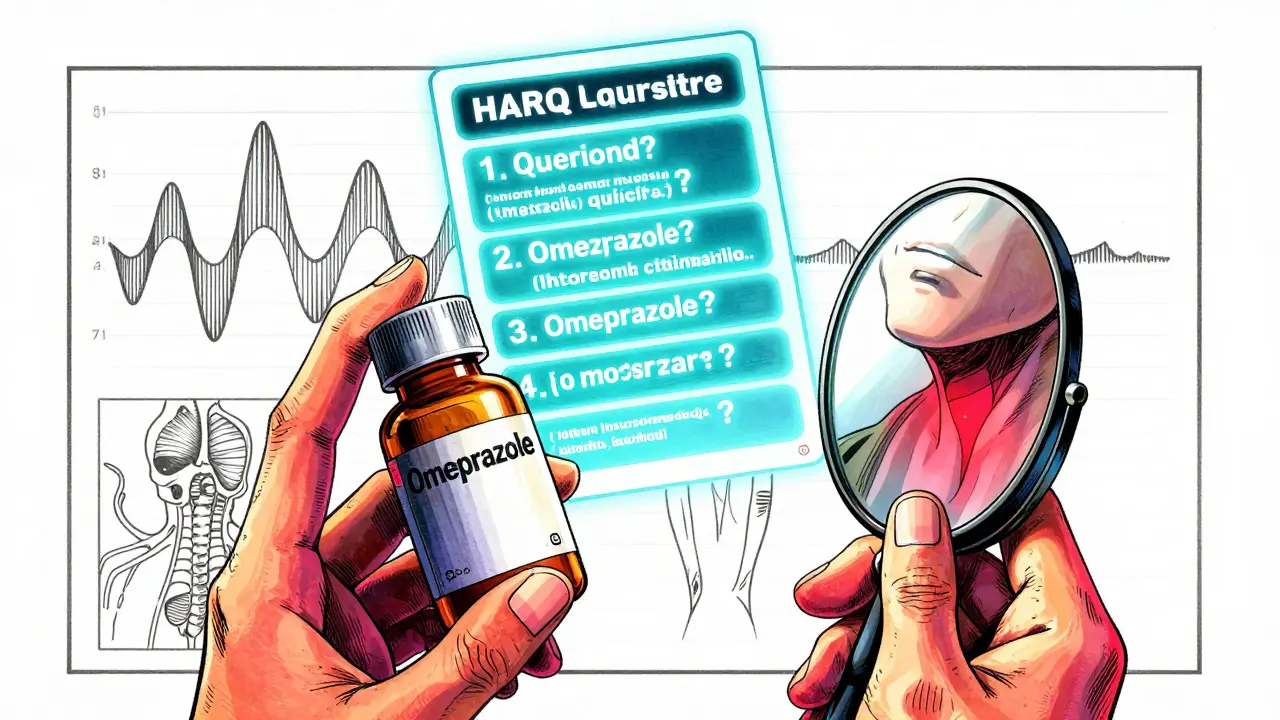
What If None of the Three Work?
About 10 to 30% of chronic cough cases don’t respond to treatment for UACS, asthma, or GERD. That doesn’t mean you’re out of options. It means you need to look deeper. Possible causes include:- Chronic refractory cough (CRC): A condition where the cough reflex becomes overly sensitive, even without a clear trigger. New drugs like gefapixant and camlipixant (approved in 2022 and 2024) target this directly.
- Pertussis (whooping cough): Rare in adults, but it can cause a cough lasting months. A nasal swab test can confirm it.
- Chronic aspiration: When food or liquid enters the lungs-common in older adults or those with swallowing problems.
- Eosinophilic bronchitis: Inflammation in the airways without asthma. Diagnosed with sputum tests.
What Doesn’t Work
Many people waste months on things that won’t fix a chronic cough:- Antibiotics: Only 1 to 5% of chronic coughs are bacterial. Antibiotics won’t help if you don’t have an infection.
- Over-the-counter cough syrups: Most contain dextromethorphan, which doesn’t work well for chronic cough. They’re for short-term colds.
- Home remedies alone: Honey, steam, and humidifiers might soothe, but they won’t fix the root cause.
- Immediate CT scans: If your X-ray is normal, a CT scan won’t find anything new 99.9% of the time-and exposes you to radiation equal to 74 chest X-rays.
Real-Life Example
Sarah, 52, had a cough for 14 months. She tried antihistamines, inhalers, and even acupuncture. Nothing worked. Her doctor ordered a chest X-ray-it was normal. Spirometry showed no asthma. She started a trial of diphenhydramine and pseudoephedrine. After 10 days, her cough was 80% better. She’d been suffering from UACS caused by seasonal allergies she didn’t realize she had. She’s been symptom-free for 8 months now.
What You Can Do Today
If you’ve had a cough longer than 8 weeks:- Stop any ACE inhibitor meds (if you’re on one) and talk to your doctor about alternatives.
- Get a chest X-ray and spirometry.
- Try a 2-week trial of diphenhydramine + pseudoephedrine.
- If no improvement, ask about a methacholine challenge test.
- If still no answer, consider the HARQ questionnaire for reflux.
- Keep a cough diary: note when it happens, what triggers it, and how bad it is.
Frequently Asked Questions
Can a cough be caused by both GERD and asthma at the same time?
Yes. About 30% of people with chronic cough have more than one cause. That’s why treating one condition at a time is important. If you try asthma treatment and still cough, then try GERD. If both fail, you might have both, and your doctor may need to combine treatments.
How long does it take for a chronic cough to go away after treatment starts?
It varies by cause. UACS usually improves in 1 to 2 weeks. Asthma takes 2 to 4 weeks. GERD can take 4 to 8 weeks. Don’t give up before the full trial period. If you stop too early, you might think the treatment didn’t work when it just needed more time.
Is a cough from GERD worse at night?
Yes. Lying down makes it easier for stomach acid to reach the throat. People with GERD-related cough often wake up choking or with a sore throat. If your cough is worse when you lie down or right after eating, GERD is a strong possibility-even if you don’t have heartburn.
Can allergies cause a chronic cough?
Yes-but not directly. Allergies cause nasal inflammation, which leads to postnasal drip. That triggers UACS, which causes the cough. So treating allergies with antihistamines and nasal sprays often helps. But if you’re using newer antihistamines like Zyrtec or Claritin and still coughing, try an older one like diphenhydramine. They work better for this type of cough.
Why do some people keep coughing even after treatment?
Sometimes the cough reflex becomes hypersensitive-even after the original trigger is gone. This is called chronic refractory cough. It’s not in your lungs or throat anymore; it’s in your nervous system. New medications like gefapixant target this directly. If you’ve tried everything and still cough, ask about referral to a cough specialist.
What’s Next
The future of chronic cough care is getting better. AI tools can now analyze cough sounds and tell if it’s asthma, GERD, or something else-with 87% accuracy. New drugs are coming that target the cough reflex itself. But for now, the best tool you have is a smart, step-by-step approach. Don’t accept a cough that won’t quit. It’s not normal. And with the right workup, it’s usually fixable.

Annette Robinson
January 9, 2026 at 03:51I’ve been dealing with this for over a year. I tried everything-antibiotics, cough syrup, humidifiers-and nothing worked. Then I switched off lisinopril and started the diphenhydramine + pseudoephedrine combo. Within 10 days, it was gone. I wish I’d known this sooner. This post saved me months of frustration.
Thank you for writing this with such clarity.
Luke Crump
January 10, 2026 at 01:58Let me guess-this is the same ‘step-by-step’ nonsense that’s been peddled since 2012. You know what’s really causing chronic cough? The fact that modern medicine has forgotten how to listen. You don’t need a spirometry test-you need a therapist who’ll sit with you in silence while you cough. The body speaks. We just stopped learning the language.
Also, PPIs are corporate poison. They’re selling you a cure that makes them richer. Wake up.
Molly Silvernale
January 12, 2026 at 00:44UACS? Cough-variant asthma? Silent reflux? These aren’t just diagnoses-they’re whispers from your body begging to be heard. And yet, we rush to CT scans like they’re magic wands. We’ve turned medicine into a checklist, not a conversation.
That HARQ questionnaire? Genius. It’s like a poetry slam for your throat. Ten questions, one truth: your cough isn’t random. It’s a story. And if you’re lucky enough to find the right listener, the story finally ends.
Also-why is everyone still using Zyrtec? It’s like bringing a spoon to a hurricane. Diphenhydramine? Now that’s a warrior.
And gefapixant? Finally. Someone’s listening to the nervous system. Not the lungs. Not the sinuses. The nerves. The real conductor. We’re so close to understanding this. So close.
Prakash Sharma
January 13, 2026 at 20:03This is why America is weak. You people spend years on coughs and still don’t know how to take a pill? In India, we just drink ginger tea, do pranayama, and move on. No tests. No PPIs. No ‘HARQ questionnaires.’ Just discipline. You think your body is a machine? No. It’s a temple. Treat it like one.
Also, why are you all on antihistamines? We don’t have this problem because we don’t live in air-conditioned boxes with pollen everywhere. Go outside. Breathe real air. Stop overmedicalizing everything.
Kristina Felixita
January 15, 2026 at 00:25OMG this is literally my life story. I had a cough for 18 months. I thought I was dying. I Googled ‘cough and lung cancer’ 37 times. Then my aunt said ‘try the old-school antihistamine’ and I was like… okay, whatever. I got diphenhydramine from the dollar store, mixed it with pseudoephedrine, and 10 days later I could sleep without coughing. I cried. I’m not even kidding.
Also-PPIs are NOT harmless. I got a stomach infection from taking them too long. Don’t be like me. Read the fine print. Your gut will thank you.
And yes, I misspelled ‘pseudoephedrine’ but you know what I meant. ❤️
Joanna Brancewicz
January 16, 2026 at 10:22Normal X-ray + normal spirometry → UACS/asthma/GERD triad. Methacholine challenge confirms asthma. HARQ > PPI trial. Gefapixant for refractory cases. Antibiotics = useless. OTC syrups = placebo. CT scans = unnecessary radiation. ACE inhibitors = common culprit. Cough diary = essential. All supported by ACCP guidelines. This is evidence-based, not anecdotal.
Evan Smith
January 16, 2026 at 11:07Wait, so you’re telling me I didn’t need that $2,000 pulmonary workup after all? I just needed to stop my blood pressure med and take Benadryl? I feel like a fool. But also… kinda impressed. This is the most useful medical advice I’ve ever read on Reddit. Like, seriously. My wife’s been nagging me to stop lisinopril for months. Guess she was right.
Also-why does no one ever tell you this stuff in the waiting room? Doctors just hand you a prescription and say ‘try this.’
Lois Li
January 17, 2026 at 05:27I’m so glad someone wrote this. I’ve been a nurse for 15 years and I’ve seen too many patients suffer because no one took their cough seriously. It’s not ‘just a cough.’ It’s a signal. And we’ve trained ourselves to ignore signals.
Thank you for not just listing tests-but explaining why they matter. For reminding us that sometimes the answer is simple, but we’ve made it complicated.
Also, the Sarah example? That’s the kind of story that gives people hope. Not a miracle drug. Not a fancy machine. Just a smart approach. That’s what real medicine looks like.