

Drug Side Effect Frequency Tool
Check Side Effect Frequency
This tool shows how common side effects are based on real-world data from the FDA and medical studies.
When you take a pill for high blood pressure, an antibiotic for an infection, or even a daily vitamin, you’re not just getting the intended benefit. Your body reacts in ways you might not expect - sometimes mildly, sometimes seriously. These are called drug side effects. They’re not mistakes. They’re part of how drugs work - and they happen to millions of people every year.
What Exactly Is a Drug Side Effect?
A drug side effect is any unintended effect that happens when you take a medication. It’s not always bad. Some side effects are annoying, like dry mouth or drowsiness. Others can be serious, like liver damage or irregular heartbeat. The U.S. Food and Drug Administration (FDA) defines them as "unwanted, undesirable effects that are possibly related to a drug." That "possibly" matters because not every symptom you feel after taking medicine is actually caused by it. Here’s the key: side effects are different from allergic reactions. An allergy means your immune system overreacts - think rash, swelling, trouble breathing. A side effect is just your body responding to the chemistry of the drug. For example, if you take an antihistamine for allergies and get sleepy, that’s a side effect. If you break out in hives after taking it, that’s an allergy. Even more surprising: some side effects are actually helpful. Finasteride, a drug for enlarged prostate, often causes hair growth on the scalp - which is why it’s also used to treat male pattern baldness. Minoxidil, meant for high blood pressure, causes hair growth too, so it’s now sold as a topical treatment for thinning hair. These aren’t accidents. They’re predictable, documented effects that doctors sometimes use on purpose.Why Do Side Effects Happen?
Drugs don’t just target one part of your body. They travel through your bloodstream and interact with receptors, enzymes, and cells everywhere. That’s why a drug meant to calm your heart can also make you dizzy - because it affects nerves in your brain too. There are two main types of side effects:- Type A (Predictable): These make up 85-90% of all side effects. They’re linked to the drug’s main action and usually depend on the dose. The higher the dose, the worse the side effect. Examples: nausea from antibiotics, dizziness from blood pressure meds.
- Type B (Unpredictable): These are rare (10-15%) and not tied to dosage. They’re often allergic or immune-related. Examples: severe skin reactions, liver failure from certain painkillers.
Side effects aren’t random. They’re influenced by your body’s unique biology. Age plays a big role. People over 65 are 3 to 5 times more likely to experience serious side effects because their kidneys and liver process drugs slower. That’s why older adults are often warned against certain medications - like benzodiazepines for anxiety - which can cause falls or confusion.
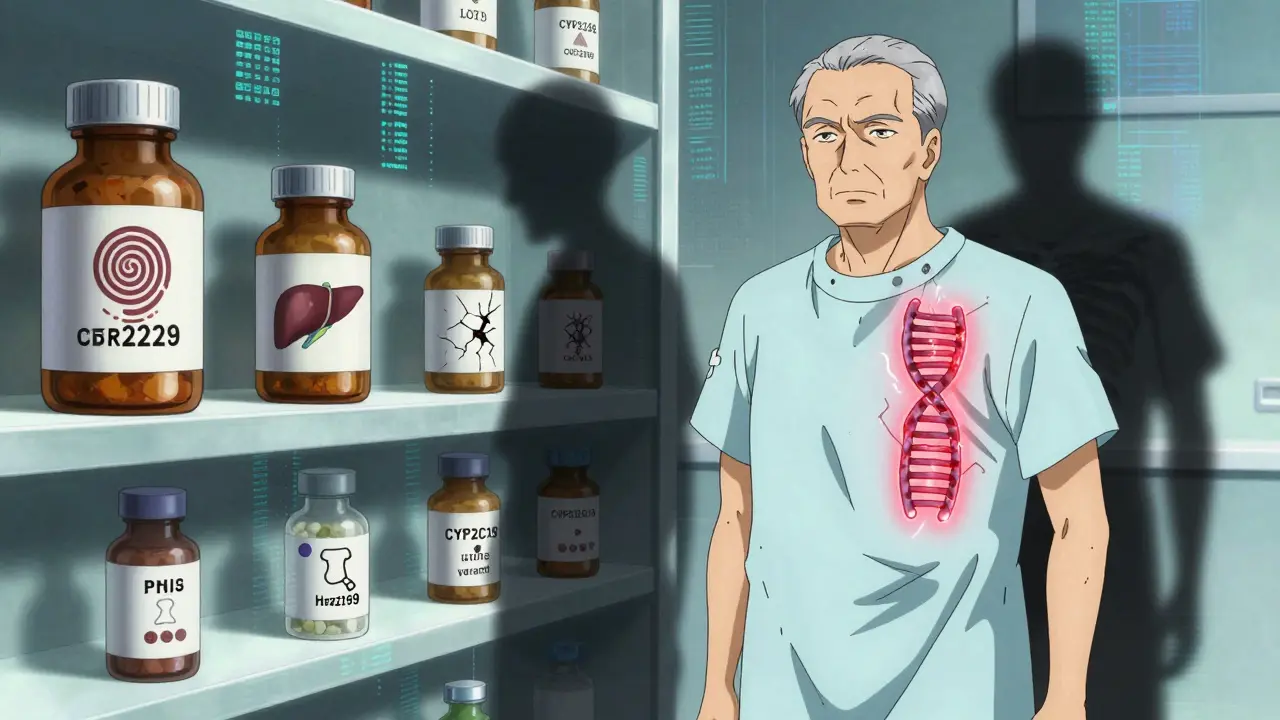
Genetics matter too. About 40-95% of people have gene variations that change how they metabolize drugs. For example, if you have a certain version of the CYP2C19 gene, clopidogrel (a blood thinner) won’t work as well for you - increasing your risk of a heart attack. That’s why some hospitals now test patients’ genes before prescribing certain drugs.
Taking multiple medications? That’s another big risk. If you’re on five or more drugs, your chance of a side effect jumps by 88%. Why? Because drugs can interact. One might slow down how your body breaks down another, causing it to build up to toxic levels. This is especially common in people with chronic conditions like diabetes, kidney disease, or heart failure.
How Common Are Side Effects? The Numbers That Matter
The World Health Organization and European Medicines Agency use clear categories to describe how often side effects occur:- Very common: Affects 1 in 10 or more people
- Common: Affects 1 in 10 to 1 in 100
- Uncommon: Affects 1 in 100 to 1 in 1,000
- Rare: Affects 1 in 1,000 to 1 in 10,000
- Very rare: Affects fewer than 1 in 10,000
These aren’t guesses. They come from clinical trials and real-world monitoring. For example:
- NSAIDs like ibuprofen cause stomach irritation in 15-30% of regular users - that’s why doctors recommend taking them with food.
- Antibiotics like amoxicillin lead to diarrhea in 5-30% of patients because they kill off good gut bacteria.
- Doxycycline, an antibiotic for acne or Lyme disease, causes sun sensitivity in about 10% of users. If you don’t use sunscreen, you can get a bad burn.
- Statin drugs for cholesterol cause muscle pain in 10-15% of people - but studies show up to 62% of those cases are "nocebo" effects, meaning the person expected pain and felt it, even when taking a sugar pill.
Some side effects are rare but dangerous. SGLT2 inhibitors (used for diabetes) carry a boxed warning from the FDA because they raise the risk of lower limb amputations by 77%. That’s based on data from the CANVAS trial. mRNA COVID-19 vaccines were linked to myocarditis (heart inflammation) in about 40.6 cases per million second doses in young men - rare, but real enough to be tracked and studied.
Real Examples You Might Recognize
Let’s look at common drugs and what their side effects really look like in practice:- Antidepressants (SSRIs): Nausea, sexual dysfunction, weight gain. Many people stop taking them because of these - not because they don’t work, but because the side effects feel unbearable. A 2023 Consumer Reports survey found 73% of people experienced side effects they weren’t warned about.
- Chemotherapy: Nausea, hair loss, fatigue. But immune checkpoint inhibitors - newer cancer drugs - cause immune-related side effects in 60-85% of patients. That means the immune system attacks healthy organs: lungs, liver, even the thyroid.
- Thyroid medication (levothyroxine): Too much can cause rapid heartbeat, sweating, insomnia. Too little, and you still feel tired. Dosing is tricky and often needs adjustment over time.
- Birth control pills: Headaches, breast tenderness, mood changes. But they also reduce the risk of ovarian and endometrial cancer - a beneficial side effect.
Here’s something most people don’t realize: some side effects don’t show up until months or years later. For example, long-term use of proton pump inhibitors (PPIs) like omeprazole (Prilosec) for heartburn has been linked to lower bone density and increased fracture risk. That’s why doctors now recommend using the lowest dose for the shortest time possible.
What You Should Do About Side Effects
If you notice something new after starting a drug - dizziness, rash, fatigue, changes in mood - don’t ignore it. But don’t stop the medication on your own either. Here’s what to do:- Write it down. Note when it started, how bad it is, and whether it gets worse with the dose.
- Check the patient leaflet. All medications come with a guide listing common side effects. Compare what you’re feeling.
- Call your doctor or pharmacist. They can tell you if it’s normal or if you need to switch drugs. Sometimes a simple fix - like taking the pill with food or at night - helps.
- Use tools like the FDA’s MedWatcher app. Launched in October 2023, it lets you report side effects in real time. Over 23% of users caught drug interactions their doctors missed.
Don’t assume every symptom is the drug’s fault. Stress, sleep loss, or another illness can mimic side effects. That’s why doctors sometimes do a "rechallenge" - have you take the drug again under supervision to see if the symptom returns.

How the System Keeps You Safe
Side effects aren’t just tracked - they’re actively monitored. The FDA’s FAERS database has over 22 million reports. The CDC’s VAERS system tracks vaccine reactions. In Europe, EudraVigilance processes over 1.7 million reports a year. New systems are making this faster. The FDA’s Sentinel Initiative uses electronic health records from 200 million Americans to spot safety signals 18-24 months faster than old methods. AI tools are now predicting who’s at risk for side effects - like who’s likely to get stomach bleeding from NSAIDs - with 82% accuracy. But here’s the catch: only 1-10% of serious side effects are reported. Most people don’t report them. That’s why your voice matters. If you experience something unusual, tell your provider. If you can’t, report it online. You’re helping future patients.What Patients Really Think
A 2023 survey of over 2,000 adults found that 57% believed every side effect listed on the label would happen to them. That’s not true. Most side effects are uncommon. But 73% said they’d experienced one they weren’t warned about. In Reddit threads, 68% of users confused side effects with allergies. That confusion leads people to quit medications unnecessarily. A 2022 Mayo Clinic study found 31% of patients stopped statins because of muscle pain - but nearly two-thirds of those cases were psychological. When they tried the pill again (with a placebo), the pain didn’t return. On the flip side, many people accept side effects if the benefit is worth it. A 2023 study in JAMA Dermatology found 78% of women using minoxidil for hair loss considered facial hair growth an "acceptable trade-off." That’s perspective.Bottom Line: Side Effects Are Part of Treatment
No drug is perfect. Every medication carries some risk. But the goal isn’t to avoid side effects entirely - it’s to understand them, manage them, and weigh them against the benefits. If you’re on a new drug, expect some adjustment. Talk to your provider. Don’t panic over a list of side effects. Use the numbers: if something is "very rare," it’s unlikely to happen to you. If it’s "common," know what to watch for. And remember: side effects aren’t just problems. Sometimes, they’re clues - pointing to how a drug works, or even how it can be used in new ways. The best treatment isn’t the one with no side effects. It’s the one where the benefits clearly outweigh the risks - and you know what to expect.


Shruti Chaturvedi
March 15, 2026 at 22:38I've been on statins for years and never thought about the nocebo effect until now. My muscle pain? Probably just me stressing out. Funny how the mind plays tricks. I started taking it at night and boom - no more complaints. Thanks for the clarity.
Also, PPIs and bone density? My grandma broke her hip after 5 years of omeprazole. Never connected the dots. This post saved her from another fall.
Serena Petrie
March 16, 2026 at 13:16Side effects aren't bugs, they're features.
Katherine Rodriguez
March 18, 2026 at 11:42Of course the FDA says 'possibly related' - they're lawyers, not scientists. They're covering their asses so Big Pharma doesn't get sued. You think they really care if 10% of people get diarrhea from amoxicillin? Nah. They just want you to keep buying pills. Wake up.
And don't even get me started on how they let minoxidil be sold as a hair treatment while it's clearly a blood pressure drug with a side effect. This is how capitalism works. You're being manipulated.
Devin Ersoy
March 18, 2026 at 23:06Let me tell you something about Type A side effects - they’re basically your body doing a slow clap while screaming ‘I DIDN’T SIGN UP FOR THIS’.
Statins? Muscle pain? Please. That’s just your mitochondria filing a formal complaint. And don’t even get me started on SSRIs - they don’t treat depression, they just turn you into a mildly nauseous zombie who can’t orgasm but can still pay taxes. The real miracle drug? Coffee. And maybe a good therapist. Or a pet rock. I’ve heard those work wonders too.
Ali Hughey
March 20, 2026 at 14:15You think this is about science? 🤔
EVERY SINGLE SIDE EFFECT LISTED? MANIPULATED. The FDA, WHO, and CDC? Controlled by pharmaceutical conglomerates. They want you to believe side effects are ‘common’ or ‘rare’ - but they’re not telling you the real numbers. The VAERS database? Censored. The 22 million reports? Only the ones they let through. The rest? Buried. Deleted. Classified.
And what about the ‘nocebo effect’? That’s a distraction. They know you’ll blame yourself - so they don’t have to fix the system. They profit from your fear. And your confusion. And your silence.
They’re not warning you - they’re conditioning you. Look at the dates. The CANVAS trial. The 77% amputation risk. Why was that buried for 3 years? Why did it take a Reddit thread to get attention?
Wake up. The pills are not your friends. 💊👁️🗨️
Alex MC
March 20, 2026 at 22:26This was actually really helpful. I’ve been on levothyroxine for 8 years and never realized how delicate the dosing is. My doctor just said ‘take one pill’ and left it at that. Now I understand why I felt so off last winter - probably under-dosed. I’ll call my endocrinologist this week.
Also, the part about gene testing? That’s huge. I didn’t know my CYP2C19 status mattered. I’ll ask if they can test it next time. Small steps.
Elsa Rodriguez
March 22, 2026 at 17:37I took SSRIs for 18 months and the sexual dysfunction? It was like my body turned off. Like, full system shutdown. I cried. I didn’t tell anyone. I felt broken. Then I stopped cold turkey because I couldn’t take it anymore. No one warned me. Not my doctor. Not the pamphlet. Not even Google.
And now? I’m on therapy. And yoga. And I don’t need a pill to feel ‘normal’. But I still hate that they didn’t tell me the truth. Like, seriously? 73% of people experience side effects they weren’t warned about? That’s not healthcare. That’s negligence. 💔
Buddy Nataatmadja
March 23, 2026 at 13:11I’m from Indonesia and we don’t talk about side effects here. People just take what the pharmacist says. I read this and realized my uncle took amoxicillin for a week and got diarrhea so bad he ended up in the hospital. No one knew it was common. We just thought he had bad luck.
This should be taught in schools. Not just in the US. Everywhere.
mir yasir
March 23, 2026 at 22:32The statistical categorization of side effects is a mathematical illusion. The thresholds are arbitrarily defined, and the clinical trials are conducted on populations that do not reflect global demographics. The FDA’s 1 in 10 threshold for 'very common' is based on Western, educated, industrialized, rich, and democratic (WEIRD) cohorts. This is not medicine - it is colonial science repackaged as public health.
Stephanie Paluch
March 25, 2026 at 09:50I just started minoxidil for thinning hair and got facial hair. At first I panicked 😳 But then I laughed. It’s like my face decided to grow a beard just to say ‘hey, I’m still here’. My dermatologist said it’s normal - and honestly? I’m okay with it. It’s a trade-off. I’d rather have a little fuzz than lose my hair. 💇♀️❤️