

If you've struggled with sleep apneaa serious sleep disorder where breathing repeatedly stops and starts during sleep, you know the frustration of wearing a heavy mask all night. Many people hate the sound, the pressure, and the feeling of being tethered to a machine while they try to rest. That is why upper airway stimulation (UAS) has become such a game-changer. This therapy involves an implanted device that wakes up your muscles just enough to keep your airway open. It acts like an internal pacemaker for breathing, specifically designed for those who simply cannot tolerate continuous positive airway pressure (CPAP).
You might wonder if this surgery is worth the risk compared to sticking with your current setup. The short answer is yes for many, but you have to fit specific criteria. It isn't for everyone with snoring issues, but for those who meet the medical requirements, the freedom from a mask often changes their quality of life permanently.
What Exactly Is Upper Airway Stimulation?
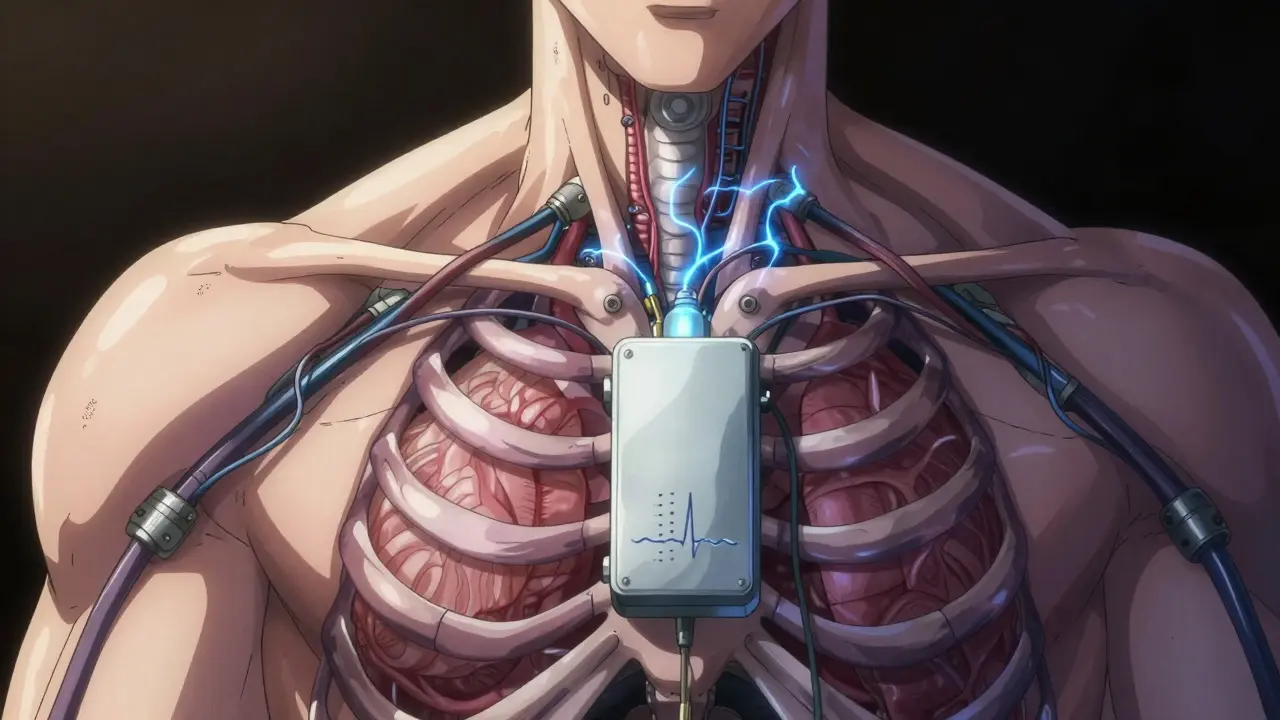
Think of upper airway stimulationan implantable nerve stimulator therapy used to treat moderate to severe obstructive sleep apnea as an intelligent biological alarm system. While most treatments rely on forcing air into your lungs through a hose, this method actually stimulates the hypoglossal nerve. This is the cranial nerve responsible for controlling tongue movement. When you breathe in, the device senses that action and sends a tiny electrical signal to your tongue, telling it to move forward slightly. This keeps the airway open so air can flow freely without the obstruction that causes snoring and apnea events.
The technology behind this is quite mature. The leading system available today is manufactured by Inspire Medical SystemsInspire. It gained FDA approval back in 2014, making it one of the more established options on the market. By 2026, over 200,000 implants have been performed globally, meaning we have plenty of real-world data on how it performs long-term. Unlike older surgical options that cut out tissue in the throat, this approach preserves anatomy while functionally managing the muscle control.
This system consists of three main parts that are surgically placed inside the body. You get a pulse generator (like a small battery pack) tucked under your skin near your collarbone. Then, there are leads running from that generator to your chest to sense breathing and to your neck to stimulate the nerve. Everything works together automatically once you turn it on before bed.
Who Can Actually Get This Treatment?
Not every person with sleep issues qualifies for the procedure. Your doctor needs to run a set of checks because the device relies on your anatomy working in a specific way. If you have a blockage higher up in the nose or palate, stimulating the tongue won't help enough. The standard eligibility checklist usually looks something like this:
- Your diagnosis must confirm obstructive sleep apnea rather than central apnea.
- Your Apnea-Hypopnea Index (AHI) should generally be between 15 and 100 events per hour, showing moderate to severe severity.
- Your Body Mass Index (BMI) typically needs to be under 35 (some newer approvals go up to 40).
- You must be at least 22 years old.
- You cannot have had prior surgeries that would block access to the necessary nerves.
- Critical factor: You must fail CPAP tolerance. Most insurance plans require proof you tried CPAP for at least three months and gave it up due to discomfort.
Beyond just the numbers, doctors often perform a drug-induced sleep endoscopy. This sounds intense, but it helps them see exactly where your airway collapses while you are sedated. If your throat collapses in a concentric pattern (like a funnel closing completely), the implant won't work well. However, if the collapse happens mostly at the base of the tongue, that is exactly what the device fixes.
How Does the Surgery Work?
The implantation itself is an outpatient procedure. You go to the hospital in the morning and head home the same day, usually resting for the remainder of the week. The surgeon makes three small incisions. One sits at the top of your neck to reach the nerve, another is lower down to place a pressure sensor on your ribs, and a third goes into the side of your chest for the battery unit.
The whole process takes roughly two to three hours. Once it's done, you aren't ready to use the device immediately. Your body needs time to heal. Usually, about four weeks post-surgery, you visit your clinic for activation. After that point, the therapy becomes part of your nightly routine. You keep a remote control by your bedside, similar to a TV remote. Every night before you drift off, you press the button. In the morning, you turn it off again. During sleep, the device monitors your breath and delivers pulses only when you inhale.
Comparing UAS to Other Treatments
If you are deciding whether to switch to an implant, understanding how it stacks up against alternatives is vital. CPAP machines push air through a mask; oral appliances shift your jaw forward; traditional surgeries remove tissue. Here is how they compare regarding effectiveness and lifestyle impact.
| Treatment Type | Surgical Requirement | Mechanism | User Adherence Rate | Reversibility |
|---|---|---|---|---|
| CPAP | No | Positive Air Pressure | Low (~60% abandon) | N/A |
| Oral Appliances | No | Jaw Positioning | Moderate | Yes |
| Traditional Surgery (UPPP) | Yes | Tissue Removal | N/A | No |
| Upper Airway Stimulation | Yes | Nerve Stimulation | High (>80%) | Yes |
While CPAP is often the first line of defense, studies show that nearly half of patients stop using it within a year. The sensation of suffocation or mask fogging kills compliance. UAS bypasses this entirely because you don't wear anything on your face. Oral appliances are another option, but they only work for mild to moderate cases and often affect bite alignment over time. Traditional surgery carries risks like dry mouth or swallowing issues, whereas UAS avoids altering the soft tissue structure permanently.
Real-World Outcomes and Side Effects
Data from major trials like the STAR trial shows impressive results. Participants saw their AHI drop significantly-often reducing from around 30 events per hour down to single digits within a year. That means fewer times your heart rate spikes from lack of oxygen during the night. Daytime sleepiness scores drop dramatically, meaning you aren't yawning away your meetings anymore.
Safety is a huge concern for anyone facing surgery. Fortunately, the complication rate is very low. Serious issues happen in less than 2% of cases. Most common complaints involve minor things like temporary soreness at the incision sites or slight tongue weakness for the first few weeks as you adjust to the sensation. Some users report feeling a twitch or vibration in the tongue, which fades as you get used to the device. If you experience persistent pain or infection, your doctor can power down the device via a handheld programmer, which is a significant safety feature compared to removing tissue irreversibly.

Cost and Insurance Coverage
Pricing is always a tricky topic with medical devices. The average cost for the procedure hovers around $35,000 to $40,000, excluding surgeon fees. This might sound daunting compared to buying a $1,000 CPAP machine. However, if you calculate the lifetime cost of replacing masks, filters, and machines, along with the health costs associated with untreated sleep apnea (like hypertension management), the value balances out.
By 2026, insurance coverage has expanded considerably. Most Medicare beneficiaries and commercial plans now cover the device if you meet the documentation requirements for CPAP failure. You still need to verify with your specific provider, but the landscape is much friendlier than it was five years ago. Don't forget that some providers offer financing programs for co-pays, making the upfront payment manageable.
Long-Term Maintenance and Lifestyle
Living with the device is surprisingly normal once you settle in. There are no monthly visits or refills. The battery lasts about six years before needing replacement, which is a quick surgical procedure compared to the first one. You won't feel shocks; the stimulation is mild, below the threshold of perception for most people, but strong enough to move the nerve.
A common adjustment challenge is remembering to turn it on. Since you aren't waking up gasping for air as you did pre-treatment, the habit can slip. Setting a reminder on your phone for bedtime helps train the brain. Partner feedback is also useful-if they notice you started snoring again, you likely forgot the remote.
Frequently Asked Questions
Does the implant hurt after surgery?
Most patients report mild discomfort at the incision sites for about a week. Pain medication prescribed by your surgeon usually manages this effectively. Tongue weakness sensations may last a few days but resolve quickly.
Can I fly after getting the implant?
You can travel internationally, but airport security scanners will detect the metal components of the implant. Always inform TSA officers beforehand and carry your implant ID card to pass through checkpoints without issue.
Will the device fix my high blood pressure?
Improvements in sleep apnea often lead to better cardiovascular health. Many patients see reductions in systolic blood pressure within the first year, though you should never stop medications without consulting your cardiologist.
Is the procedure reversible if I don't like it?
Yes, unlike tonsillectomy or UPPP, the device is removable. If it causes problems or is ineffective, surgeons can extract the components in a separate procedure.
How long does the battery last?
The internal battery typically powers the device for approximately 6 years. Replacement is a shorter procedure than the initial implant and restores full function.
If you are tired of wrestling with a mask and struggling to wake up refreshed, asking your specialist about UAS could be the next logical step. With high satisfaction rates and a solid safety profile, it represents a modern solution to an ancient problem. Speak with your sleep specialist to check if you qualify-it might just change how you rest forever.

Charles Rogers
March 31, 2026 at 07:20People think it is easy to just get the device but you really need to understand the BMI limits and everything else regarding your specific body type before considering this procedure seriously. Most folks skip the endoscopy part entirely which is why they fail so badly down the line when the anatomy just does not align right. I see too many individuals running in blind and then complaining about unnecessary pain later when they could have been told they were not candidates early enough.
Calvin H
April 1, 2026 at 14:01$40k for a gadget in my chest lol
Marwood Construction
April 2, 2026 at 18:47Insurance covers it properly if you document CPAP failure requirements correctly so out of pocket costs are rarely that high for beneficiaries with full plans.
Debbie Fradin
April 4, 2026 at 12:58They say nerve stimulation helps significantly but half the time it just twitches your tongue until you want to scream in frustration instead of relaxing. It sounds like magic but the reality is often a lot more mechanical and annoying than the brochures admit frankly.
William Rhodes
April 6, 2026 at 04:29My wife stopped snoring completely after six months of using the system and I sleep so much better now than we did previously. The peace of quiet alone was worth every single minute of recovery time involved in the whole process.
Brian Yap
April 6, 2026 at 18:10Cool tech :)
Adryan Brown
April 8, 2026 at 09:07I went through this exact process last year and honestly it changed my life for the better in ways I did not expect initially.
The initial surgery felt weird having things placed under the skin but once healed I never noticed the battery pack sitting there internally.
Turning it on every night became muscle memory pretty quickly after the first few weeks of adjustment period.
My doctor explained the drug induced sleep endoscopy clearly so I was not scared about the sedation part at all during prep.
Recovery took about a week before I felt back to normal energy levels again for daily tasks.
Some days I forget to hit the button in the morning and turn it off but it shuts down automatically eventually anyway.
The remote feels just like a regular TV clicker sitting next to my pillow each time before bed.
You really do feel less groggy during meetings compared to how I felt on the heavy machine mask consistently.
Breathing feels different because there is no pressure pushing air into my throat constantly anymore while sleeping.
I wake up without that dry mouth feeling that used to plague me every single morning without fail.
Snoring is gone completely which is great for my partner who hates noise and disruption during the night.
Battery replacement is something I think about but six years is plenty of time to enjoy the benefits fully before needing work.
Pain meds were manageable for the first few nights but nothing crazy severe to deal with during rest.
Surgeon said the complications rate is super low so I did not worry too much about infection risks associated with implants.
Now I tell anyone who asks about it that the investment was totally worth the sleep quality gains for us.
I recommend getting the sleep study redone just to confirm the numbers are actually improving after the fact specifically.
Definitely check insurance policies first because some regional plans have different rules about what they pay for upfront costs.
RONALD FOWLER
April 8, 2026 at 16:38good read glad you had success story
Vikash Ranjan
April 10, 2026 at 06:51Why trust a machine over your own muscles working normally its risky putting electrical components inside your neck area like that.
dPhanen DhrubRaaj
April 11, 2026 at 07:38i mean if cpap failed theres really not much else left to try safely without major damage to throat tissue
Dan Stoof
April 12, 2026 at 06:10Oh! The relief from waking up gasping is absolutely phenomenal!! Plus no more foggy lenses on the glasses either!!! It is a game changer for sure!!!
Jonathan Alexander
April 14, 2026 at 02:43Still feels like cheating though putting tech inside your body permanently changes how your system functions naturally in the long run perhaps.