Bempedoic Acid Side Effect Risk Calculator
This tool estimates your risk of gout or tendon issues based on key factors from clinical studies. Enter your details below:
When you can't take statins because of muscle pain or other side effects, bempedoic acid (sold as Nexletol) might be your next option. It's designed to lower LDL cholesterol - the "bad" kind - by blocking a different enzyme in the liver than statins do. But unlike statins, it comes with its own set of risks that many people don't expect. Two of the biggest concerns? Gout and tendon injuries. If you're considering this drug, or already taking it, you need to know what’s really going on under the hood.
How Bempedoic Acid Works - And Why It Triggers Gout
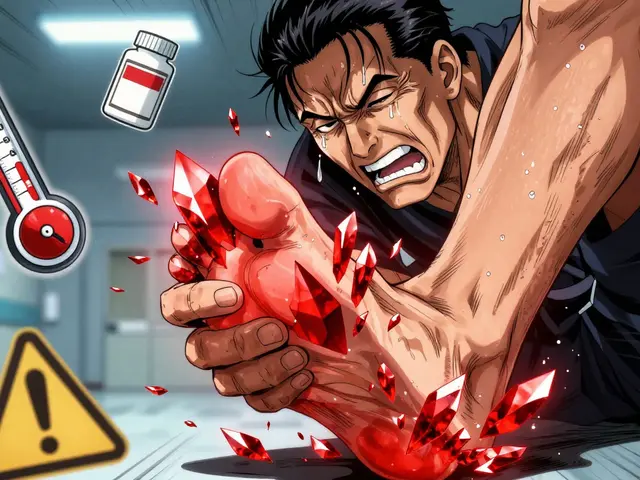
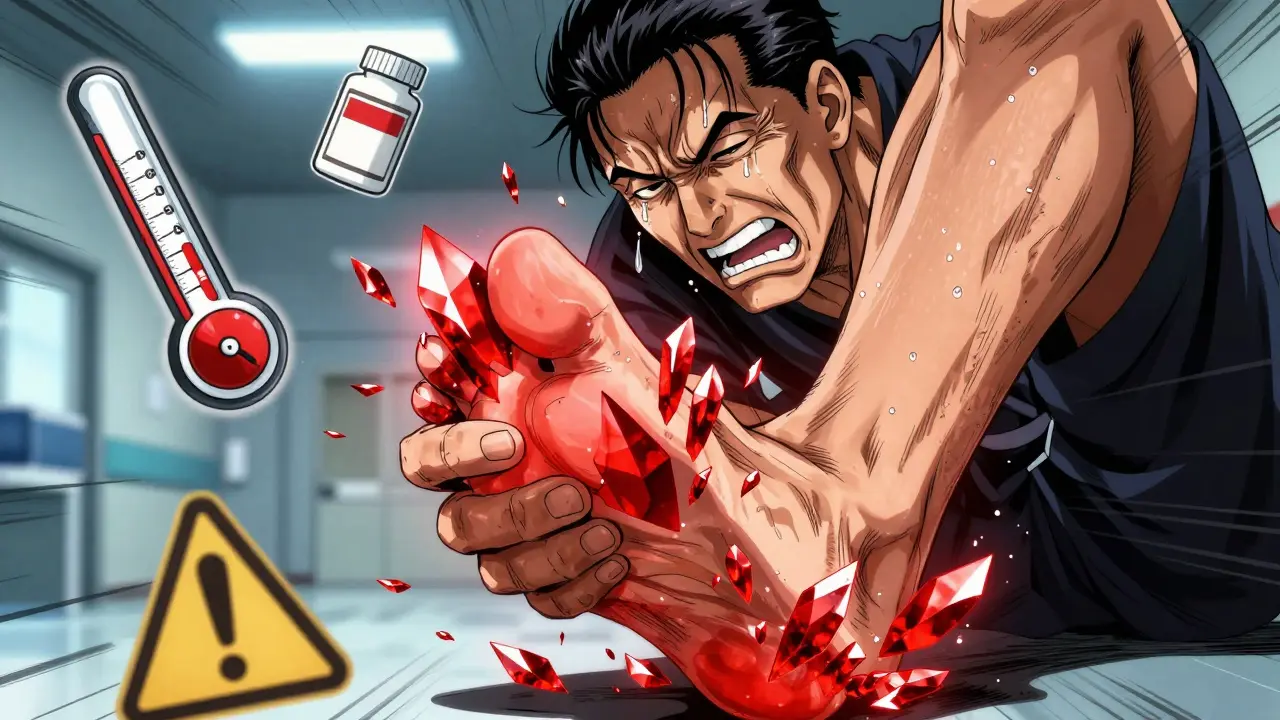
Bempedoic acid doesn't touch muscle tissue like statins do. That’s why it's often prescribed to people who can't tolerate statins. But here's the catch: it increases uric acid levels in your blood. That’s not a side effect you can ignore. Uric acid is a natural waste product, but when it builds up, it forms sharp crystals in your joints. The big toe? That’s ground zero. One in 67 people taking bempedoic acid ends up with a gout flare. That’s 1.5% - more than triple the rate in people on placebo. If you’ve had gout before, your risk jumps to 2.3%. That’s not a small number.
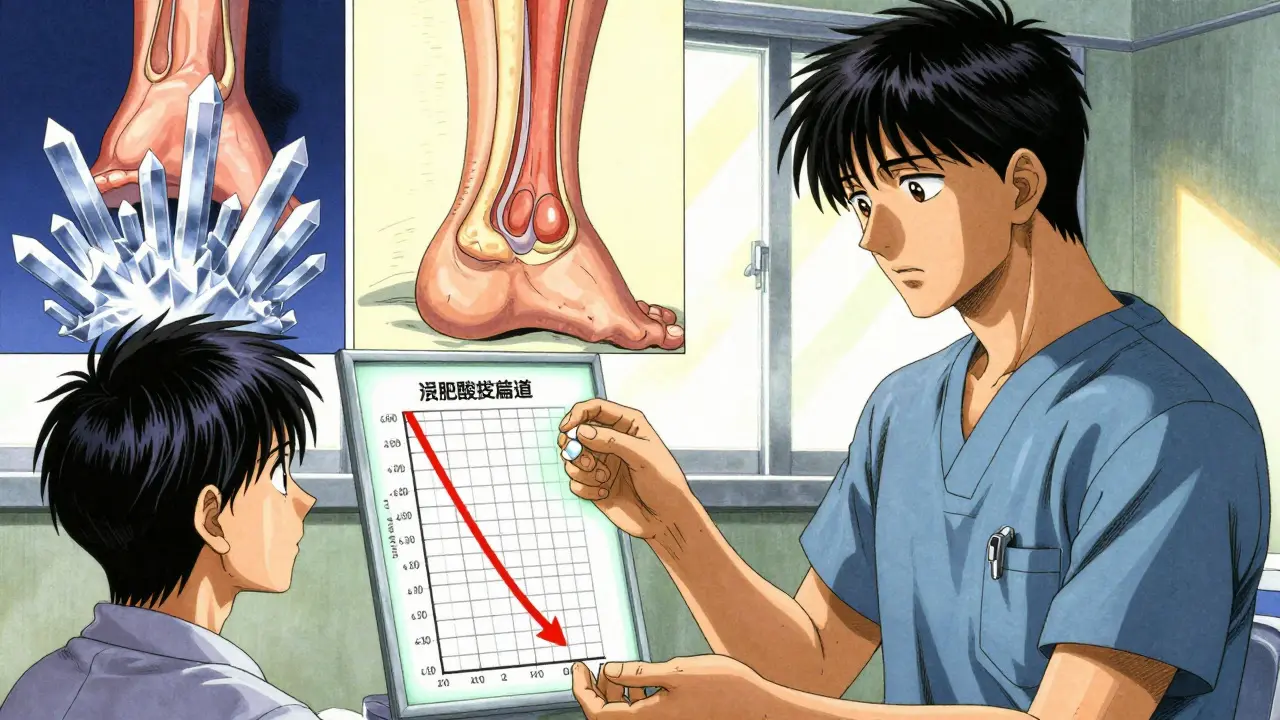
Doctors see this within the first month. Patients come in complaining of sudden, burning pain in their big toe, ankle, or knee. It’s not just discomfort - it’s debilitating. And it’s directly tied to the drug. The FDA requires labs to check uric acid levels before you start and again at four weeks. If it’s climbing, your doctor should talk to you about prevention. Prophylactic allopurinol - a simple, cheap pill - cuts gout risk by about two-thirds. But most patients never hear this unless they ask.
Tendon Risks: More Than Just Muscle Pain
Most people assume that if a drug doesn’t cause muscle pain, it’s safe for movement. Not true. Bempedoic acid has been linked to tendon ruptures - especially when combined with statins. In clinical trials, 0.7% of people on bempedoic acid had tendon problems. That’s seven times higher than placebo. But here’s the scary part: if you’re on both bempedoic acid and a statin, your risk jumps to 3.5 times higher than if you’re on placebo alone. That’s not a coincidence. It’s a known interaction.
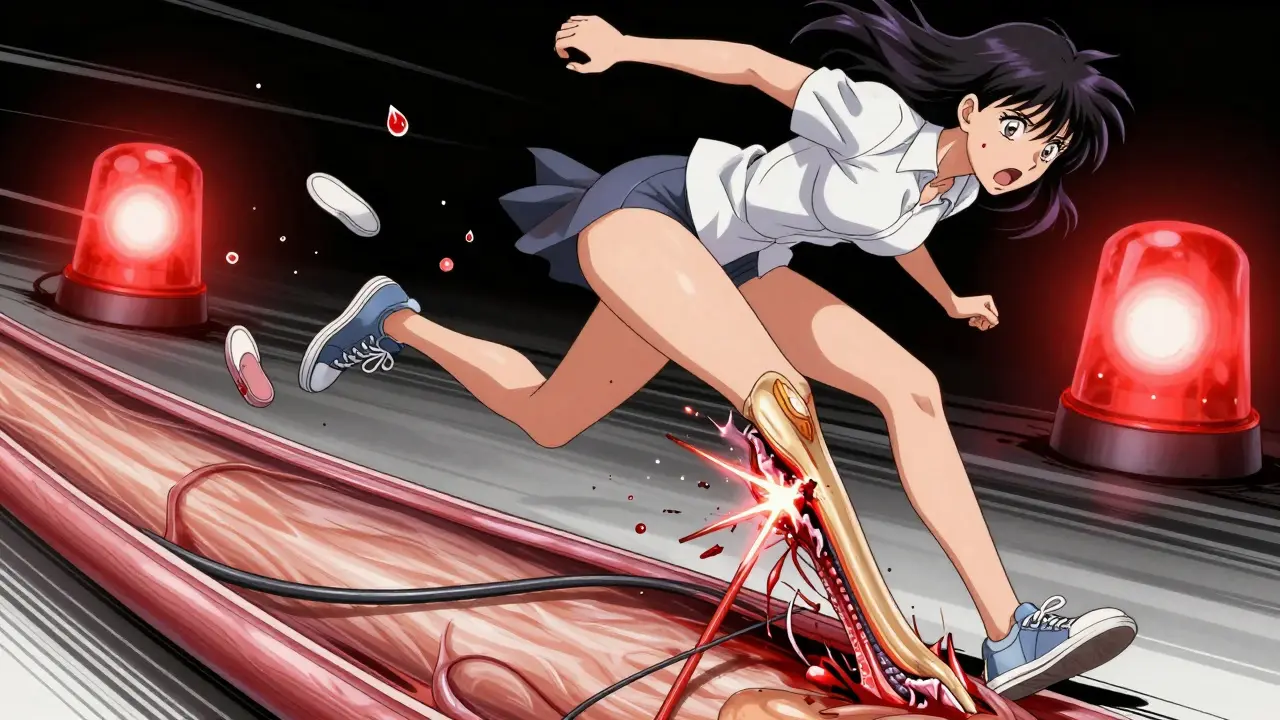
Tendon rupture doesn’t always come with warning signs. Sometimes, people hear a "snap" or "pop" - like a rubber band breaking - and suddenly can’t stand on their foot or lift their arm. The Achilles tendon is the most common, but shoulders, hands, and wrists are also at risk. The FDA warns that if you feel sudden pain, swelling, or bruising near a tendon, stop the drug and get to an ER. No waiting. No "it’ll pass." This isn’t soreness. It’s structural damage.
And it’s not just statins. Fluoroquinolone antibiotics - like ciprofloxacin or levofloxacin - also raise tendon risk. If you’re on bempedoic acid and get prescribed one of these for a sinus infection or UTI, your doctor should pause the cholesterol drug. The European Atherosclerosis Society says outright: don’t use bempedoic acid if you’ve had prior tendon issues.
Other Side Effects You Can’t Ignore
Gout and tendon injuries get the headlines, but other side effects are common enough to matter. About 6% of people get muscle spasms. Back pain? Nearly 5%. Pain in hands or feet? Over 3%. These aren’t rare. They’re frequent enough that your doctor should ask about them at follow-ups.
Liver enzymes go up in 2.2% of users. That sounds scary, but it’s usually mild. Only 1.6% have levels more than three times the normal limit - and most of those cases resolve without stopping the drug. Still, liver tests are required every three months. Anemia shows up in 1.8% of people. It’s usually mild - hemoglobin drops less than 1 g/dL - but if you’re already low on iron or have kidney disease, this can add up.
Respiratory infections? Yes. Bronchitis, colds, and flu-like symptoms are slightly more common. So is stomach pain and diarrhea. None of these are life-threatening, but they can make daily life harder. And if you’re taking bempedoic acid because you’re already tired of statin side effects, adding new ones can feel like trading one problem for another.
Who Should Avoid Bempedoic Acid Altogether?
Not everyone should try this drug. If you’ve had gout before, you’re already at higher risk. If you’ve had a tendon tear, rupture, or chronic tendonitis, skip it. Same if you’re on fluoroquinolone antibiotics - even for a few days. The combo is dangerous.
People with severe liver disease should also avoid it. While liver enzyme spikes are usually mild, if your liver is already struggling, this drug adds stress. And if you’re pregnant or breastfeeding? There’s no data. Don’t take it.
Most importantly - if you’re not statin-intolerant, this isn’t your first-line option. The American Heart Association says it clearly: reserve bempedoic acid for those who truly can’t take statins. It’s not better than statins. It’s an alternative. And alternatives come with trade-offs.
What to Do If You’re Already Taking It
If you’re on bempedoic acid right now, here’s your action plan:
- Check your uric acid levels. If you haven’t had them tested in the last 4 weeks, ask your doctor.
- Watch for gout symptoms: sudden joint pain, redness, swelling - especially in the big toe. Don’t wait for it to get worse.
- Listen to your body. If you feel a pop, snap, or sharp pain in a tendon, stop the drug and get medical help immediately.
- Review all your other meds. Are you on cipro, levaquin, or another fluoroquinolone? Tell your cardiologist.
- Keep a journal. Note when you feel muscle spasms, fatigue, or stomach issues. Patterns help your doctor adjust your plan.
Most side effects - like muscle spasms or mild fatigue - fade after a few weeks. Only 1.2% of people quit the drug because of them. But tendon and gout risks? They don’t fade. They can change your life.
The Bigger Picture: Is It Worth It?
Yes - for the right person. The CLEAR Outcomes trial showed bempedoic acid reduces heart attacks, strokes, and death by 13% over three years. That’s meaningful. For someone who can’t take statins, it’s a lifesaver. But it’s not a magic bullet. It’s a tool with sharp edges.
The future is coming. Esperion is testing a once-weekly version. Early data shows it cuts gout risk by 22%. That’s huge. But until then, the daily pill comes with real, documented risks. You need to know them. Not because you should avoid it - but because you need to manage it.
If you’re considering bempedoic acid, talk to your doctor. Ask: "Do I have a history of gout? Have I ever had a tendon injury? Am I on any antibiotics?" Don’t assume it’s safe just because it doesn’t hurt your muscles. The risks are different - and they’re real.
Can bempedoic acid cause gout even if I’ve never had it before?
Yes. Even if you’ve never had gout, bempedoic acid raises uric acid levels in your blood, which can trigger your first gout attack. About 1.5% of people without prior gout still experience flares within the first month of treatment. This is why doctors check uric acid levels before and after starting the drug.
Is tendon damage from bempedoic acid reversible?
It depends. Mild tendon pain or inflammation may improve if you stop the drug early and rest. But a full tendon rupture - especially in the Achilles - often requires surgery and months of rehab. The damage isn’t always reversible. That’s why immediate action is critical if you hear a "pop" or suddenly can’t move a joint.
Can I take bempedoic acid with statins?
Yes - but with caution. The combination (Nexlizet) is FDA-approved and lowers cholesterol more effectively. But it also triples your risk of tendon rupture compared to taking bempedoic acid alone. If you’re on both, your doctor should monitor you closely and avoid fluoroquinolone antibiotics. Many patients choose to avoid this combo unless absolutely necessary.
Do I need to take allopurinol with bempedoic acid?
Not automatically, but if your uric acid levels rise above 7 mg/dL, your doctor should consider it. Studies show allopurinol reduces gout attacks by 65% in people taking bempedoic acid. It’s cheap, well-tolerated, and often covered by insurance. Ask your doctor if you’re at risk.
How long does it take for bempedoic acid side effects to show up?
Gout flares often happen within the first 4 weeks. Tendon injuries can occur anytime, but most are reported within the first 3 months. Muscle spasms and fatigue may appear in the first week but usually fade. Liver enzyme changes show up in blood tests around 4-8 weeks. Regular monitoring is key.