

Learn how to time antimalarials and HIV medications across time zones to avoid treatment failure, drug resistance, and dangerous side effects. Essential guide for international travelers.
Travel Medications: What to Pack and How to Stay Safe Across Borders
When you're heading abroad, your travel medications, prescriptions and over-the-counter drugs you carry for health needs while traveling. Also known as medications for international travel, these aren't just pills in a bag—they're part of your travel plan, just like your passport. Skipping this step can mean days in pain, a confiscated prescription, or worse—being denied entry because customs thinks you're smuggling something illegal.
Not all countries treat the same drugs the same way. Something you buy over the counter at home, like a strong painkiller or sleep aid, might be classified as a controlled substance overseas. For example, codeine is legal in the U.S. with a prescription, but in Japan, it’s banned entirely—even with documentation. That’s why international medication rules, the legal requirements for bringing drugs into foreign countries matter more than you think. You need to know what’s allowed, how much you can bring, and what paperwork to carry. The customs medication limits, the maximum quantities of drugs permitted when entering a country vary wildly. Some places allow a 30-day supply with a doctor’s note. Others require a special permit months in advance. And don’t assume your prescription label is enough—many countries demand official translations or government-issued forms.
Then there’s the practical side. What do you actually need? Beyond your regular meds, think about motion sickness pills, anti-diarrheal meds, antihistamines, and pain relievers. Don’t forget the basics: hand sanitizer, bandages, and electrolyte packets. If you’re flying, keep everything in your carry-on. Checked luggage can get lost, and if you need your asthma inhaler or insulin at 30,000 feet, you can’t afford to wait. Also, keep original bottles with your name on them. Pharmacists don’t need to be detectives—you do. And if you’re taking controlled substances like opioids or ADHD meds, bring a letter from your doctor that explains why you need them, the dosage, and the duration of your trip.
Some travelers think they can just buy meds locally when they arrive. Bad idea. Drug quality varies. Counterfeits are common. And if you’re in a country with language barriers, asking for "the blue pill for stomach pain" could get you something completely wrong. That’s why the best plan is to bring what you know works, plus a few extra days’ supply in case your trip gets extended. Always check the embassy website of your destination country—they often list banned substances and required documentation. Don’t wait until you’re at the airport.
You’ll find real-world advice in the posts below: how to pack your meds so they don’t get seized, which countries have the strictest rules, what to do if your prescription isn’t allowed, and how to handle emergency situations overseas. Whether you’re flying to Europe, backpacking through Southeast Asia, or visiting family overseas, this isn’t about being overly cautious—it’s about being smart. Your health shouldn’t be left to chance when you’re far from home.

Learn why carrying medications in original containers is critical for safe travel in 2026, from TSA rules to international bans. Avoid delays, fines, and legal trouble with this practical guide.
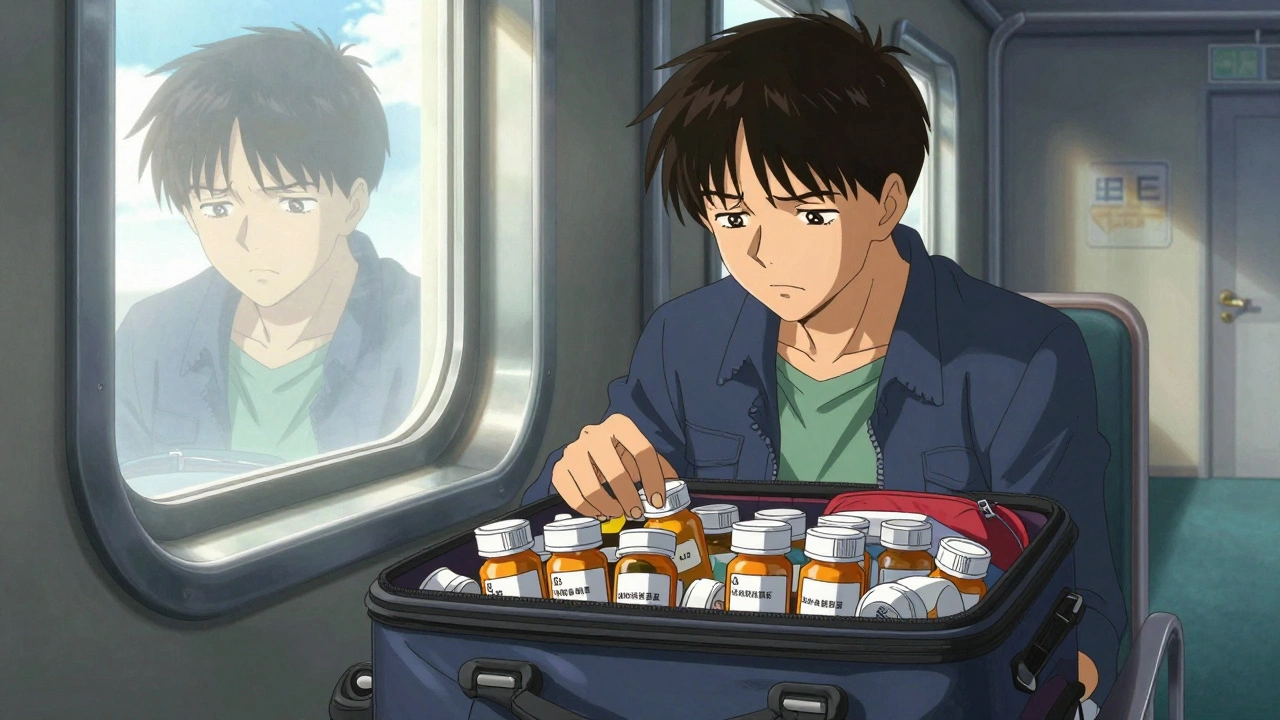
Learn how to manage prescriptions on a cruise ship-what medications are available, what you must bring yourself, and how to avoid costly or dangerous mistakes. Essential advice for travelers with chronic conditions.