
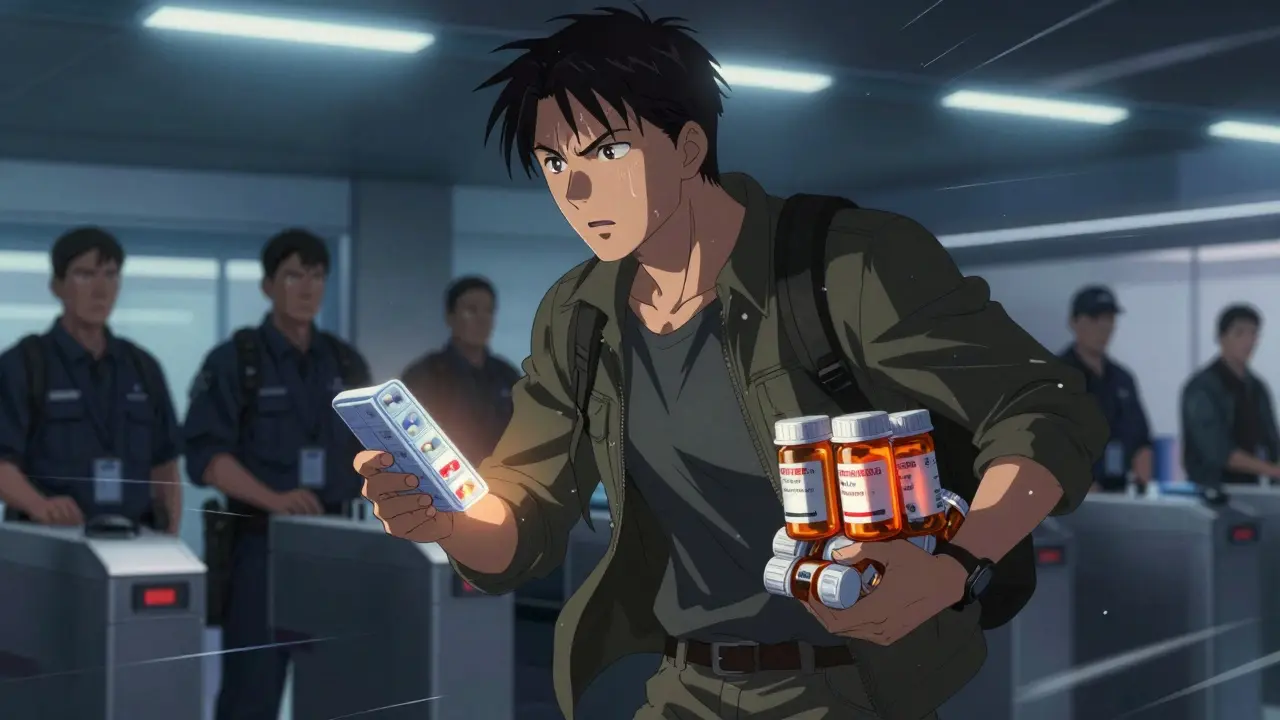
It’s 3 a.m. and you’re rushing through security at JFK with your carry-on, a pill organizer in hand, and a sinking feeling in your stomach. You didn’t bring your prescription bottles. You’re not sure if that’s a problem. You’ve heard conflicting things. Maybe you’re fine. Maybe you’re not. You’re not alone. Thousands of travelers face this exact moment every day, and the difference between a smooth screening and a confiscated medication often comes down to one thing: whether your pills are still in their original containers.
Why Original Containers Matter More Than You Think
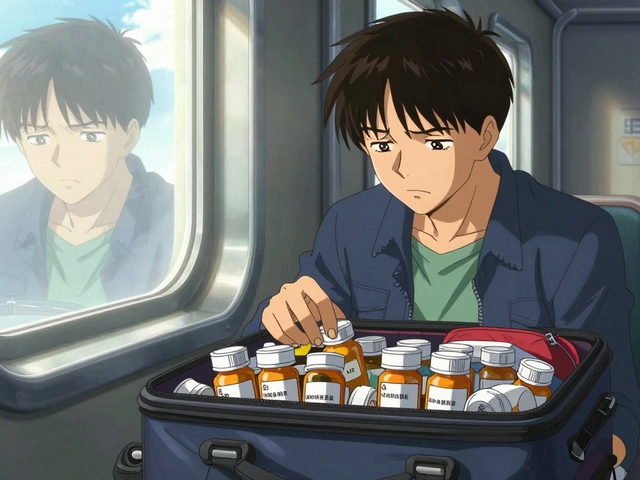
The TSA doesn’t legally require you to keep medications in their original bottles. That’s the official line. But here’s what they don’t tell you: original containers are your best defense against delays, confiscation, and even legal trouble-especially when you’re crossing borders. Think about it from a security officer’s point of view. They see hundreds of bags a day. A small plastic case with unlabeled white pills? That’s a red flag. A bottle with a pharmacy label, your name, the drug name, dosage, and prescriber info? That’s a clear, verified item. No questions asked. The Cleveland Clinic and the American Society of Health-System Pharmacists both say the same thing: keep your meds in original containers. Why? Because labels aren’t just paperwork-they’re proof. They prove the medication is legitimate, prescribed to you, and not something dangerous or illegal. Even if TSA doesn’t demand it, customs agents in other countries absolutely do.Domestic vs. International: Two Different Rules
Inside the U.S., rules vary by state. Thirty-seven states, including California, New York, and Texas, require prescription meds to be in original containers when transported. That means even if you’re just driving from Florida to Arizona, you could get pulled over and fined if your pills aren’t labeled properly. But international travel? That’s where things get serious. Take pseudoephedrine-the common decongestant in Sudafed. It’s legal in the U.S. But in Japan, the UAE, and South Korea, it’s classified as a controlled substance. Bring it in a pill organizer? You could be arrested. Bring it in the original bottle with your name and prescription? You might still get questioned, but you’ll likely be let through with a warning. Same goes for Adderall and Ritalin. These ADHD medications are banned in over 30 countries, including Singapore, Thailand, and several EU nations. If you’re caught without proper documentation, you’re not just risking a fine-you’re risking jail time. The U.S. Department of State reports that 68% fewer travelers are denied entry into Mexico when they carry medications in original containers with a doctor’s letter. That’s not a small number. That’s life-changing.What Exactly Counts as an “Original Container”?
It’s not just any bottle with a label. The original container means the bottle your pharmacy gave you-printed with:- Your full name
- The drug name (brand and generic)
- Dosage and instructions
- Pharmacy name and contact info
- Prescriber’s name
- Expiration date
What to Do If You Must Use a Pill Organizer
Sometimes, original bottles are bulky. You’re traveling light. You’ve got 12 different pills. You need a solution. Here’s what experts recommend if you switch to a pill organizer:- Label each compartment clearly: drug name, dose, time of day, expiration date.
- Carry a printed copy of your prescription or a doctor’s letter on official letterhead.
- Include your doctor’s license number and contact info.
- Take a photo of each original bottle and store it on your phone.
- Keep the original bottles in your checked luggage-just in case you’re asked to show proof.
Liquids, Injections, and Temperature-Sensitive Meds
TSA allows more than 3.4 ounces of liquid medication in your carry-on-but you must declare it at the start of screening. Tell the officer before you reach the X-ray machine. Don’t wait for them to find it. Insulin, epinephrine pens, and other injectables? Always keep them in your carry-on. Never check them. United Airlines and the International Air Transport Association both say checked baggage can hit extreme temperatures. Your insulin could spoil. Your EpiPen could fail. For temperature-sensitive meds like certain biologics or refrigerated insulin, talk to your pharmacist. Ice packs are allowed, but they must be declared. Wrap them in a plastic bag. Put them next to your meds. Let the officer know what you’re carrying.The One Thing No One Tells You: Bring Extra
Travel delays happen. Your flight gets canceled. Your bag gets lost. You’re stuck in a foreign airport for three days. The Cleveland Clinic advises bringing at least a 10-15% extra supply of all your medications. Why? Because the drug you take daily might not exist in the country you’re visiting. Or it might be a different brand. Or it might be illegal. In 2023, the FDA found that 28.4% of medications bought in Southeast Asia were counterfeit. That’s nearly one in three. You don’t want to be the person who runs out of blood pressure meds and tries to buy a “generic” version off a street vendor.Documentation: Your Secret Weapon
A doctor’s letter isn’t optional if you’re traveling internationally. It should include:- Your diagnosis
- Medication names (brand and generic)
- Dosage and frequency
- Reason for use
- Doctor’s name, license number, phone, and clinic address
- Date of letter
What Happens If You Get Caught Without Original Containers?
In the U.S., you’ll likely get a pat-down, a few extra questions, and maybe a bag check. No arrest. But you’ll be delayed. In other countries? It’s a different story. In Singapore, bringing Adderall without a permit can mean jail time. In the UAE, even a small amount of codeine without a prescription can lead to deportation and a ban from re-entry. In Thailand, travelers have been detained for carrying over-the-counter painkillers with tramadol. The International Association for Medical Assistance to Travelers found that travelers with original containers had 73% fewer delays at customs. That’s not luck. That’s preparation.Final Checklist: Before You Fly
Before you leave, run through this:- Are all prescriptions in original bottles with full labels?
- Do you have a doctor’s letter for each controlled or unusual medication?
- Do you know the laws of your destination country? (Check the U.S. State Department website.)
- Are your liquids declared and easily accessible?
- Are all meds in your carry-on? No exceptions.
- Do you have extra supply? At least 10% more than needed.
- Do you have photos of original bottles on your phone?
- Have you checked if your meds are banned in your destination? (Search: “[Country] + banned medications”)
What’s Changing in 2026?
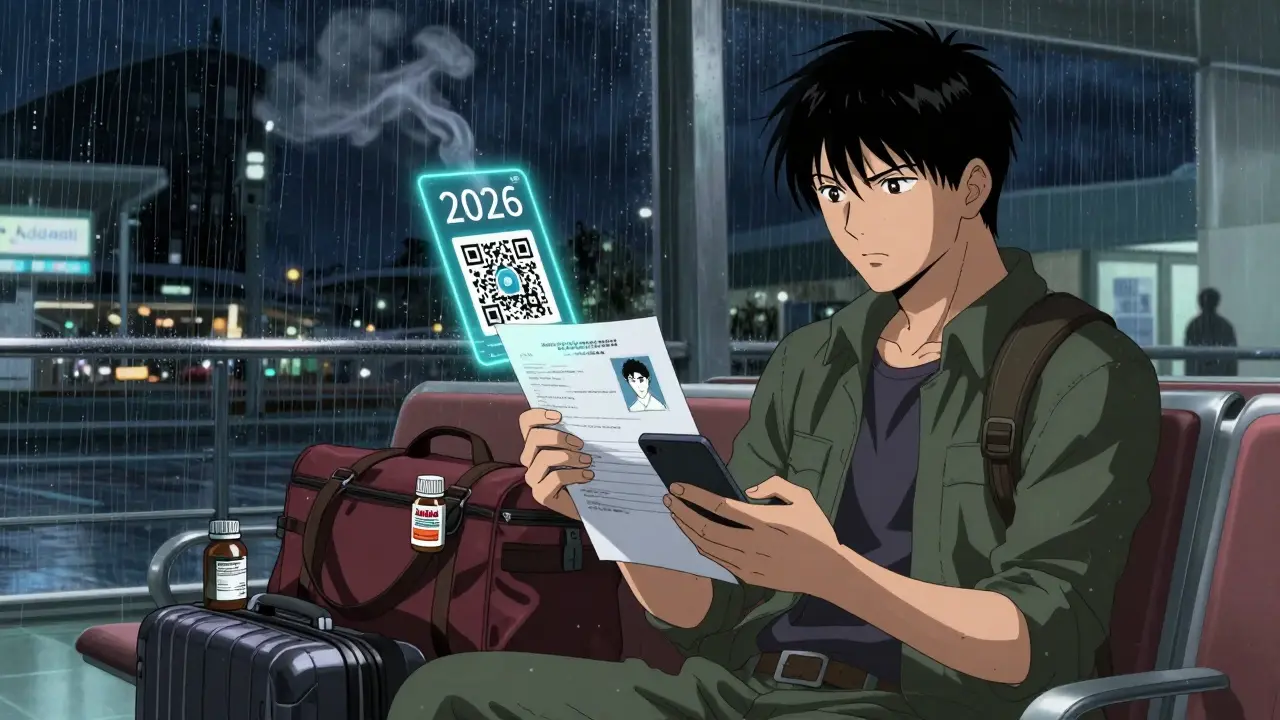
The TSA is testing a digital verification pilot at 12 major U.S. airports. By late 2024, you might be able to scan a QR code on your prescription bottle and show your meds on your phone. The International Air Transport Association is also developing a global digital health pass for meds, expected to roll out in 2025. But here’s the catch: technology won’t fix bad policy. Countries will still have their own rules. Your original bottle will still be the most reliable proof you have. Don’t wait for the app. Don’t hope for a shortcut. Keep your meds in their original containers. Bring the letter. Pack extra. Keep them in your carry-on. It’s not about following rules. It’s about protecting yourself.Do I have to keep my pills in original bottles when flying within the U.S.?
No, the TSA doesn’t require it. But 37 U.S. states have laws that do. If you’re driving or flying between states, you could be fined or questioned. Keeping meds in original containers avoids legal risk and makes security screening faster.
Can I put my medications in a pill organizer?
Yes, but only if you also carry a doctor’s letter and a photo of the original bottle. A pill organizer alone isn’t enough for customs or security. If you’re flying internationally, you’re risking delays or confiscation.
Are liquid medications allowed in carry-on bags?
Yes, medically necessary liquids over 3.4 ounces are allowed, but you must tell a TSA officer at the start of screening. Never pack them in checked luggage-they can freeze or spoil. Insulin, eye drops, and liquid pain meds all qualify.
What if my medication is banned in my destination country?
Don’t bring it. Countries like Japan, Singapore, and the UAE ban common U.S. meds like Adderall, Sudafed, and codeine. Even with a prescription, you could be arrested. Check the U.S. State Department’s travel advisories for your destination before you pack.
Should I bring extra medication?
Yes. Always bring at least 10-15% more than you think you’ll need. Flights get delayed. Bags get lost. Pharmacies abroad may not carry your drug-or they may sell counterfeit versions. Extra supply is your safety net.
Can I buy medication abroad and bring it back to the U.S.?
No. The FDA prohibits bringing in unapproved drugs, even if they’re the same as what you take at home. Many overseas meds are counterfeit or contain dangerous ingredients. Stick to your U.S. prescriptions and bring enough for your whole trip.


Bobbi-Marie Nova
January 15, 2026 at 23:04I swear, if I lose one more pill organizer to TSA, I’m just gonna start carrying a printed copy of my prescription taped to my forehead. 🤦♀️
Ryan Hutchison
January 16, 2026 at 10:26Look, if you can’t be bothered to keep your meds in the original bottle, you don’t deserve to travel. This isn’t a suggestion-it’s a survival skill. The U.S. doesn’t owe you convenience.
Stephen Tulloch
January 18, 2026 at 02:45I mean… 🤓 I carry my meds in a custom engraved titanium case with a QR code linked to my EHR. TSA agents just stare. One asked if I was a spy. I said, 'No, just someone who respects pharmacology.' They let me through. You’re welcome.
Melodie Lesesne
January 19, 2026 at 14:35I used to roll the dice with pill organizers until I got pulled aside in Frankfurt. Now I keep the bottle, the letter, the photo, and a printed copy of the country’s medication laws. It’s extra, but so is getting deported.
Corey Sawchuk
January 20, 2026 at 09:13I just put everything in my carry-on and don’t think about it. If they ask, I show them. Simple. No drama.
Rob Deneke
January 21, 2026 at 09:58You got this. Just remember: extra pills, extra paper, extra peace of mind. You’re not overpacking-you’re being smart.
evelyn wellding
January 22, 2026 at 07:38I started doing this after my friend got stuck in Dubai for 3 days over a box of ibuprofen 😭 Don’t be her. Be the person who breezes through.
Chelsea Harton
January 22, 2026 at 10:43meds arent toys. if you dont take them seriously you deserve to lose them
Corey Chrisinger
January 24, 2026 at 04:16It’s funny how we treat medicine like contraband. We’re so afraid of pills that we’ve turned pharmacies into border checkpoints. We’re not protecting safety-we’re just performing control.
Bianca Leonhardt
January 25, 2026 at 11:17I can’t believe people still ask if they can use pill organizers. If you’re that lazy, maybe you shouldn’t be traveling. Or taking meds. Honestly.
Travis Craw
January 27, 2026 at 09:29i used to think this was overkill until i got pulled over in texas with my anxiety meds in a tupperware. now i carry the bottle and a letter and i dont even care if it looks dumb
kanchan tiwari
January 29, 2026 at 04:13THEY’RE WATCHING YOU. THE PHARMA COMPANIES, THE TSA, THE GOVERNMENT, THE AI THAT SCANS YOUR PILLS-EVERYTHING IS TRACKED. YOU THINK YOUR PILL ORGANIZER IS SAFE? THINK AGAIN. THEY’RE COLLECTING DATA ON YOUR HEALTH, YOUR TRAVELS, YOUR FEAR. KEEP THE BOTTLE OR BECOME A NUMBER IN THEIR DATABASE. I’M NOT SCARED. I’M PREPARED.
Christina Bilotti
January 29, 2026 at 16:40I love how people act like this is some revolutionary advice. This isn’t 2026, it’s 2024. We’ve known this since 2010. If you didn’t know this, maybe you shouldn’t be leaving your house.