
Sirolimus Timing Calculator
This calculator helps determine the safest time to start sirolimus after surgery based on your individual risk factors. It considers factors like BMI, diabetes status, smoking, and surgery type to provide personalized recommendations.
When a patient gets a kidney transplant, the goal isn’t just to keep the organ alive-it’s to help them live a full life after. That means managing rejection, avoiding infections, and preventing long-term damage from the drugs they need. One of those drugs is sirolimus is a mammalian target of rapamycin (mTOR) inhibitor used to prevent organ rejection in transplant recipients. Also known as rapamycin, it was first approved by the FDA in 1999 and has since become a key option for patients at high risk of cancer or kidney damage from other immunosuppressants.
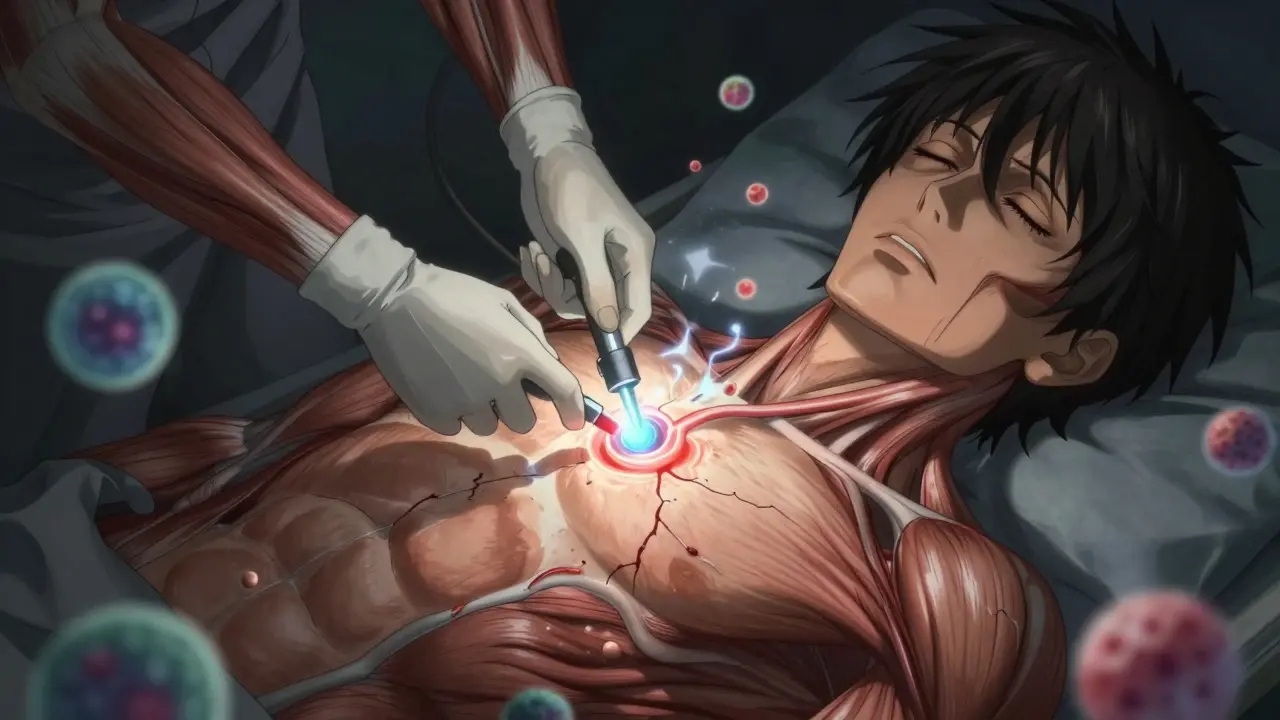
But here’s the catch: sirolimus doesn’t just stop your immune system from attacking the new kidney. It also slows down your body’s ability to heal cuts, incisions, and surgical wounds. That’s not a side effect you can ignore. If you’re getting surgery-whether it’s a transplant or something like a skin biopsy-timing when you start or restart sirolimus matters more than most doctors realize.
How Sirolimus Slows Healing
Sirolimus works by blocking a protein called mTOR, which is like a switch that tells cells to grow and multiply. In transplant patients, that’s helpful-it stops immune cells from attacking the new organ. But in healing tissue, that same switch is needed to rebuild skin, blood vessels, and connective tissue.
Studies using rat models showed that when sirolimus was given at doses of 2.0 or 5.0 mg per kg per day, wound breaking strength dropped by more than 30% compared to controls. That’s not a small difference-it’s the kind of change that can turn a minor incision into a slow-healing, infection-prone wound. Why? Because sirolimus hits multiple parts of the healing process:
- It cuts VEGF (vascular endothelial growth factor) by up to 60%, which means fewer new blood vessels form in the wound. No blood flow? No healing.
- It reduces collagen production, the main structural protein in skin and scar tissue. Less collagen? Weaker scars.
- It stops fibroblasts and smooth muscle cells from multiplying. These are the cells that literally rebuild the wound.
- It lowers nitric oxide levels, which normally help bring immune cells to the site and open up blood vessels.
What’s scary is that sirolimus doesn’t just stay in your blood. One study found concentrations in wound fluid were two to five times higher than in the bloodstream. That means your surgical site is getting a direct, heavy dose-even if your blood levels look fine.
When Do Complications Show Up?
The biggest risk isn’t when you take the drug-it’s when you take it too soon after surgery.
Early studies from the 2000s showed alarming numbers: 7.7% of transplant patients on sirolimus had their surgical wounds open up (dehiscence), compared to 0% in those not on the drug. Infections were nearly four times more common. But here’s what those studies didn’t tell you: the sample sizes were tiny. Only 26 patients were on sirolimus in the Mayo Clinic study. And many of those patients had other risk factors-diabetes, obesity, smoking-that made healing harder anyway.
Fast forward to 2022, and the story’s changed. New data from clinical teams across the U.S. and Europe show that with better patient selection and dosing, the risks aren’t as high as once thought. In fact, some centers now start sirolimus as early as day 5 after transplant, as long as the wound looks stable.
The real danger isn’t sirolimus itself. It’s giving it to the wrong person at the wrong time.
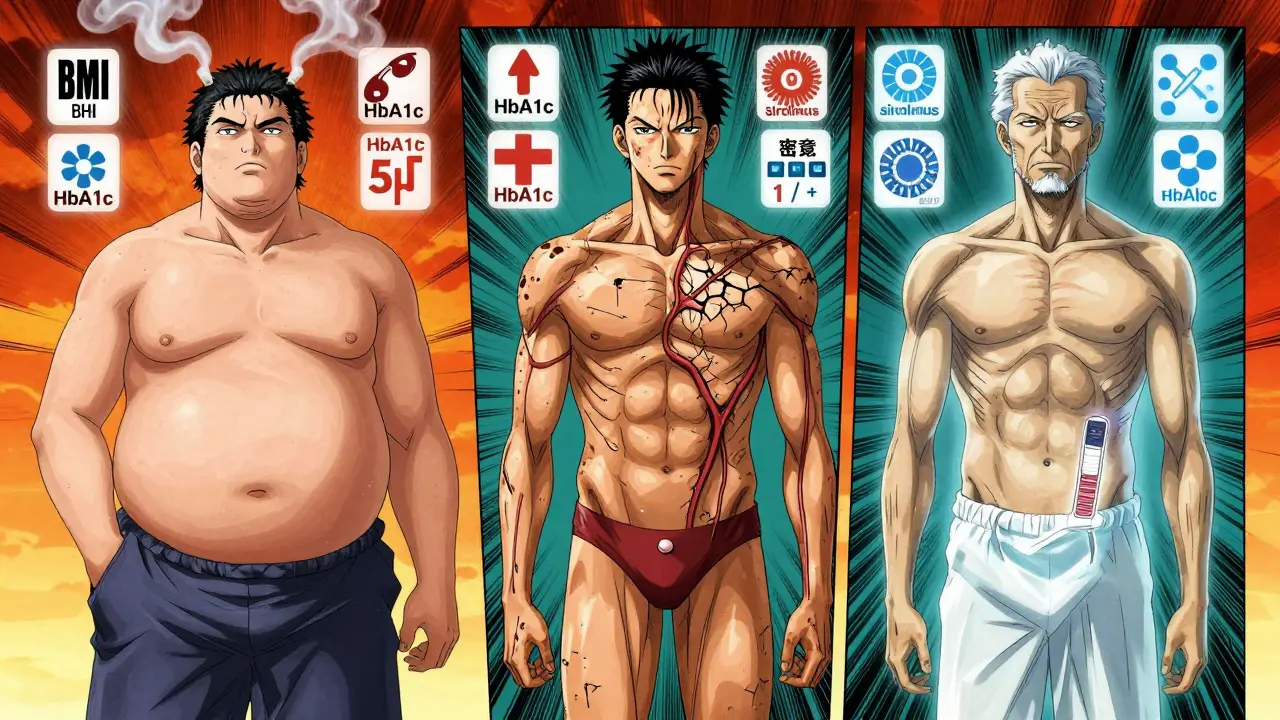
Who’s at Highest Risk?
Not everyone on sirolimus will have problems. But some people are walking into a storm before they even get to the hospital.
Body mass index (BMI) is the biggest red flag. For every point above 30, your odds of wound complications jump. A 2009 study found that patients with BMI over 30 had nearly triple the risk of delayed healing. Why? Fat tissue has poor blood flow, and it already struggles to heal. Add sirolimus on top? That’s asking for trouble.
Diabetes is another major player. High blood sugar gums up the healing process by damaging small blood vessels. Combine that with sirolimus’s VEGF suppression? You’re cutting off oxygen and nutrients to the wound before it even starts to repair.
Smoking cuts healing time by 40% on its own. Nicotine constricts blood vessels. Carbon monoxide reduces oxygen delivery. And smoking also lowers collagen production. If you’re on sirolimus and you smoke? You’re doubling down on risk.
Protein-energy malnutrition is often overlooked. If you’re not getting enough protein, your body can’t make the cells or proteins needed to close a wound. A 2022 paper called this one of the most modifiable risk factors-meaning, fixing it can make a huge difference.
Age? It’s a factor, but not the main one. A 70-year-old who eats well, doesn’t smoke, and has controlled diabetes can heal just fine on sirolimus. A 40-year-old with obesity, uncontrolled diabetes, and a history of smoking? That’s a different story.
Timing: The Critical Window
There’s no universal rule. But there are clear patterns.
Most transplant centers still delay sirolimus for 7 to 14 days after surgery. That’s not because it’s proven safe-it’s because it’s safe enough to avoid disaster. But emerging guidelines from the American Society of Transplantation (2021) say: don’t wait blindly. Wait smart.
Here’s what works now:
- For major abdominal surgeries (like kidney transplants): Wait at least 10-14 days. The wound is deep, under tension, and has high blood flow disruption. Rushing sirolimus here is asking for lymphocele or dehiscence.
- For minor skin procedures (biopsies, excisions): Many centers now start sirolimus within 3-5 days. The 2008 Mayo study found no statistically significant increase in complications for these smaller wounds-even with sirolimus.
- For patients with high malignancy risk (e.g., history of skin cancer, lymphoma): Some teams start sirolimus as early as day 5, because the cancer prevention benefit outweighs the healing risk. But they monitor closely.
And here’s the new trick: trough level monitoring. Instead of giving a fixed dose, many centers now check sirolimus blood levels daily for the first week. Keeping levels under 4-6 ng/mL during healing reduces complications without losing immune control. One 2023 study showed that patients with troughs under 5 ng/mL had 70% fewer wound issues than those above 7 ng/mL.
What About Other Drugs?
Sirolimus doesn’t work alone. It’s usually part of a cocktail.
Most transplant patients also get steroids (like prednisone) and mycophenolate. Both of these also slow healing. Steroids reduce collagen and weaken immune defense. Mycophenolate cuts white blood cell production. So if you’re on all three? You’re not just fighting sirolimus-you’re fighting a triple threat.
That’s why some centers switch from calcineurin inhibitors (like tacrolimus) to sirolimus after healing is complete. Tacrolimus is more toxic to kidneys long-term, but it’s gentler on wounds. So they start with tacrolimus, wait 6-8 weeks, then swap in sirolimus for its cancer-protective and kidney-sparing benefits.
Antithymocyte globulin (ATG), used for induction therapy, also suppresses healing. So if you got ATG on day 1, don’t rush sirolimus on day 3. Give your body time.

How to Reduce Risk
You can’t always avoid sirolimus. But you can control the risks.
- Stop smoking at least 4 weeks before surgery. Even cutting back helps, but quitting is non-negotiable.
- Optimize blood sugar. HbA1c under 7% is the target. If it’s higher, delay elective surgery.
- Get protein. Aim for 1.2-1.5 grams per kg of body weight daily. Eggs, lean meat, whey protein, lentils-all help.
- Check albumin. If your serum albumin is below 3.5 g/dL, you’re at risk. Supplement with oral nutrition if needed.
- Start sirolimus low. Begin at 1 mg/day instead of 2 mg. Monitor levels daily. Increase only if wound looks clean and firm.
- Use local wound care. Keep the area clean, dry, and covered. Avoid tension. Don’t lift heavy things for 6 weeks.
The Bottom Line
Sirolimus isn’t the enemy. It’s a powerful tool-for preventing rejection, protecting kidneys, and lowering cancer risk. But it’s not a one-size-fits-all drug.
The old rule-‘don’t use sirolimus until 2 weeks after surgery’-is outdated. The new rule? Assess the patient, not just the drug.
If you’re obese, diabetic, or still smoking? Delay sirolimus. Wait 14 days. Optimize your health. Then start low and go slow.
If you’re a 55-year-old with controlled diabetes, normal BMI, and a history of melanoma? You might benefit from starting sirolimus at day 7. Your wound will heal fine if you monitor levels and care for the site.
Transplant care isn’t about avoiding risk. It’s about managing it. Sirolimus is one of those drugs that forces you to think harder, check deeper, and act smarter. And that’s exactly what good medicine looks like.
Can sirolimus cause wound dehiscence after a kidney transplant?
Yes, sirolimus can increase the risk of wound dehiscence-especially if started too early or in patients with high BMI, diabetes, or poor nutrition. Studies show dehiscence rates as high as 7.7% in early use, compared to 0% in controls. But newer data suggests this risk drops significantly when sirolimus is delayed until day 10-14 and trough levels are kept under 6 ng/mL.
How long should I wait after surgery before starting sirolimus?
For major surgeries like kidney transplants, wait 10-14 days. For minor skin procedures, some centers start as early as day 3-5. The key is wound stability: if the incision is dry, closed, and not under tension, it’s likely safe. Always check with your transplant team and monitor sirolimus trough levels during the first week.
Does sirolimus affect all types of wounds the same way?
No. Deep, high-tension wounds (like abdominal closures) are far more vulnerable than superficial ones (like skin biopsies). Studies show that patients undergoing dermatologic surgery on sirolimus had no statistically significant increase in complications, while those with kidney transplants did. The location, size, and blood supply of the wound matter more than the drug alone.
Can I take sirolimus if I’m diabetic?
You can, but it’s risky. Diabetes already impairs healing by damaging blood vessels and reducing immune cell function. Adding sirolimus can double the delay in wound closure. If you’re diabetic, optimize your HbA1c below 7% before surgery, delay sirolimus until at least day 14, and monitor your wound closely. Many teams avoid sirolimus in uncontrolled diabetics entirely.
Is there a safe dose of sirolimus for healing wounds?
Yes. Evidence now shows that keeping sirolimus trough levels between 4-6 ng/mL during the first 30 days after surgery minimizes healing complications while still preventing rejection. Doses above 7 ng/mL are linked to higher rates of lymphocele and dehiscence. Starting at 1 mg/day and adjusting based on blood levels is safer than starting at 2 mg or higher.
Sirolimus is a drug that demands respect-not fear. It’s not a blunt instrument. It’s a scalpel. Use it right, and it saves lives. Use it carelessly, and it creates problems. The best outcomes come not from avoiding it, but from understanding it.

Ajay Krishna
February 28, 2026 at 10:43As someone who’s worked in transplant clinics for over a decade, I’ve seen this play out too many times. Sirolimus isn’t the villain-it’s a tool that gets misused because we’re trained to follow protocols, not think. The real win? When we tailor timing to the patient’s lifestyle, not just their lab values. I had a 52-year-old with melanoma history start sirolimus on day 6 after transplant. He quit smoking, hit his protein goals, and his wound closed like new. No complications. Just smart care.
Sophia Rafiq
March 2, 2026 at 08:25My uncle got a kidney transplant last year. They started sirolimus day 8. He’s a diabetic, but his HbA1c was 6.8 and he ate like a nutrition textbook. No issues. Honestly, the real problem isn’t the drug-it’s how we treat patients like numbers instead of people.
Katherine Farmer
March 2, 2026 at 13:36Let’s be real-the entire transplant community is still stuck in 2005. You cite a 2023 study showing trough levels under 5 ng/mL reduce complications by 70%, yet most hospitals still use the ‘14-day rule’ like it’s gospel. This isn’t medicine. It’s ritual. And it’s costing patients time, money, and quality of life. The data is here. We’re just choosing to ignore it because change is scary.
bill cook
March 3, 2026 at 01:14I read this whole thing and still don’t know if I should take it or not. Can someone just tell me what to do? Like, in one sentence? I’m tired of all this medical jargon.
Ben Estella
March 3, 2026 at 06:57Why are we letting some European study dictate how we treat American patients? We have better data here. Our patients are tougher. We don’t need to baby them with 14-day waits. If they can handle a job, a mortgage, and three kids, they can handle sirolimus on day 5. Stop overthinking. Just give it to them.
Full Scale Webmaster
March 5, 2026 at 05:28Okay, so let me get this straight. Sirolimus cuts VEGF by 60%, suppresses fibroblasts, lowers nitric oxide, and concentrates TWICE as high in wound fluid as in blood? And we’re still giving it to people who smoke, are obese, and diabetic? That’s not medicine. That’s negligence. Someone’s making money off this. I’m telling you, there’s a pharma lobby pushing this. Why else would every major center still delay it 10-14 days? Because they’re scared of liability. Not because it’s safe. They’re covering their asses while patients suffer slow-healing wounds for months. Wake up.
Charity Hanson
March 7, 2026 at 05:01From Nigeria, I just want to say-this is why global health is broken. In my country, we don’t even have sirolimus in most hospitals. We’re lucky to get basic immunosuppressants. But the principles here? They’re universal. Protein, no smoking, blood sugar control-these aren’t fancy Western ideas. They’re basic human biology. If we could just teach this to every patient everywhere, we’d save so many lives. Don’t make it complicated. Just tell them: eat, stop smoking, wait, and check your numbers.
Miranda Anderson
March 7, 2026 at 15:41I’m a nurse in a transplant unit, and I’ve watched this unfold. The hardest part isn’t the science-it’s the patients who refuse to change. One guy had a BMI of 41, HbA1c of 9.5, and smoked a pack a day. He wanted sirolimus on day 3 because he ‘heard it prevents cancer.’ We had to delay the transplant for 3 months just to get him to cut back. He finally did it. His wound healed perfectly. He’s now off steroids. But he didn’t do it because of data. He did it because he saw his scar on day 10 and realized he didn’t want to live like that. Medicine isn’t just about drugs. It’s about moments.
Sumit Mohan Saxena
March 8, 2026 at 05:53It is imperative to underscore that the pharmacokinetic profile of sirolimus necessitates individualized therapeutic drug monitoring, particularly during the perioperative phase. The literature consistently demonstrates that maintaining trough concentrations below 6 ng/mL significantly mitigates the incidence of wound dehiscence and lymphocele formation. Furthermore, concurrent administration of calcineurin inhibitors should be carefully phased out only after adequate tissue integrity has been established, typically after 42 days postoperatively. The integration of nutritional biomarkers, including serum albumin and prealbumin, is not ancillary but central to risk stratification. This approach aligns with the current guidelines of the American Society of Transplant Surgeons (2021) and should be adopted as standard protocol.
Brandie Bradshaw
March 8, 2026 at 11:48It’s not that sirolimus is dangerous-it’s that we’ve made it dangerous by being lazy. We don’t check albumin. We don’t ask about protein intake. We don’t require smoking cessation programs. We just say, ‘Wait 14 days.’ That’s not a medical decision. That’s a cop-out. And then we blame the drug when things go wrong. If we treated every patient like they were our own sibling, we’d be doing daily wound checks, nutritional counseling, and adjusting doses based on levels-not just waiting for the calendar to turn.
Byron Duvall
March 10, 2026 at 08:33They say sirolimus lowers cancer risk but what if it’s just making you more vulnerable to other stuff? Like, what if the real reason cancer rates dropped in some studies is because they stopped using tacrolimus? Maybe tacrolimus was the real problem all along. And sirolimus just looks good because it’s the new guy. I’m not saying it’s a conspiracy, but… have you seen the patents? Who owns the rights to sirolimus testing kits? Why are they pushing trough levels so hard? Something smells off.
Vikas Meshram
March 10, 2026 at 15:47Correction: the study you referenced from 2009 didn't find 'nearly triple the risk'-it found a 2.8x increase with 95% CI 1.9–4.1. Also, VEGF suppression isn't 60% across all patients-it's variable based on CYP3A4 polymorphisms. You're oversimplifying. And you didn't mention that sirolimus increases triglycerides, which also impairs microcirculation. This article reads like a blog post, not a clinical review. Fix your references.
Angel Wolfe
March 10, 2026 at 23:37They’re telling you to wait 14 days? That’s the government’s way of controlling you. The truth? Sirolimus is fine after 72 hours if you’re not on steroids. The real reason they delay it is because hospitals get paid more for longer stays. You think they care about your wound? They care about your insurance code. This isn’t medicine. It’s a billing scheme. I’ve seen patients get discharged with open wounds because they started sirolimus too soon. And then the hospital gets reimbursed for ‘complication management.’ Wake up. This is rigged.
Jimmy Quilty
March 11, 2026 at 07:39Interesting how they never mention that sirolimus was originally developed as an antifungal… and then repurposed because it was too toxic for humans. Now we’re using it to save lives? That’s like using a chainsaw to do surgery because it’s ‘powerful.’ Maybe we should’ve stuck with cyclosporine. At least we knew its limits. Now we’re playing Russian roulette with wound healing because some professor got a grant to study mTOR. I’m not anti-science. I’m anti-ignorance.
Justin Ransburg
March 12, 2026 at 18:07Thank you for this comprehensive overview. The emphasis on individualized risk assessment is precisely what modern transplant medicine requires. The data presented, particularly regarding trough level monitoring and nutritional optimization, represents a significant evolution in clinical practice. It is encouraging to see evidence-based guidelines supplanting outdated dogma. I will be incorporating these recommendations into our institutional protocols immediately.