
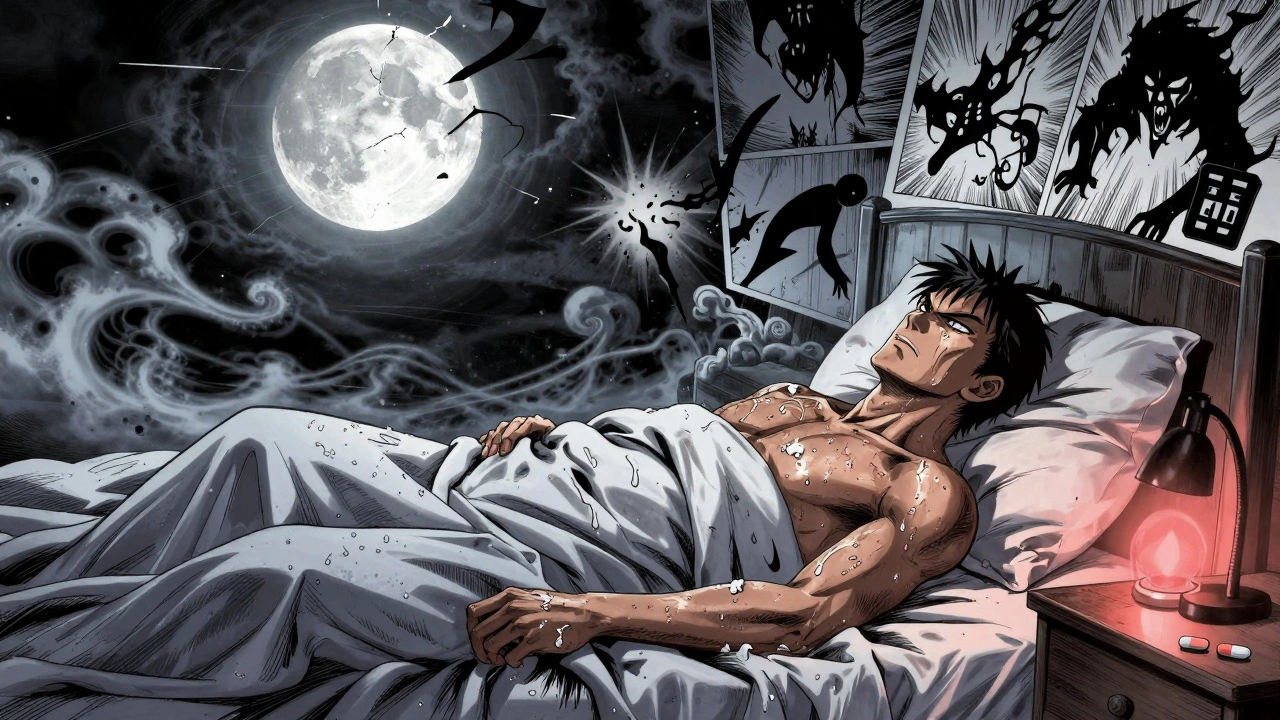
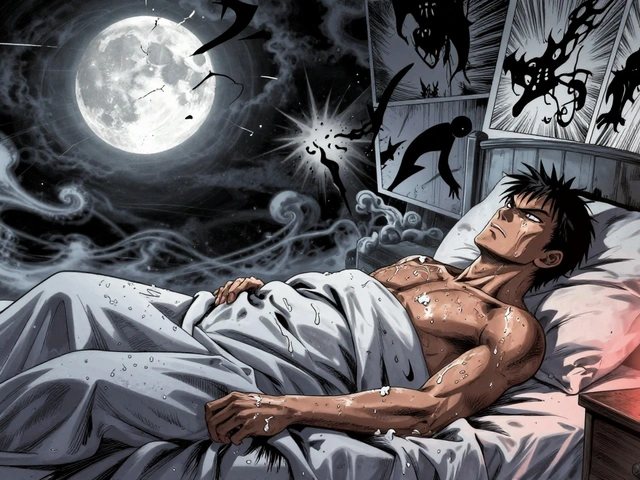
For many people with PTSD, the worst part isn’t the memories-it’s what happens when they close their eyes. Nightmares don’t just disrupt sleep; they keep the trauma alive. You wake up drenched in sweat, heart pounding, convinced you’re back in the moment you tried to forget. And then the cycle starts again: fear of sleep, exhaustion, irritability, numbness. It’s not laziness. It’s not weakness. It’s your brain stuck in survival mode. Around 71-90% of military veterans with PTSD and over half of civilian trauma survivors experience these nightmares regularly. The good news? There are real, research-backed ways to break the cycle-not just with pills, but with sleep-focused therapies that retrain your brain.
What Prazosin Does (and Doesn’t Do)
Prazosin isn’t a new drug. It was developed in 1976 to lower blood pressure. But in 2003, a VA doctor named Murray Raskind noticed something strange: veterans taking it for hypertension were sleeping better. He started testing it for PTSD nightmares-and it worked. Today, it’s one of the most commonly prescribed off-label treatments for this symptom, even though the FDA has never approved it for that use.
How does it work? Prazosin blocks adrenaline receptors in the brain, especially in areas tied to fear and arousal. At night, when stress hormones spike during REM sleep, prazosin quiets the storm. Most people take 1-25 mg before bed, usually starting at 1 mg and slowly increasing. The goal? Reduce nightmare frequency by more than half, which studies show happens in about 60-70% of users.
But here’s the catch: prazosin doesn’t fix PTSD. It doesn’t erase trauma. It just makes the nightmares less intense. A 2022 meta-analysis found it has a moderate effect on nightmares but almost no impact on other PTSD symptoms like flashbacks or emotional numbness. And it’s not without risks. About 44% of users report side effects-dizziness, low blood pressure, nasal congestion. Some even experience rebound nightmares when they stop taking it. One VA report found 28% of patients had worse nightmares after discontinuing prazosin.
Still, for people who can’t access trauma therapy-especially in rural areas or under tight insurance rules-prazosin is often the only option. In 2022, 42% of veterans with PTSD were prescribed it. Only 32% received evidence-based psychotherapy.
Why Sleep Therapy Might Be Better
If prazosin is a bandaid, sleep-focused therapies are the surgery. Two treatments stand out: Cognitive Behavioral Therapy for Insomnia (CBT-I) and Imagery Rehearsal Therapy (IRT).
CBT-I isn’t about counting sheep. It’s a structured 6-8 week program that rewires how you think about sleep. You learn to get out of bed if you’re awake for more than 20 minutes. You limit time in bed to match how much you actually sleep. You challenge thoughts like, “If I don’t sleep tonight, I’ll lose control.” You track your sleep with a diary. And yes, the first week is brutal. Sleep restriction makes you exhausted. But by week four, most people report deeper, more restful sleep.
And it works. A 2021 review found CBT-I reduced insomnia severity by a large margin-far more than any medication. It also cut PTSD symptoms by 62%. In one VA study, combining CBT-I with Prolonged Exposure therapy led to a 78-minute increase in total sleep time and a 15% jump in sleep efficiency. That’s not small. That’s life-changing.
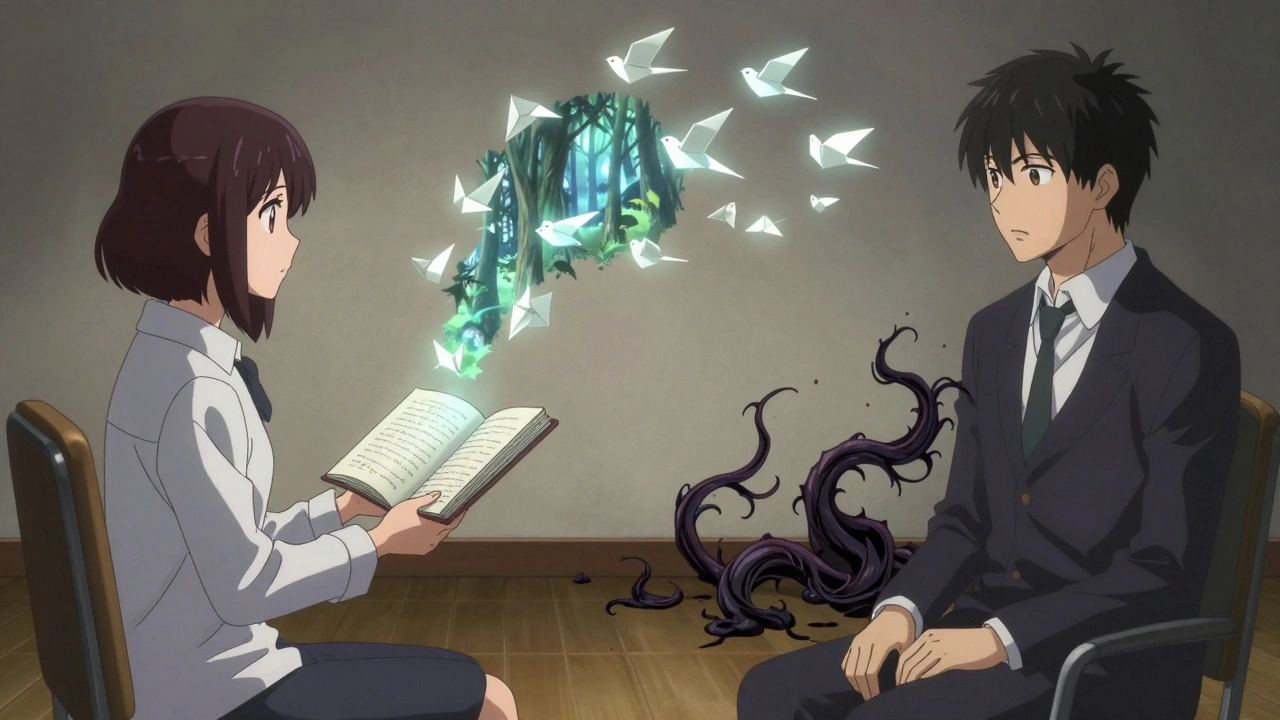
Then there’s IRT. This one’s simpler. You write down your nightmare. Then you rewrite it. Not as a horror story, but as something calm, even silly. A soldier being chased by explosions? Rewritten as him walking through a quiet forest, birds singing. You rehearse this new version for 10-20 minutes each day. After 3-5 sessions, the brain starts to adopt the new narrative. Studies show 67-90% of PTSD patients see a major drop in nightmare frequency. One survey found 85% of users felt less distress after IRT.
Unlike prazosin, these therapies build skills that last. People who finish CBT-I often keep sleeping well a year later. No refills. No side effects. Just a brain that’s learned to rest again.
The Real Winner: Combining Both
The best outcomes don’t come from choosing between pills and therapy. They come from using them together.
Imagine someone so overwhelmed by nightmares they can’t even sit through a therapy session. Prazosin can help them get to sleep long enough to start CBT-I. Once they’re sleeping better, therapy can tackle the root cause: the trauma memories tied to those dreams.
The VA’s “Sleep SMART” initiative uses this exact model. They start with a brief 4-session version of CBT-I called BBTI. If that doesn’t work, they add prazosin or move to full CBT-I. Of the veterans who started with BBTI, 83% improved. That’s higher than most drug trials.
And it’s not just VA. The Department of Defense is now investing $28 million into research combining CBT-I with virtual reality exposure therapy. Why? Because when you reduce nightmares, you reduce hypervigilance. When you reduce hypervigilance, you reduce avoidance. And when you reduce avoidance, you open the door to healing.
What’s New in 2025?
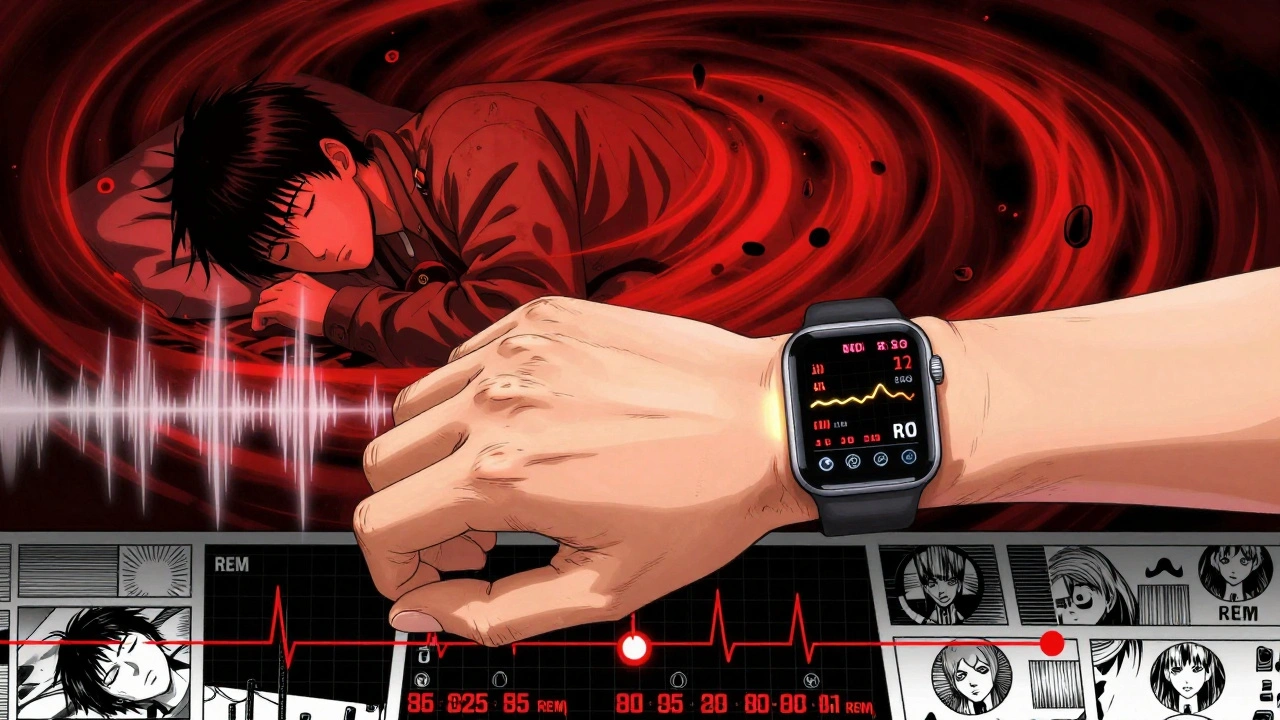
Technology is stepping in. The FDA approved NightWare in 2020-a wearable app that uses an Apple Watch to detect when your heart rate and movement suggest a nightmare is starting. Then, it delivers a tiny vibration to gently disrupt REM sleep without waking you. In a 2022 study, users saw a 58% drop in nightmares. It’s not a cure, but it’s a tool that works while you sleep.
Meanwhile, the PRAZ-PTSD III trial in 2023 showed prazosin at 6 mg nightly reduced nightmare distress by 32% compared to placebo. That’s a win. But critics point out: the placebo group improved too. And many patients in past trials didn’t get high enough doses. Dr. Raskind argues the negative studies failed because they didn’t treat nightmares properly-too short, too low, too fast.
Still, the tide is turning. The American Academy of Sleep Medicine upgraded CBT-I from a “conditional” recommendation to a “strong” one in 2023. More clinics are training therapists. More insurers are covering it. And more patients are asking for it.
What to Do If You’re Struggling
If nightmares are keeping you awake, here’s your step-by-step path:
- Track your nightmares. Write down what happens, how often, and how you feel afterward. Even a simple journal helps your doctor understand your pattern.
- Ask about CBT-I. It’s not just for insomnia-it’s for PTSD nightmares too. Look for a certified sleep therapist. The Society of Behavioral Sleep Medicine has a directory.
- Try IRT. You can do this on your own. Rewrite one nightmare this week. Change the ending. Make it safe. Make it quiet. Rehearse it every day.
- If therapy feels too hard, ask about prazosin. Start low (1 mg). Monitor your blood pressure. Don’t stop suddenly. Talk to your doctor about tapering.
- Use tech. NightWare or sleep tracking apps can give you data to share with your provider.
Don’t wait until you’re completely broken. Nightmares are a symptom-not your identity. You don’t have to live with them.
Why Most People Don’t Get Better
It’s not that treatments don’t work. It’s that they’re hard to access.
Only 412 clinicians in the U.S. are certified in CBT-I. In rural areas, 47% fewer veterans can reach one. Insurance often caps therapy at 6 sessions, even though 8 are needed. Many doctors still think, “Just take a pill.” But pills don’t heal trauma. They just mute the noise.
And then there’s the stigma. Some patients feel ashamed to admit they’re scared of sleep. Others think therapy will make them relive the trauma. But CBT-I doesn’t force you to talk about the event. It teaches you to sleep again. IRT lets you rewrite the dream without reliving it.
The real barrier isn’t the treatment. It’s the belief that nothing can help. That’s the lie PTSD tells you. But the data doesn’t lie. People get better. Not always fast. Not always easy. But they do.
What’s Next for PTSD Sleep Treatment?
By 2027, experts predict nearly all PTSD treatment guidelines will require sleep screening. That’s huge. Because if you don’t fix sleep, you can’t fix PTSD.
Pharmaceutical companies aren’t rushing to make new nightmare drugs. Prazosin’s patent expired in 2000. No profit in it. But digital tools? That’s different. NightWare is just the start. Think AI-driven dream analysis. Wearables that predict nightmares before they happen. Apps that guide you through IRT in 10 minutes a day.
The future isn’t about one magic pill. It’s about personalized, layered care: therapy for the mind, tech for the body, and support for the soul.
You don’t need to fix everything at once. Just start with one night. One dream. One rewrite. One small step toward sleep that doesn’t feel like a battlefield.
Does prazosin cure PTSD nightmares?
No, prazosin doesn’t cure PTSD. It reduces nightmare frequency and intensity by calming the brain’s stress response during sleep. It’s a symptom management tool, not a trauma resolution tool. Many people see improvement, but symptoms often return if they stop taking it. For lasting change, combining prazosin with therapy like CBT-I or IRT is more effective.
Can I take prazosin without therapy?
Yes, many people do-especially if therapy isn’t available. But studies show better long-term outcomes when prazosin is paired with sleep-focused therapy. Without therapy, the underlying trauma remains unaddressed, and nightmares may return after stopping the medication. Think of prazosin as a bridge, not a destination.
How long does CBT-I take to work for PTSD nightmares?
Most people start seeing improvements in sleep within 2-4 weeks. Nightmare frequency typically drops by 50% or more after 6-8 weekly sessions. The first week is often the hardest due to sleep restriction, but by week four, many report sleeping through the night for the first time in years. Results tend to last long after treatment ends.
Is IRT safe for everyone with PTSD?
Yes, IRT is generally safe and doesn’t require reliving the trauma. You rewrite the nightmare while awake, so you’re in control. It’s been used successfully with veterans, survivors of assault, and accident victims. Some people find it hard to imagine a new ending at first-but that’s normal. Your therapist can help you create a safe, calming version.
What if I can’t afford therapy or prazosin?
The VA offers both CBT-I and prazosin at no cost to eligible veterans. For civilians, check with community mental health centers-they often have sliding scale fees. Apps like CBT-I Coach and NightWare are low-cost or free. You can also start with free IRT: write down your nightmare, change the ending, and read it aloud every morning. Small steps add up.
Do nightmares ever go away on their own?
Rarely. Studies show PTSD nightmares tend to persist for years without treatment. In fact, they often get worse over time as the brain reinforces the fear pattern. Sleep deprivation also makes other PTSD symptoms stronger. Waiting doesn’t help. The sooner you address nightmares, the faster you can reclaim your sleep-and your life.
Michaux Hyatt
December 12, 2025 at 00:56I’ve been on prazosin for 18 months now-started at 1mg, worked up to 6mg. Nightmares went from nightly to once every two weeks. Not perfect, but I slept through Thanksgiving for the first time in 12 years. Still doing IRT on the side. It’s not a cure, but it’s a lifeline.
Also, shoutout to NightWare. My Apple Watch picked up a nightmare last week and gave me that tiny buzz. I didn’t even wake up. Just… woke up calm. Weird, but amazing.
Raj Rsvpraj
December 12, 2025 at 03:37Ha! You Americans think a pill fixes trauma? In India, we have yoga, pranayama, and ancestral wisdom-no FDA-approved gadgets needed. Prazosin? A Western placebo for weak minds. You don’t need a wearable to ‘vibrate’ your nightmares away-you need discipline, not dopamine suppression!
And CBT-I? A 20th-century Band-Aid. Real healing comes from meditation under the stars-not sitting in some sterile clinic counting sheep while your soul rots!
Jack Appleby
December 12, 2025 at 13:54Let’s be precise: prazosin is an alpha-1 adrenergic antagonist, not a ‘stress hormone blocker.’ The mechanism is nuanced-it dampens noradrenergic hyperactivity in the locus coeruleus during REM, not ‘calming the storm’ like some poetic VA pamphlet.
And the 2022 meta-analysis? It’s flawed. Most trials used subtherapeutic dosing (<5mg). The real effect size is likely closer to Cohen’s d=0.8 when titrated properly. Also, IRT isn’t ‘silly’-it’s neuroplasticity-driven narrative reconsolidation. Your brain doesn’t distinguish between imagined rehearsal and real memory. That’s why it works.
And NightWare? Brilliant engineering. But the 58% reduction? That’s with a control group that received no intervention. Placebo-controlled trials show 37-42%. Still, it’s a step. Not a revolution.
Kaitlynn nail
December 12, 2025 at 14:46So… prazosin = temporary silence. Therapy = permanent rewrite.
Why do we keep choosing silence?
Just saying.
Nikki Smellie
December 14, 2025 at 11:33Did you know the VA has been quietly testing subliminal audio triggers in sleep labs since 2019? Prazosin isn’t about blood pressure-it’s a cover. The real goal is to condition veterans to accept neural dampening so they won’t question the system. NightWare? It’s a surveillance tool. Your heart rate data is being fed into DoD behavioral databases.
They don’t want you healed. They want you quiet.
And CBT-I? It’s just brainwashing with a clipboard.
Trust no one. Sleep with one eye open. 🕵️♀️👁️
Neelam Kumari
December 15, 2025 at 20:41Oh, so now we’re all supposed to be poets? Rewrite your nightmares? Cute. Like writing a happy ending to being raped. How poetic. How therapeutic.
Meanwhile, real people are stuck in ERs because their therapist quit and their insurance lapsed. You talk about ‘skills that last’-but what if you don’t have 8 weeks? What if you’re working two jobs and your kid has asthma?
Stop pretending therapy is a luxury everyone can afford.
And prazosin? At least it doesn’t make you cry while reading a bedtime story to your brain.
Queenie Chan
December 16, 2025 at 02:55I tried IRT last month. My nightmare was being trapped in a burning van after the accident. I rewrote it as me floating above it, watching fireflies dance around the wreckage, humming my grandma’s lullaby.
First night? Still woke up shaking.
Third night? Felt weirdly… peaceful.
Now I do it every morning while making coffee. It’s not magic. But it’s mine. And for the first time in 7 years, I don’t dread bedtime.
Also-NightWare vibrated me last Tuesday. I didn’t even know it was on. Woke up at 3am and just… breathed. That’s all I needed.
Stephanie Maillet
December 17, 2025 at 12:32There’s something deeply human about reclaiming sleep-not as a biological function, but as an act of rebellion against trauma.
Prazosin silences the scream. Therapy teaches you to hear your own voice again.
And technology? It’s just a bridge. The real work is inside. The quiet, stubborn act of choosing safety over fear, again and again.
Maybe healing isn’t about erasing the past… but learning to dream in a new key.
Thank you for writing this. It felt like someone finally held the door open.
And yes-I’m starting IRT tomorrow.
David Palmer
December 17, 2025 at 19:00Yeah but what if you just… don’t wanna? What if you’re tired of fighting? What if your brain says ‘fine, I’ll just stay scared’?
I’ve tried all this stuff. CBT-I? Exhausting. IRT? Feels fake. Prazosin? Made me dizzy and then I stopped. Now I just drink whiskey and hope I don’t wake up.
It’s not that I don’t want to get better. It’s that I don’t have the energy to pretend I care anymore.
And that’s okay too, right?
Paul Dixon
December 18, 2025 at 23:48David here-veteran, dad, guy who used to scream in his sleep every night.
I took prazosin for a year. Helped. But I didn’t feel like *me* until I started IRT with my VA therapist. Rewrote my nightmare as me sitting on a porch with my dog, sipping lemonade, listening to rain.
Now I do it every night before bed. Even if I don’t sleep well, I still write it. It’s my ritual.
And yeah-I still get scared sometimes. But now I know: I’m not stuck. I’m healing.
You’re not alone. I promise.
Vivian Amadi
December 19, 2025 at 23:33STOP PROMOTING PRASOSIN AS A SOLUTION. IT’S A COVER-UP FOR A BROKEN SYSTEM.
THE VA PRESSCRIBES IT BECAUSE IT’S CHEAPER THAN HIRING THERAPISTS. THE DOH IS INVESTING IN NIGHTWARE BECAUSE IT’S A PRODUCT THEY CAN SELL. NONE OF THIS IS ABOUT HEALING.
YOU’RE BEING MANIPULATED.
AND IF YOU BELIEVE A VIBRATION FROM YOUR WATCH CAN FIX PTSD, YOU’RE PART OF THE PROBLEM.
WHY DON’T WE JUST GIVE EVERY VETERAN A PILLOW THAT WHISPERS ‘YOU’RE SAFE’?
Jimmy Kärnfeldt
December 20, 2025 at 00:17Hey-just wanted to say thank you for writing this. Not because it’s perfect, but because it’s real.
I started prazosin after my third suicide attempt. Didn’t fix me. But it gave me enough quiet to call my sister. She found me a therapist. I did CBT-I. I rewrote my nightmare as a quiet train ride home. No explosions. Just the sound of wheels on tracks.
It’s been 14 months. I still have bad nights. But I don’t hate sleep anymore.
And that? That’s everything.
You’re not broken. You’re becoming.
Keep going.