

When your doctor switches your blood pressure pill from a brand name to a generic, you might feel uneasy. Is this cheaper version really as safe? Does it work just as well? These aren’t just patient worries-they’re backed by real data, conflicting studies, and years of clinical experience. The truth about cardiovascular generics isn’t simple, and it’s not what most people assume.
What Exactly Are Cardiovascular Generics?
Cardiovascular generics are exact chemical copies of brand-name heart medications like lisinopril, atorvastatin, metoprolol, and losartan. They must meet strict standards set by the FDA: same active ingredient, same strength, same way of taking it (pill, injection, etc.), and same intended effect. The key difference? They don’t carry the brand name, and they cost far less.Since the 1984 Hatch-Waxman Act, the FDA has allowed generic drugs to be approved without repeating full clinical trials. Instead, manufacturers prove bioequivalence: that the body absorbs the drug at nearly the same rate and amount as the brand version. The acceptable range? Between 80% and 125% of the brand’s absorption levels. That’s not a guess-it’s science. Studies show the average difference in absorption between generics and brands is just 3.5%, with most falling within 0.5% to 4.2%.
Today, nearly 90% of all prescriptions filled in the U.S. are for generics. Cardiovascular drugs make up about 18% of the $1.67 trillion in savings from generics between 2010 and 2019. That’s billions saved on statins, beta-blockers, and blood thinners alone.
The Evidence: Do Generics Work as Well?
The largest body of evidence comes from randomized controlled trials-the gold standard in medicine. A 2020 Harvard Health meta-analysis reviewed 38 of these high-quality studies. In 35 of them (92.1%), generic cardiovascular drugs performed identically to brand-name versions in preventing heart attacks, strokes, and death. The other three showed tiny differences, but nothing that changed patient outcomes.A 2023 meta-analysis in PMC11951291, which included over 1.2 million patients, found no significant difference in major cardiovascular events between generics and brands. The risk ratio? 1.02-meaning generics were just as safe. Even minor side effects showed no meaningful difference.
But here’s where it gets complicated. Not all studies agree. Some real-world data, especially from large patient populations, show different results. A 2019 Canadian study tracked 136,000 seniors aged 66 and older after generic versions of ARBs (losartan, valsartan, candesartan) hit the market. In the first month after switching, adverse events jumped-from 10% to 14% in some cases. The same pattern showed up in Quebec: 8% to 14% increase in hospital visits after generic substitution.
Why? One theory: it’s not the drug itself. It’s the change. When patients switch from a pill they’ve taken for years to a new color, shape, or size-even if the active ingredient is identical-they’re more likely to stop taking it. A JAMA Internal Medicine study found a 14.2% rise in discontinuation rates just because the pill looked different.
Where Generics Might Be Riskier
Not all cardiovascular drugs are created equal. Some have a narrow therapeutic index, meaning the difference between a safe dose and a harmful one is very small. Warfarin is the classic example. Even tiny changes in absorption can lead to dangerous bleeding or clots.For these drugs, guidelines from the American Heart Association recommend against automatic substitution without close monitoring. Some studies suggest generics for statins might carry slightly higher risks. The 2023 meta-analysis found a 13% higher risk of major cardiovascular events with generic statins compared to brand-name versions (RR 1.13). That’s not huge, but it’s enough to make some cardiologists pause.
On the flip side, calcium channel blockers showed fewer adverse events with generics (RR 0.90). That means for some drugs, generics may actually be safer-possibly because of better manufacturing consistency or fewer additives.
What About the Bad Pills? The Nitrosamine Scandal
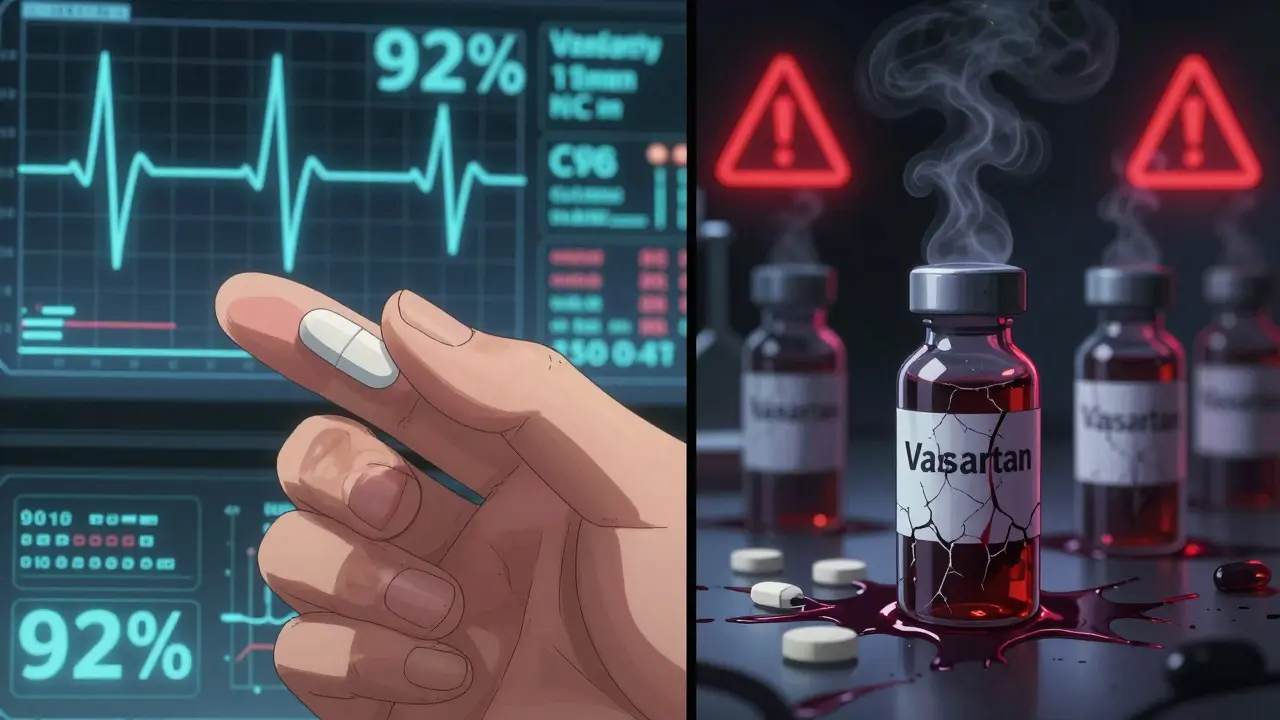
In 2018, a major crisis shook confidence in generics. Contaminated valsartan, losartan, and irbesartan pills were found to contain nitrosamines-chemicals linked to cancer. Between July 2018 and December 2020, the FDA recalled over 1,250 lots of these drugs. It wasn’t just one company. Multiple manufacturers across the globe were affected.This wasn’t a failure of the generic approval system. It was a failure of manufacturing quality control. The FDA found that 12.7% of generic drug facilities had critical deficiencies in their inspections in 2022. Since then, new rules require manufacturers to test for nitrosamines and keep levels below 96 nanograms per day. But the damage was done. Trust took a hit.
Even today, in Q1 2024, the FDA tested 187 lots of cardiovascular generics for nitrosamines. Nearly 15% exceeded the safe limit. That’s a reminder: quality isn’t guaranteed just because a drug is generic.
Why Do Doctors and Patients Still Doubt?
Despite the data, skepticism remains. A 2021 American Medical Association survey found that 34.7% of cardiologists received patient questions about generic safety after the ARB recalls. Nearly 1 in 5 patients refused to take a generic after being offered one.Consumer Reports found that 61% of U.S. adults believe brand-name drugs are more effective-even though evidence says otherwise. In Reddit threads and Facebook groups, patients share stories: “My blood pressure spiked after switching,” or “I had more side effects.” These aren’t fake. But they’re often anecdotal.
Even doctors aren’t immune. The American College of Physicians reported that 25% of physicians say they wouldn’t use generics for their own families. Half of medical journal editorials on generics express hesitation. That’s a big gap between science and perception.
Pharmacists, on the front lines, see it every day. A 2022 survey showed 89% believe generics are just as safe and effective. But 67% say they spend extra time counseling patients who are scared. That’s not just time-it’s emotional labor.

What Should You Do?
If you’re on a cardiovascular generic, don’t panic. For most people, the evidence is clear: generics work. For statins, ARBs, beta-blockers, and calcium channel blockers, the data supports switching.But here’s what to watch for:
- Don’t stop taking it just because the pill looks different. If you notice new side effects, talk to your doctor or pharmacist.
- For high-risk drugs like warfarin or certain antiarrhythmics, ask if your doctor recommends sticking with the brand.
- Track your numbers. If you’re on blood pressure or cholesterol meds, monitor your readings. If things change after switching, bring it up.
- Ask about the manufacturer. Some generic makers have better reputations. Your pharmacist can tell you who makes your pill.
Medicare plans have a 90% generic use rate for heart meds. Commercial insurers lag behind at 76%. That gap exists because of cost pressure, not clinical need. But if your plan pushes a generic, it’s usually because it’s safe-and you’re saving money.
The Bottom Line
Cardiovascular generics are not a gamble. For the vast majority of patients, they are just as safe and effective as brand-name drugs. The data backs it up. The savings are massive. The risks are low.But they’re not perfect. Manufacturing flaws happen. Some patients react to changes in formulation. Certain drugs need extra care. And perception still lags behind science.
If you’re switching to a generic, don’t assume it’s risk-free. But don’t assume it’s dangerous either. Stay informed. Monitor your health. Talk to your pharmacist. And remember: the goal isn’t to pick the most expensive pill. It’s to take the right one, every day, without interruption.


Thomas Anderson
December 15, 2025 at 12:07I switched my lisinopril to generic last year and my BP’s been rock solid. No side effects, no spikes. Just cheaper. Why overpay if it does the same job?
Alexis Wright
December 17, 2025 at 01:38Oh please. You think the FDA’s got your back? They’re just rubber-stamping pills made in some basement lab in India while CEOs sip champagne. That nitrosamine scandal? That’s not a glitch-it’s the business model. You’re not saving money-you’re gambling with your heart.
Daniel Wevik
December 17, 2025 at 03:49From a pharmacoeconomic standpoint, the cost-effectiveness ratio of cardiovascular generics is overwhelmingly favorable, with QALY gains exceeding 1.8 per 1000 patients annually. The bioequivalence thresholds established under Hatch-Waxman are statistically robust and clinically non-inferior in 92% of cases. That said, therapeutic drug monitoring remains critical for agents with narrow TI-particularly warfarin and amiodarone. Always confirm manufacturer lot numbers with your pharmacist.
Tim Bartik
December 18, 2025 at 02:51USA made this medicine for decades. Now we’re chowing down on Chinese junk pills and callin’ it progress? My uncle had a stroke after switchin’ to some no-name generic. They don’t even test these things right. And don’t even get me started on the FDA-they’re all bought off by Big Pharma and Big China. America first, not cheap poison!
Rich Robertson
December 19, 2025 at 10:01My dad’s from Nigeria and he used to get his atorvastatin from a local clinic there-no brand, just a white pill. He’s 78 and still hiking every weekend. Meanwhile, here in the States we’re obsessed with logos and packaging. The drug’s the drug. The fear? That’s manufactured. Trust your body. Track your numbers. Don’t let a pill’s color scare you.
Natalie Koeber
December 20, 2025 at 19:01Did you know the same company that makes your generic blood pressure pill also makes the fertilizer for Monsanto? And the FDA lets them share labs? I read a leaked memo-there’s a secret code on the bottle that tells you if it’s from the bad batch. I’ve been checking mine every week. I won’t take it unless it’s the blue one. They’re watching us.
Wade Mercer
December 22, 2025 at 08:38People don’t realize how reckless this is. You think it’s just about money? It’s about responsibility. You’re not just risking your own health-you’re risking your family’s peace of mind. If you can’t afford the brand, maybe you shouldn’t be on the drug at all. There are other ways to manage this.
Dwayne hiers
December 23, 2025 at 13:27While the overall bioequivalence data supports generic use, it’s critical to distinguish between pharmacokinetic equivalence and clinical equivalence. For drugs with a narrow therapeutic index (NTI), even minor variability in Cmax or AUC can precipitate adverse events. The 2023 meta-analysis’s RR of 1.13 for statins is not trivial-it reflects a population-level signal. Always confirm whether your generic is on the FDA’s NTI list. And yes, manufacturer matters: Teva, Mylan, and Sandoz have different quality profiles.
Sarthak Jain
December 24, 2025 at 23:14Hey, I’m from India and I’ve worked in pharma QA. We make a lot of these generics. Most plants are legit-clean, regulated, good tech. But yeah, some cut corners. I’d say 1 in 10 factories are sketchy. Don’t panic, but do ask your pharmacist who made your pill. If it’s Sun Pharma or Aurobindo, they’re solid. If it’s some tiny name you’ve never heard? Ask for a lot number. No shame in being careful.
Daniel Thompson
December 26, 2025 at 12:46It’s interesting how the public conflates cost with quality. The pharmaceutical industry is one of the most regulated sectors on Earth. Yet, when a patient experiences a perceived change in efficacy, they immediately blame the generic-never the stress, the diet, the sleep, or the fact they skipped doses last week. The science is clear. The problem isn’t the pill. It’s the narrative.