
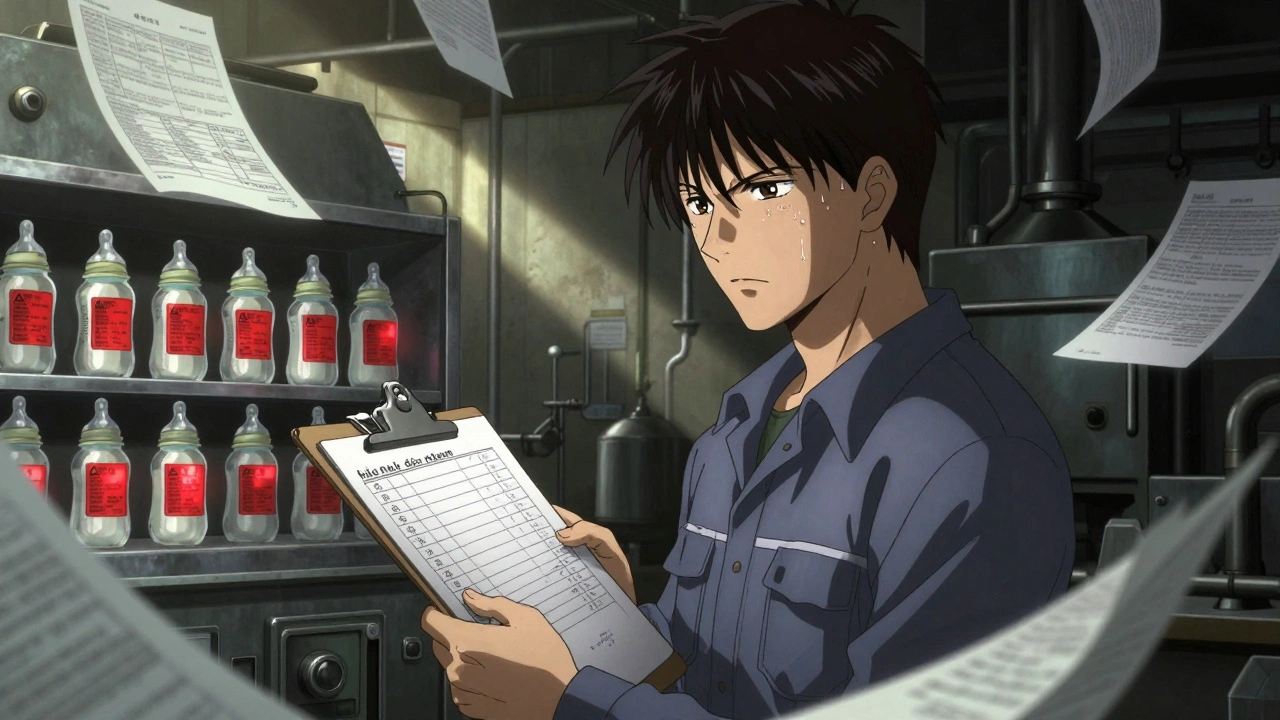
What happens when you spot a dangerous flaw in a product being made?
If you work in manufacturing and you see something wrong-like a batch of baby bottles with toxic lead paint, a car part that could snap at high speed, or a medical device that fails under stress-you’re not just seeing a problem. You’re seeing a potential disaster. And if you speak up, the law is supposed to protect you. But it’s not as simple as calling a hotline. There are deadlines, rules, and traps that can leave you unprotected if you don’t know them.
Why speaking up matters more than you think
Most product recalls don’t start with inspectors. They start with someone on the floor. The Consumer Product Safety Commission found that 72% of recalls in 2021 came from internal reports, not government inspections. That means if no one spoke up, those dangerous products would still be in homes, cars, and hospitals. A faulty airbag, a contaminated food ingredient, a mislabeled insulin pen-these aren’t abstract risks. They’re real threats to real people. And whistleblowers are often the only ones who catch them before it’s too late.
Which laws actually protect you?
You’re not covered by one law-you’re covered by several, depending on what you’re reporting. The biggest ones are:
- CPSIA (Consumer Product Safety Improvement Act): Covers toys, children’s products, household goods. In 2022, 58% of complaints under this law involved lead in children’s products.
- FSMA (Food Safety Modernization Act): Protects food manufacturers, packers, and transporters. In 2022, 63% of FSMA complaints were about unsanitary conditions in food plants.
- MAP-21: Covers auto manufacturers and parts suppliers. In 2022, 41% of vehicle recalls came from whistleblower reports.
- Sarbanes-Oxley (SOX): Protects workers at companies that are publicly traded-even if you work for a supplier, not the brand itself. A 2014 Supreme Court ruling confirmed this, meaning 73% of manufacturing whistleblowers in supply chains now qualify.
- 41 U.S.C. § 4712: Covers contractors and subcontractors working for the government. Half of the complaints under this law in 2022 were about medical device quality.
These laws don’t just protect you if you call the government. They also protect you if you report the issue internally-to your manager, your safety officer, or your HR department. In fact, 62% of CPSIA protections apply to internal reports.
What counts as retaliation?
Retaliation isn’t just getting fired. It’s anything that punishes you for speaking up:
- Demotion or transfer to a worse shift
- Reduced hours or pay
- Being excluded from meetings or training
- Being given impossible workloads
- Being pressured to sign a non-disclosure agreement
- Being blacklisted from future jobs in the industry
- Being forced out through harassment-this is called "constructive discharge"
Even if you’re not fired, if the workplace becomes unbearable because you reported a defect, the law still protects you. But here’s the catch: you have to prove it. That’s why documentation matters more than anything.

How to protect yourself before you speak up
You don’t need to be a hero. You need to be smart.
- Document everything. Write down dates, times, product IDs, batch numbers, and who was involved. Take photos if safe. Keep copies of emails, reports, or safety logs. Medical device and automotive whistleblowers often spend 14.2 weeks gathering evidence.
- Use internal channels first. Most laws protect internal reports. Tell your supervisor, safety officer, or compliance team. If they ignore you, that’s part of your evidence.
- Know your deadline. This is where most people lose protection. For CPSIA and FSMA, you have 180 days from the retaliation to file a complaint. For MAP-21, it’s only 30 days. Miss it, and your case is dismissed-41% of whistleblower complaints are thrown out for this reason.
- Don’t post on social media. A 2022 NLRB ruling said complaints on Facebook or LinkedIn don’t count unless they’re tied directly to workplace safety. Keep it private.
- Don’t sign anything under pressure. A 2023 Department of Energy rule says even if you signed a confidentiality agreement, you’re still protected if you report a safety issue. But don’t assume that’s obvious-ask for legal advice before signing anything.
What happens after you file a complaint
Once you file with OSHA, they have 60 to 90 days to investigate and give you a preliminary decision. If they find your claim has merit, they can order your employer to:
- Reinstate you to your job
- Pay you back wages with interest
- Compensate you for emotional distress
- Pay your legal fees
The average payout for a successful case in 2022 was $287,500. But here’s the hard truth: only about 32% of cases result in full remedies. Many employers fight back, and the process can take months or even years.
The hidden barriers whistleblowers face
Even with strong laws, whistleblowers still lose. Why?
- Complexity. Proving a quality defect isn’t like reporting theft. You need technical knowledge. A 2022 Senate testimony said manufacturing whistleblowers often need expert witnesses just to explain what’s wrong.
- Unclear rules. A 2022 Supreme Court ruling said you have to prove your report was "definitive and detailed," not just a hunch. That’s raised the bar, and complaints dropped 15% after the decision.
- Ignorance. Nearly 47% of whistleblowers didn’t know about free legal help from OSHA when they first filed.
- Company culture. Only 34% of manufacturing companies have formal whistleblower protocols. Most don’t train managers on how to handle these reports.

What you can do right now
You don’t have to wait for a crisis. Here’s what to do today:
- Find out which law protects your industry. Google "OSHA whistleblower protections [your industry]"-they list them clearly.
- Save any emails, reports, or memos about quality issues. Even if you didn’t report them yet, keep them.
- Know your deadline. Write it down. Set a calendar reminder.
- Call OSHA’s whistleblower hotline: 1-800-321-OSHA. They answer in multiple languages and won’t tell your employer you called.
- Ask your company if they have a whistleblower policy. If they don’t, push for one. A 2022 survey found 79% of manufacturing workers believe these policies should exist.
What’s changing in 2025
OSHA’s new directive (CPL 07-00-013) has cut investigation times from 192 days to 147. The CPSC hired a dedicated Whistleblower Ombudsman-resulting in a 23% jump in CPSIA complaints. These are signs the system is slowly improving. But it still depends on people like you speaking up.
Final thought: You’re not alone
Reporting a quality issue isn’t betrayal. It’s responsibility. The system isn’t perfect, but it’s there for a reason: to stop harm before it spreads. If you’re thinking about speaking up, don’t wait. Gather your facts. Know your rights. And call OSHA before the clock runs out. The product you protect might not be the one you made-it might be the one your neighbor’s child is using tonight.
Can I be fired for reporting a manufacturing defect?
No. Federal law prohibits retaliation for reporting quality or safety issues in manufacturing. This includes firing, demotion, harassment, or forcing you out. If it happens, you have legal recourse through OSHA. However, you must file a complaint within strict deadlines-30 to 180 days depending on the law.
Do I need proof to report a quality issue?
You don’t need absolute proof, but you do need reasonable belief that a violation occurred. The law protects you if you report in good faith-even if you’re later proven wrong. However, vague complaints like "something feels off" are less likely to be protected. Document specifics: dates, product codes, batch numbers, and who was involved.
Can I report anonymously?
OSHA allows anonymous reports, but anonymity limits what they can do. If you want the strongest protection and a chance at remedies like reinstatement or back pay, you’ll need to identify yourself. You can still request confidentiality, and OSHA is legally required to protect your identity during investigations.
What if I work for a subcontractor, not the main company?
You’re still protected. Laws like Sarbanes-Oxley and 41 U.S.C. § 4712 cover employees of contractors and suppliers working for public companies or government agencies. Even if you’re hired through a staffing agency, you’re covered if you report quality issues tied to safety or compliance.
How long do I have to file a complaint?
Deadlines vary by law: 30 days for auto safety (MAP-21), 180 days for consumer products (CPSIA) and food safety (FSMA), and 45 days for environmental violations. Missing the deadline means your case is dismissed-no exceptions. Write down your deadline the moment you experience retaliation.
Can I report to the media instead of OSHA?
You can, but it’s riskier. Reporting to the media doesn’t automatically trigger whistleblower protections unless you also filed with a government agency. The safest path is to report internally first, then to OSHA. Media exposure can help, but it doesn’t replace legal filing.
Is there free legal help available?
Yes. OSHA’s Whistleblower Protection Program offers free legal assistance through regional offices in 10 locations nationwide. You don’t need to pay for a lawyer to file a complaint. Yet, nearly half of whistleblowers don’t know this service exists. Call 1-800-321-OSHA to connect.

Katie Harrison
December 10, 2025 at 01:42I work in a toy factory in Ontario, and I’ve been documenting every batch number with lead concerns since last June. I didn’t know CPSIA covered internal reports until I read this. I’m not scared anymore. I’ve got screenshots, timestamps, and my supervisor’s email saying 'it’s not a big deal.' I’m filing tomorrow.
Michael Robinson
December 10, 2025 at 23:40People think whistleblowing is about being brave. It’s not. It’s about being the only one who still cares enough to count the dots before the line breaks. Most of us just want to go home without a dead kid on our conscience.
Kathy Haverly
December 11, 2025 at 13:03This whole post is performative activism. 72% of recalls come from internal reports? Where’s your source? OSHA’s own data shows 89% of whistleblower claims are dismissed for lack of specificity. You’re giving people false hope so they’ll risk their jobs for a 12% chance. That’s not helpful. That’s cruel.
Graham Abbas
December 11, 2025 at 13:39I spent 11 years in automotive supply chains in Scotland. I reported a cracked ball joint design in 2019. They moved me to night shift. No one spoke up for me. Not HR. Not safety. Not even the union rep. I left the industry. But I still check the NHTSA database every week. Last month, I saw the exact same part recalled. Same batch code. Same failure point. I cried. Not because I was right. Because no one listened. And now, someone’s child is missing a leg.
George Taylor
December 12, 2025 at 01:11I read this. I really did. But I’m just tired. I’ve seen this movie before. You report something. They give you a ‘thank you’ email. Then you get reassigned to the paint booth with no ventilation. You file. They drag it out for 18 months. You get $12k and a ‘no rehire’ clause. You think you’re saving lives? You’re just buying yourself a 3-year PTSD package.
ian septian
December 13, 2025 at 20:09Document everything. Save emails. Write dates. Don’t wait. Call OSHA. Now.
Chris Marel
December 14, 2025 at 13:23In Nigeria, we don’t have OSHA. But we have mothers who check baby bottles before letting their kids use them. I’ve seen a child with lead poisoning because a factory skipped testing. No one got fired. No one got sued. Just a baby who can’t walk now. If you’re reading this and you’re in manufacturing… please. Don’t wait for a law to make you do the right thing. Do it because you’re human.
Carina M
December 14, 2025 at 18:24The author’s conflation of regulatory compliance with moral virtue is both logically incoherent and ethically reductive. One cannot equate adherence to statutory frameworks with altruism; the former is contractual, the latter, existential. Furthermore, the uncritical citation of OSHA statistics without contextualizing jurisdictional limitations betrays a troubling epistemological laziness.
Andrea Beilstein
December 15, 2025 at 08:35I used to work in a medical device plant in Ohio. I reported a mislabeled insulin pen batch. They told me I was being dramatic. I kept quiet for six months. Then I saw a tweet from a mom whose son went into a coma. The batch number matched mine. I filed. Took 14 months. Got reinstated. Got back pay. But I lost my sleep. I still wake up wondering if I could’ve done it sooner. Don’t wait for the tweet. Do it before the headline.
om guru
December 16, 2025 at 22:33Respected sir, as per the guidelines issued by International Labour Organization, it is imperative that every worker be aware of their legal entitlements. The statutes mentioned herein are robust and well-documented. However, implementation remains inconsistent across regional jurisdictions. It is therefore recommended that all employees maintain formal written records and seek counsel from certified labor advocates prior to initiating any formal complaint procedure.