
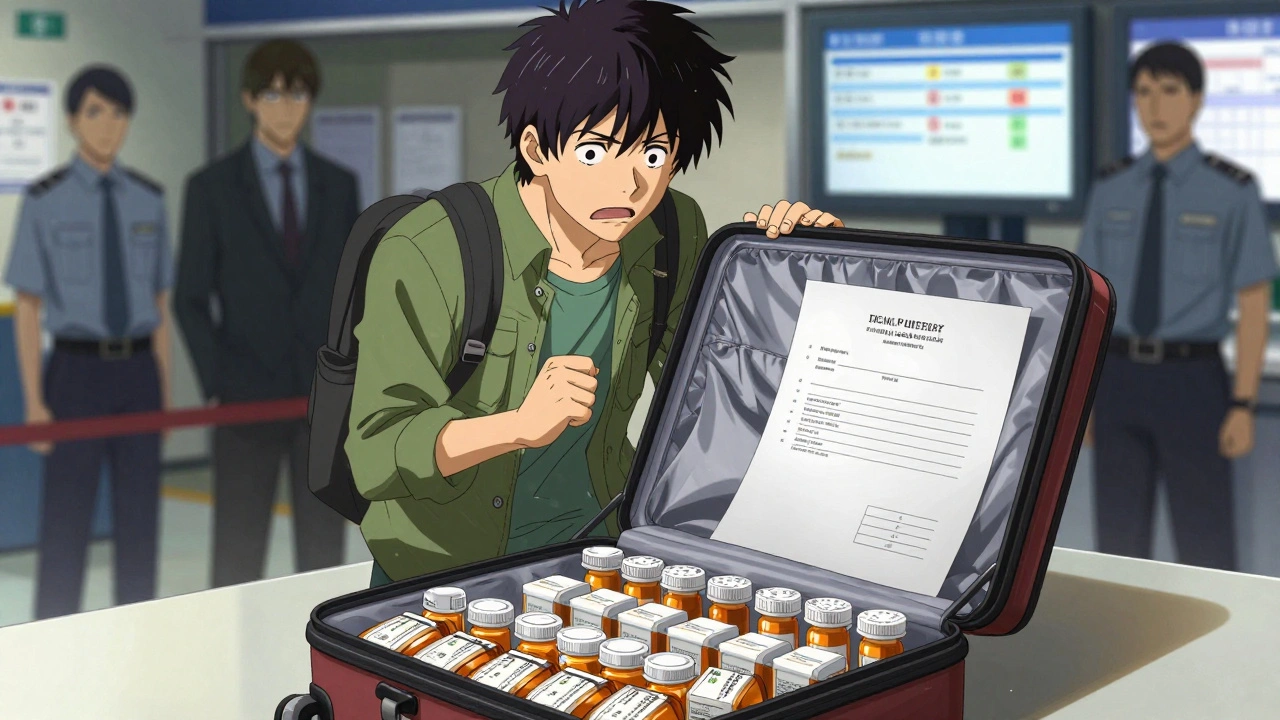
Learn the 2025 rules for bringing prescription drugs across international borders - including what’s banned, what paperwork you need, and how to avoid getting stopped at customs.
Travel with Prescription Drugs: What You Need to Know Before You Go
When you travel with prescription drugs, carry medications across borders or through airport security. Also known as flying with medication, it’s not just about packing your pills—you’re dealing with legal rules, airline policies, and customs checks that vary by country. Many people assume if it’s legal at home, it’s fine everywhere else. That’s not true. A painkiller you take daily in the U.S. might be classified as a controlled substance in Japan or Australia. Even common medications like Adderall, Xanax, or certain sleep aids can trigger serious problems if you don’t prepare.
The TSA medication guidelines, rules set by the U.S. Transportation Security Administration for carrying drugs on flights. Also known as airline drug rules, it allows you to bring prescription drugs in your carry-on or checked bag, but you must be ready to prove they’re yours. That means keeping them in original bottles with your name and doctor’s info clearly visible. If you’re traveling internationally, some countries require a letter from your doctor explaining why you need the medication. Others demand a special permit—sometimes weeks in advance. Skipping this step can mean your meds get confiscated, or worse, you get detained.
And it’s not just about pills. Inhalers, insulin pens, liquid medications, and even over-the-counter drugs like melatonin or motion sickness tablets can raise flags. If you’re carrying more than a 30-day supply, be ready to explain why. Customs officers aren’t trying to be harsh—they’re trying to stop drug smuggling. The key is making your situation look transparent and legitimate. Don’t dump your meds into a pill organizer unless you also carry the original packaging. Don’t rely on digital copies of prescriptions—paper or printed copies are still the gold standard.
What about international travel? Countries like the UAE, Singapore, and Russia have strict lists of banned substances—even some common antidepressants and ADHD meds. Before you book your trip, check the embassy website of your destination. Some even have downloadable forms you must fill out ahead of time. If you’re on long-term medication, consider bringing extra in case your flight is delayed or you lose your bag. But don’t overpack—bringing a year’s supply can look suspicious.
There’s also the issue of time zones and dosing schedules. If you’re crossing multiple time zones, talk to your doctor about adjusting your routine. Missing a dose of blood pressure or diabetes meds can be dangerous. Keep your meds in your carry-on, not checked luggage, so you can take them on time—even if your flight gets delayed.
Below, you’ll find real, practical advice from people who’ve been there—how to handle TSA screenings without stress, which countries require doctor’s letters, how to pack insulin safely, and what to do if your meds get seized. Whether you’re flying for vacation, business, or medical treatment, this collection gives you the exact steps to stay legal, safe, and on schedule.