
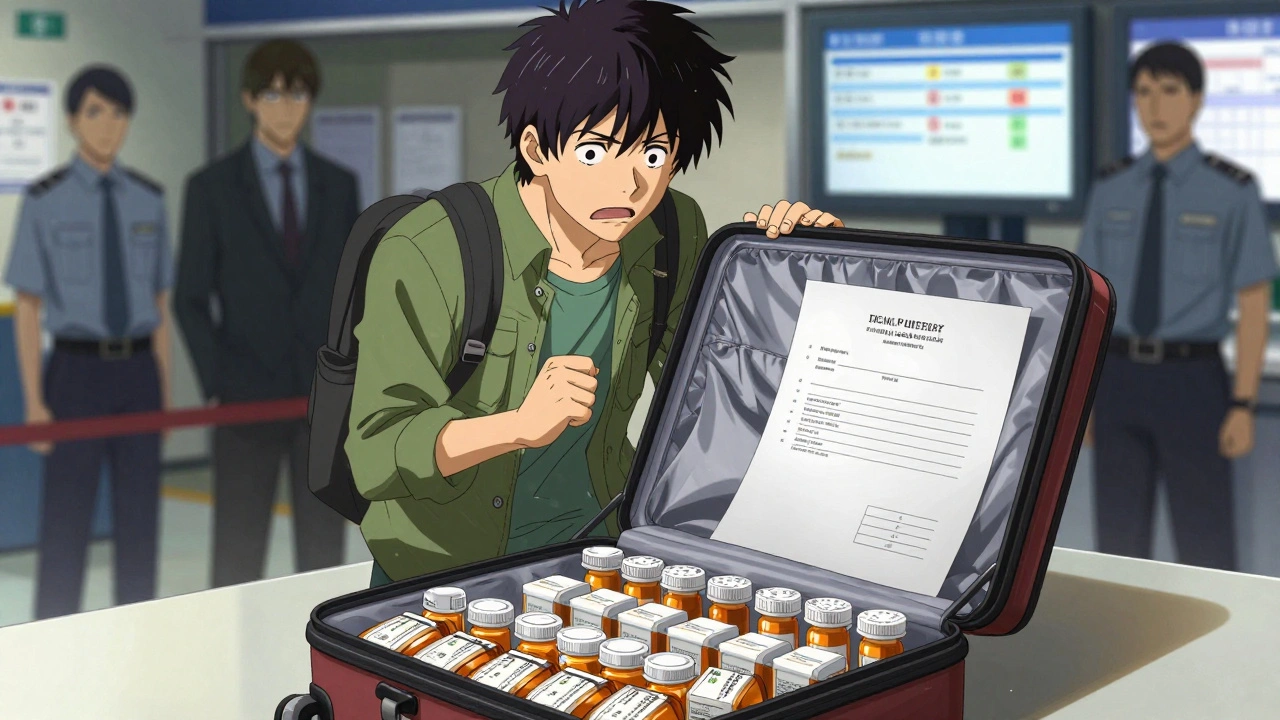
Learn the 2025 rules for bringing prescription drugs across international borders - including what’s banned, what paperwork you need, and how to avoid getting stopped at customs.
International Medication Rules: What You Need to Know About Global Drug Laws
When you take a pill, the rules around it aren’t the same everywhere. International medication rules, the legal and regulatory frameworks that govern how drugs are approved, sold, and used across countries. Also known as global pharmaceutical laws, these rules determine whether a drug is available over the counter, requires a prescription, or is banned entirely—even if it’s legal in your home country. That’s why the same medicine you get without a script in one place might need a doctor’s note—or be completely illegal—in another.
These rules aren’t just about safety. They’re shaped by local health systems, cultural attitudes toward medicine, and economic pressures. For example, drug regulations, the specific laws that control how medications are manufactured, labeled, and distributed. Also known as pharmaceutical compliance standards, they vary from strict oversight in the EU to looser controls in some developing nations. In the U.S., pharmacy substitution rules let pharmacists swap generics unless the doctor says no. In Japan, that’s not allowed without explicit permission. Meanwhile, prescription standards, the requirements for who can write a valid prescription and what information it must include. Also known as prescribing protocols, they differ so much that a prescription from a U.S. doctor may not be honored in Canada or Australia without re-approval. Even something as simple as labeling can change: a drug labeled "for temporary relief" in one country might be labeled "for chronic use" in another.
These differences affect real people every day. Travelers bring meds across borders and get stopped at customs. Parents overseas struggle to refill their child’s ADHD script. Seniors on fixed incomes find their favorite generic suddenly unavailable—and more expensive—because of import restrictions. And when new therapies like CFTR modulators for cystic fibrosis or PAMORAs for opioid constipation roll out, access isn’t just about cost—it’s about whether the country even approved them yet.
Understanding international medication rules isn’t about memorizing laws. It’s about knowing what to ask before you buy, travel, or switch providers. It’s knowing why your blood thinner might be banned in one country but sold freely in another. It’s realizing why a pharmacist in Germany can’t refill your U.S. prescription—even if it’s still in the bottle.
Below, you’ll find real-world examples of how these rules play out—from price gaps between states to how hormone therapies interact with other drugs under different legal systems. You’ll see how reporting side effects to the FDA works differently than reporting them in the UK or Australia. And you’ll learn how EHR systems, pharmacist prescribing authority, and insurance rules all tie into the bigger picture of global drug access. This isn’t theory. It’s what’s happening right now—and what you need to know to stay safe and informed.