
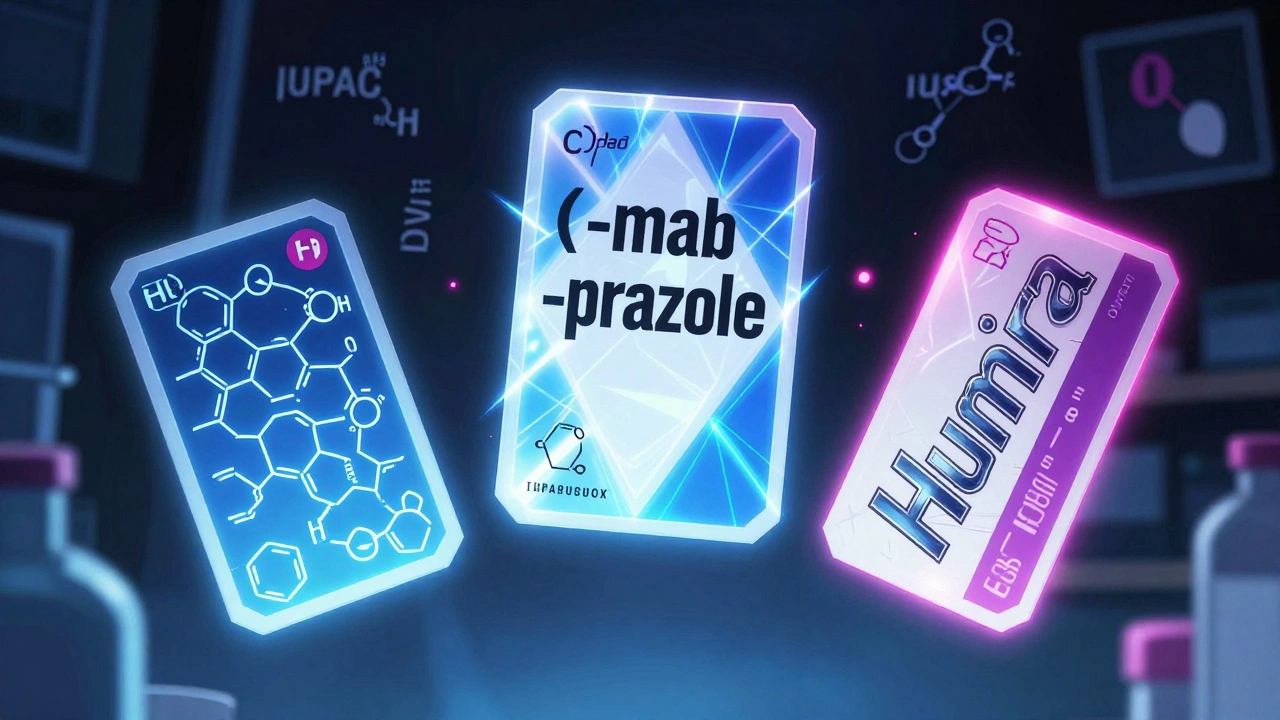
Learn how drugs get their chemical, generic, and brand names - and why these naming systems exist to prevent dangerous medication errors. Understand the science behind the labels on your pills.
INN: What It Is and Why It Matters for Your Medications
When you see INN, International Nonproprietary Name, the standardized global name for the active ingredient in a medicine. Also known as generic drug name, it’s the one thing all versions of a drug share—whether it’s sold as a brand or a copy. This is the name your doctor writes on the prescription, and the name that tells you exactly what’s inside the pill or liquid, no matter where you buy it. Without INN, you’d be stuck guessing if that cheap tablet from another country is the same as the one you take at home. It’s how pharmacists know which drug to substitute, how regulators track side effects, and how you avoid accidentally doubling up on the same medicine under two different brand names.
INN isn’t just a label—it’s a safety net. Take acetaminophen, the active ingredient in Tylenol and hundreds of other pain relievers. If you don’t know that’s the INN, you might take Tylenol for a headache and then grab a cold medicine that also contains acetaminophen—ending up with a dangerous overdose. Same goes for ibuprofen, the painkiller found in Advil, Motrin, and store brands. Knowing the INN keeps you from mixing drugs that do the same thing. It’s why infant drops come with clear concentration labels like 160 mg/5 mL—because the INN tells you the dose, not the brand.
INN also explains why the same pill costs $12 in one state and $45 in another. The brand name changes, the price jumps, but the INN stays the same. That’s the core ingredient. It’s why pharmacists can legally swap brand drugs for generics—because the INN proves they’re chemically identical. Even when you’re traveling abroad, INN is your lifeline. Customs officers don’t care if your medicine is called "Lipitor" or "Atorvastatin"—they check the INN to see if it’s allowed. And when you report a side effect to the FDA’s MedWatch system, you use the INN so they can track it across all brands.
It’s not just about saving money. It’s about control. When you know the INN, you’re no longer at the mercy of marketing names. You can ask your pharmacist: "Is there a generic with this INN?" You can compare prices across stores. You can look up interactions—like how grapefruit affects simvastatin, the INN for Zocor and other statins—without needing to remember every brand name. Even in complex cases like gender-affirming hormones or diabetes meds, the INN is the anchor. It cuts through the noise.
Every post here connects to INN in some way. Whether it’s figuring out why your insurance denied a brand-name drug, learning how to safely give baby drops, or understanding why your blood thinner caused a rash, the answer starts with the INN. You’ll find guides on how to read labels, how to talk to your pharmacist, and how to avoid dangerous mix-ups—all rooted in knowing what’s actually in your medicine. This isn’t just pharmacy jargon. It’s your power to take charge of your health, one drug name at a time.