
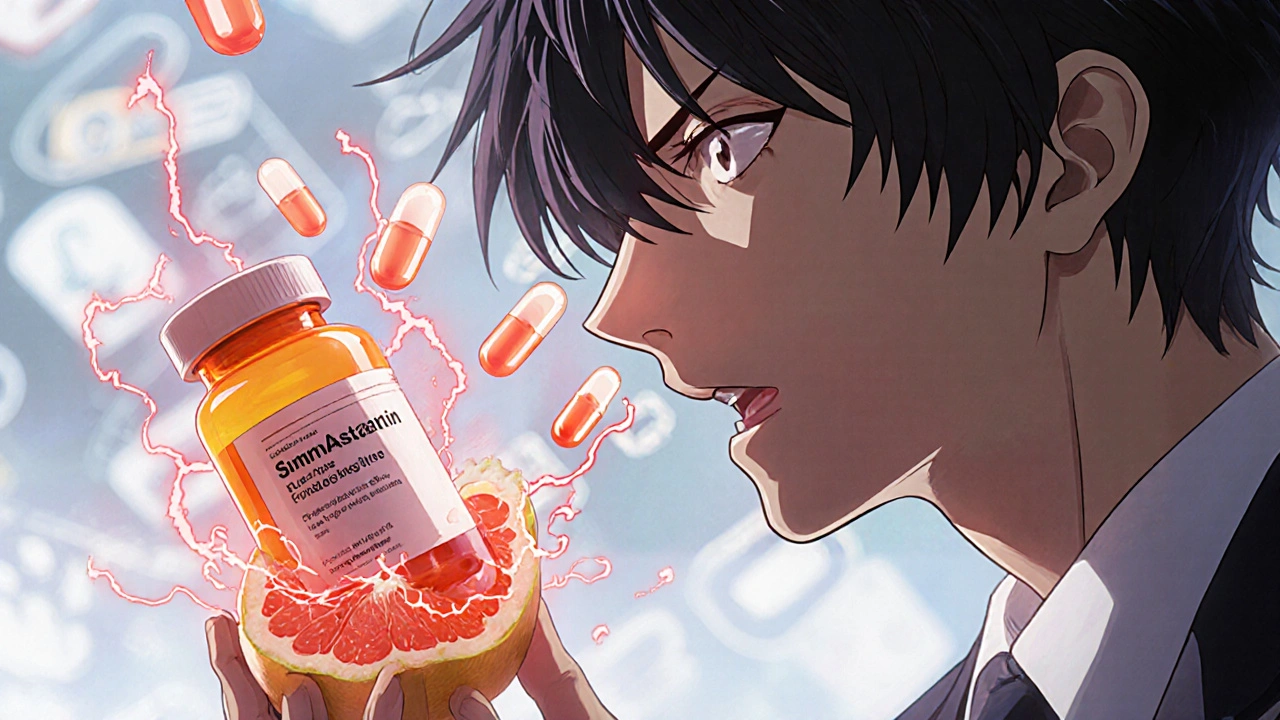
Grapefruit can dangerously increase statin levels in your blood, raising the risk of muscle damage and kidney failure. Learn which statins are risky, what symptoms to watch for, and how to stay safe.
Grapefruit and Statins: What You Need to Know About This Dangerous Interaction
When you take statins, a class of drugs used to lower cholesterol and reduce heart disease risk. Also known as HMG-CoA reductase inhibitors, they work by blocking a liver enzyme that makes cholesterol. But if you eat grapefruit or drink grapefruit juice while on these meds, you’re putting yourself at risk for muscle damage, kidney failure, or worse. This isn’t a myth—it’s a well-documented, life-threatening interaction that even some doctors overlook.
The problem lies in how grapefruit affects your body’s ability to break down statins. Grapefruit contains chemicals called furanocoumarins that shut down an enzyme in your gut called CYP3A4. This enzyme normally helps filter out drugs like atorvastatin, a common statin used to treat high cholesterol, so only the right amount enters your bloodstream. When it’s blocked, too much of the drug builds up—sometimes five to ten times more than intended. That’s why one glass of grapefruit juice can turn a safe dose into a toxic one. Not all statins are equally risky, though. simvastatin, a statin with the highest risk of grapefruit interaction is especially dangerous, while pravastatin and rosuvastatin are safer choices. But unless your doctor tells you otherwise, assume grapefruit is off-limits.
This interaction doesn’t just affect statins. It shows up with blood pressure meds, anti-anxiety drugs, and even some heart rhythm medications. But because so many people take statins—especially as they age—it’s one of the most common and dangerous food-drug clashes out there. You don’t need to give up citrus entirely. Oranges, tangerines, and lemons are fine. It’s just grapefruit, pomelos, and some hybrids like Seville oranges that cause trouble. And it’s not just about timing. Even if you take your pill at night and drink juice in the morning, the enzyme-blocking effect lasts over 24 hours. One glass is enough.
What’s worse? Many people don’t even realize they’re at risk. They think, "I only have half a grapefruit once in a while," or "My doctor didn’t mention it." But this isn’t a rare side effect—it’s a predictable, preventable danger. The FDA has issued warnings. Pharmacists are trained to flag it. Yet people still mix the two. If you’re on any cholesterol-lowering drug, check the label. Ask your pharmacist. And if you love grapefruit, talk to your doctor about switching to a safer statin or finding another way to get your vitamin C.
Below, you’ll find real-world stories and expert advice on how this interaction plays out in daily life—what happens when people ignore the warning, how to spot early signs of trouble, and what alternatives actually work. This isn’t just about avoiding fruit. It’s about understanding how your body processes medicine, and why some "healthy" habits can quietly put you in danger.