
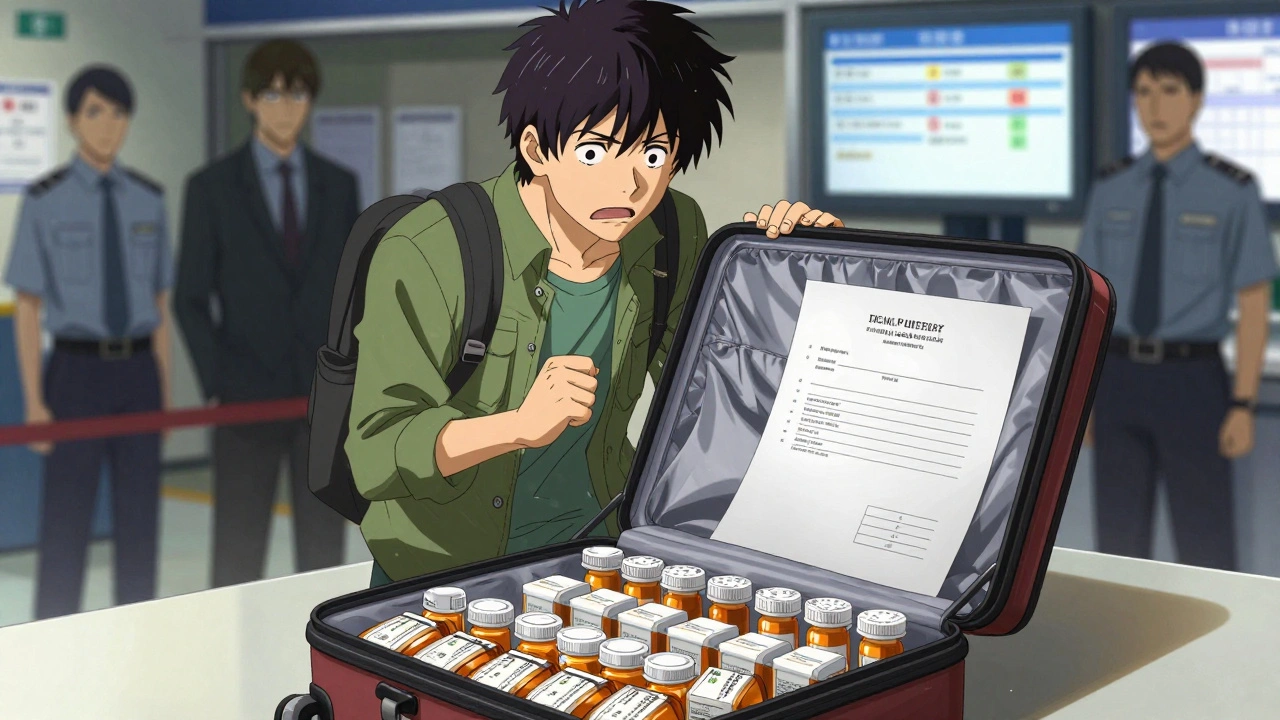
Learn the 2025 rules for bringing prescription drugs across international borders - including what’s banned, what paperwork you need, and how to avoid getting stopped at customs.
Customs Medication Limits: What You Can and Can't Bring Across Borders
When you're traveling with medication, you're not just carrying pills—you're dealing with customs medication limits, national laws that control what drugs can enter a country and in what quantities. Also known as border drug allowances, these rules vary wildly from one country to another, and ignoring them can mean your medicine gets thrown out, your trip gets delayed, or worse—you face fines or even arrest. It’s not just about prescriptions. Over-the-counter painkillers, sleep aids, even some cough syrups can be classified as controlled substances overseas. What’s legal in the U.S. might be illegal in Japan, Australia, or the UAE.
Prescription drugs, medications legally obtained with a doctor’s note in your home country. Also known as personal use medications, are usually allowed if they’re in original packaging with your name on the bottle and you’re carrying only what you need for the duration of your trip. But here’s the catch: many countries require a doctor’s letter, sometimes even a special permit. The UK lets you bring a 3-month supply of most meds, but Canada only allows a 90-day supply if it’s not a controlled substance. Meanwhile, countries like Singapore and Saudi Arabia ban certain antidepressants, ADHD meds, and even some painkillers entirely—even if you have a valid U.S. prescription.
International drug rules, the patchwork of national regulations governing the movement of pharmaceuticals across borders. Also known as traveler medication guidelines, are rarely published in plain language on government websites. Most travelers don’t realize that the FDA doesn’t control what other countries allow—you’re subject to the destination’s laws, not yours. Even if you’re just transiting through a country, you can get caught. A traveler once had their Zoloft seized in Dubai because they didn’t have a translated prescription. Another was detained in Thailand for carrying 30 pills of a common sleep aid that’s banned there as a narcotic.
You can’t rely on airline staff or airport security to know these rules. They’re trained to look for illegal drugs, not your thyroid medication. The only safe move? Check the official government travel site of your destination before you pack. Look for phrases like "medications for personal use," "controlled substances," or "import restrictions." If you’re unsure, email their embassy. Keep your original prescription, a doctor’s note in English (and ideally translated), and never pack meds in checked luggage. Always carry them in your carry-on with the bottle labels intact.
What about supplements? Vitamins? Herbal teas? Most are fine, but some—like high-dose melatonin or kratom—are flagged in certain countries. Even CBD oil, legal in many U.S. states, is banned in dozens of places abroad. If it’s not clearly labeled and you can’t prove it’s safe, assume it’s risky.
The bottom line: customs medication limits aren’t just bureaucracy—they’re real barriers with real consequences. Whether you’re flying for vacation, work, or medical care, knowing these rules isn’t optional. It’s the difference between a smooth trip and a nightmare. Below, you’ll find real-world examples of what people have run into, how to handle common situations, and what to do if your meds get stopped at the border.